 About
About





 Tibet Tours
 Tibet Train Tours
 Himalaya Tours (Tibet-Nepal-Bhutan)
 Private Tours
 Mount Kailash Tours
 Trekking Tours
 Travel Guide
 Tibet Travel Blog
 FAQ
FAQ About us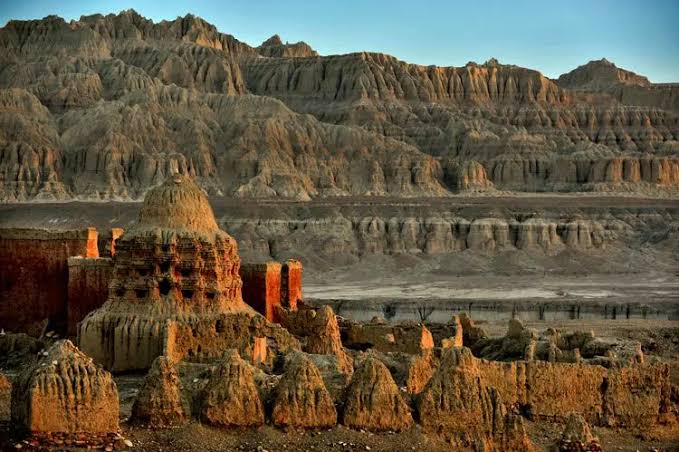
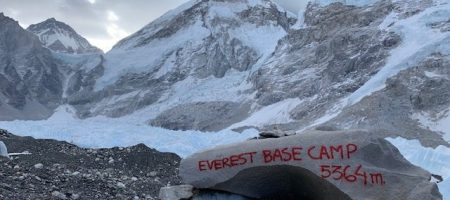
You’ve done Lhasa. You’ve stood at Everest Base Camp and taken the photo. You’ve crossed the Yamdrok turquoise lake at golden hour and called it the most beautiful thing you’ve ever seen.
And then someone mentions the Ngari overland journey, and you realize you haven’t even started.
Western Tibet is a different world entirely. The Ngari Prefecture, also known as Ali, sits at the far end of the plateau, past the point where most tours turn around. Out here, the air is thinner, the roads are emptier, and the ruins of the Guge Kingdom rise from a cliffside above the Sutlej River like something out of a story that hasn’t been told yet.
This is the guide for travelers who want more. Not just altitude, but depth.
What is the Ngari overland journey, exactly?
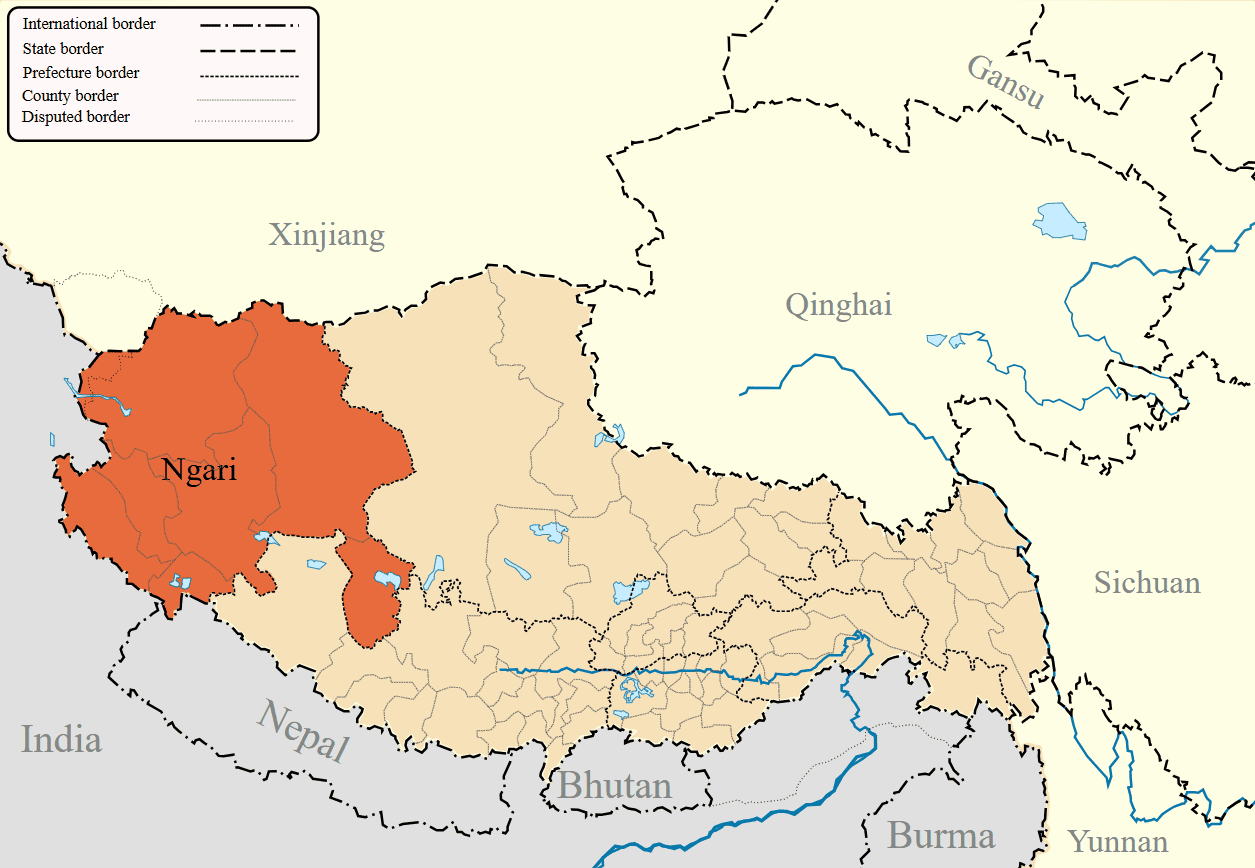
The Ngari overland journey is the route that takes you from Lhasa across the Tibetan plateau all the way into western Tibet, ending in the Ali Prefecture region. It’s not a quick trip. You’ll cover roughly 1,450 kilometers of road, pass through landscapes that shift from high grassland to lunar desert, and arrive at places that see only a fraction of the visitors that Lhasa or Shigatse gets.
The classic route passes through Shigatse, Saga, Lake Manasarovar, and Mount Kailash before pushing west into Zanda County, where the ruins of the Guge Kingdom wait. This is why people call it one of the great overland journeys in Asia. And they’re not wrong.
Some travelers do it partly by air, flying from Lhasa to Ngari Gunsa Airport in Ali city, then driving south and west. Both options work. The overland route just adds something else entirely to the experience.
The Ngari overland route: what you’ll pass through
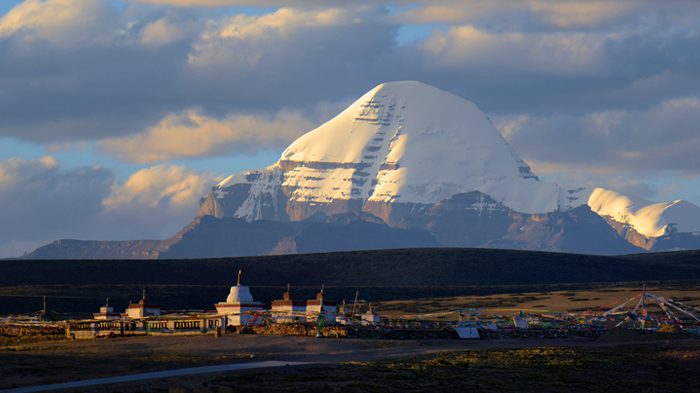
Before you even reach Guge, the Ngari overland journey delivers one checkpoint after another.
Shigatse and Tashilhunpo Monastery are usually the first major stop. Tashilhunpo has been the seat of the Panchen Lama since the 15th century, and it’s one of the few Tibetan monasteries that survived the 20th century largely intact. Give it time. It deserves more than an hour.
Saga is a small town that most overlanders know only as a fuel stop. But the road from Saga starts getting serious. The terrain changes. The sky gets bigger.
Lake Manasarovar is one of the highest freshwater lakes in the world, sitting at approximately 4,590 meters. Hindus, Buddhists, and Jains all regard it as sacred. On a clear morning, you can see the snow cone of Mount Kailash reflected in its surface. It’s the kind of scene that makes you stop talking.
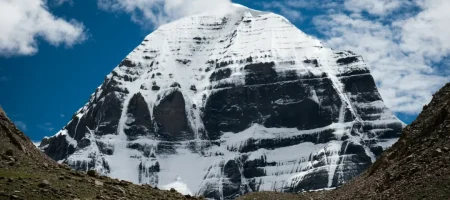
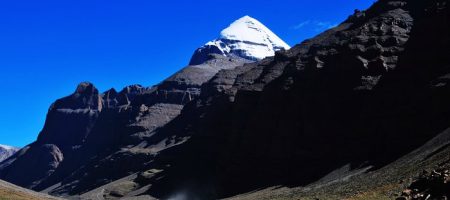
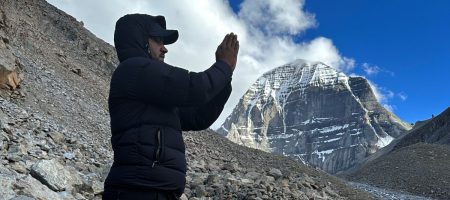
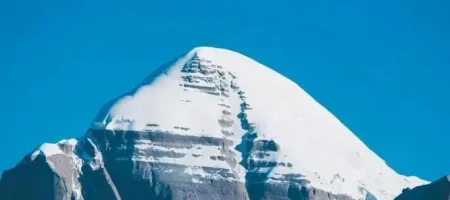
Mount Kailash itself stands at 6,638 meters. Nobody climbs it. The peak is considered sacred across four religions, and in Tibetan Buddhism, even walking around it (the kora, roughly 52 kilometers) is considered among the most meaningful acts a pilgrim can undertake. Whether you’re religious or not, the presence of the mountain does something to you. Ask anyone who’s been there.
Then you head northwest, into the Earth-Canyon landscape of Zanda County. The terrain here is unlike anywhere else in Tibet, with eroded ridges and towers of mud and rock rising hundreds of meters from the valley floor. This is where the Ngari overland journey reaches its climax.
The Guge Kingdom ruins: Tibet’s great forgotten site
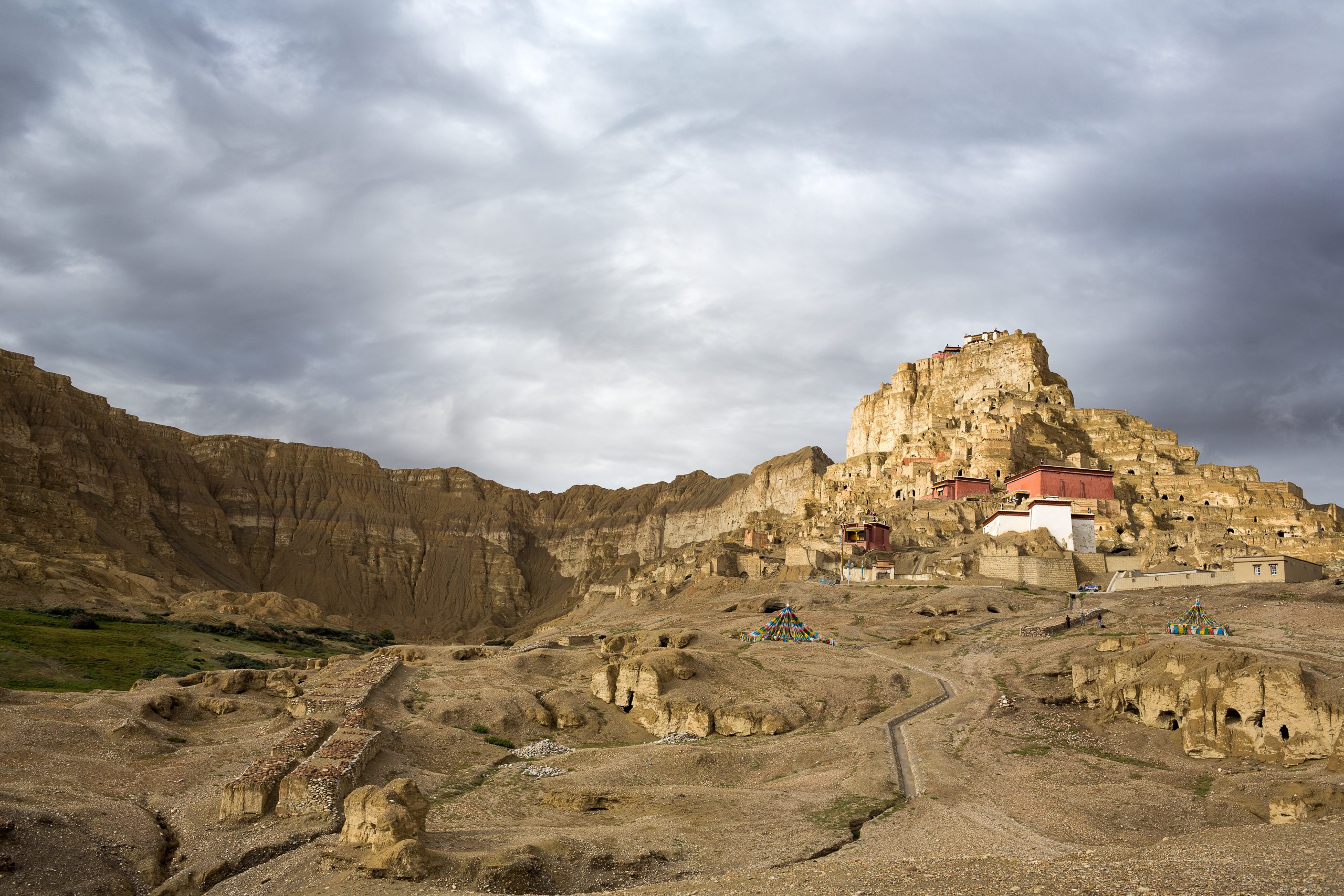
The Guge Kingdom was founded in the 10th century by descendants of Tibet’s royal lineage after the collapse of the Yarlung dynasty. For nearly 700 years, it thrived as a center of Buddhist art and scholarship in western Tibet, blending Tibetan, Indian, Kashmiri, and Central Asian influences.
It ended violently in the 17th century under circumstances that historians still debate. What remained was a sprawling complex of ruined palaces, frescoed temples, hidden tunnels, and meditation caves perched on a hillside near the village of Tsaparang, about 18 kilometers west of Zanda town.
We’ve written a full deep-dive on the history, layout, and highlights of the site in our complete guide: Travel to Guge Kingdom: The Ultimate Guide to Tibet’s Lost Empire. If you want the full archaeological and historical picture before you go, start there.
Here’s what the ruins look like on the ground.
The site covers an entire hill rising roughly 300 meters. According to historical records, it once contained more than 400 rooms, 58 fortifications, 28 stupas, and 4 major temples. What survives is still extraordinary.
The Royal Palace Complex at the summit gives you a 360-degree view over the Sutlej River canyon and the desert plateau beyond. You climb to it on a narrow path. The silence up there is complete.
The White Temple (Lhakang Karpo) holds some of the finest surviving murals in western Tibet, showing figures and compositions that reveal clear Kashmiri influence, which tells you how far the cultural networks of the old Guge Kingdom actually reached.
The Red Temple (Lhakang Marpo) is another world: vibrant, dense paintings covering every wall, depicting figures from Tibetan Buddhism’s classical period. The colors have held up remarkably well considering the centuries.
Tholing Monastery, nearby, served as the spiritual and intellectual center of the kingdom. The great translator Rinchen Zangpo, who helped spark the second diffusion of Buddhism in Tibet, was associated with this place. Some of the monastery’s original structures still stand.
And then there are the tunnels. Secret passages carved into the hillside for escape, meditation, and defense. You can explore several of them. Bring a small flashlight.
Sunrise and sunset here are extraordinary, by the way. The reddish cliffs glow in a way that makes the whole ruin look like it’s lit from inside.
Why the Ngari overland journey is different from other Tibet tours
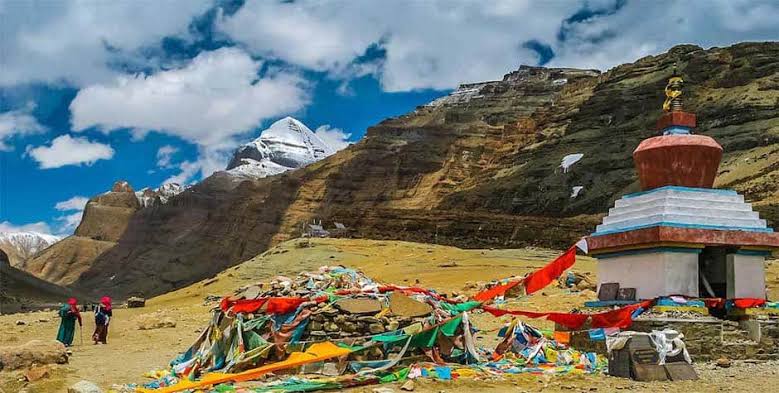
Most Tibet tours, including excellent ones, follow a well-worn circuit. Lhasa, Potala Palace, Jokhang Temple, maybe Namtso or Yamdrok, then Everest Base Camp before the return. That circuit exists because it’s genuinely good.
But the Ngari overland journey takes you somewhere else in every sense.
You’re covering distance. Real distance, across landscape that most visitors never see. The roads in western Tibet are rougher. The towns are smaller. The infrastructure is basic. That’s part of it.
You’re also far fewer travelers out here. At the Guge Kingdom ruins, you might have the place almost entirely to yourself. That’s not a common experience in Tibet anymore, and it changes how you see things.
The Ngari overland journey also tends to attract a particular kind of traveler, someone who has done the highlights and wants something less managed. People with a serious interest in history, archaeology, Buddhist art, or the physical geography of the Himalayas. The route rewards curiosity.
If you’ve already seen Lhasa and Everest and you’re wondering what else Tibet has to offer, Ngari is the honest answer.
What permits do you need for the Ngari overland journey?

This matters, so pay attention.
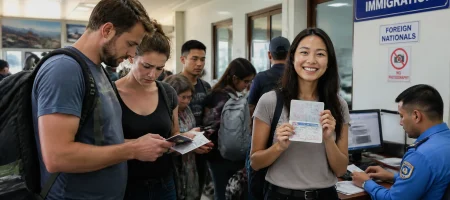
All foreign visitors to Tibet require a Tibet Travel Permit. That’s the baseline and it’s mandatory. You cannot enter Tibet independently. You must book through a registered Tibetan travel agency, and that agency will arrange your permit.
For the Ngari Prefecture specifically, you need an additional Alien’s Travel Permit, sometimes called a military permit or restricted area permit, because Ngari sits close to the borders with India and Nepal. Your registered travel agency handles this, but you need to plan ahead. These permits take time.
You’ll also need to make sure your itinerary is fully documented before you travel, as checkpoints along the Ngari overland route require the correct paperwork.
The good news: if you book through an experienced agency like Experience Tibet, this is all handled for you. The permit process is one of the reasons going with people who know the region matters more for this journey than for a standard Lhasa city tour.
You can read the full permit guide here: Tibet Travel Permit Online Application
Best time to do the Ngari overland journey
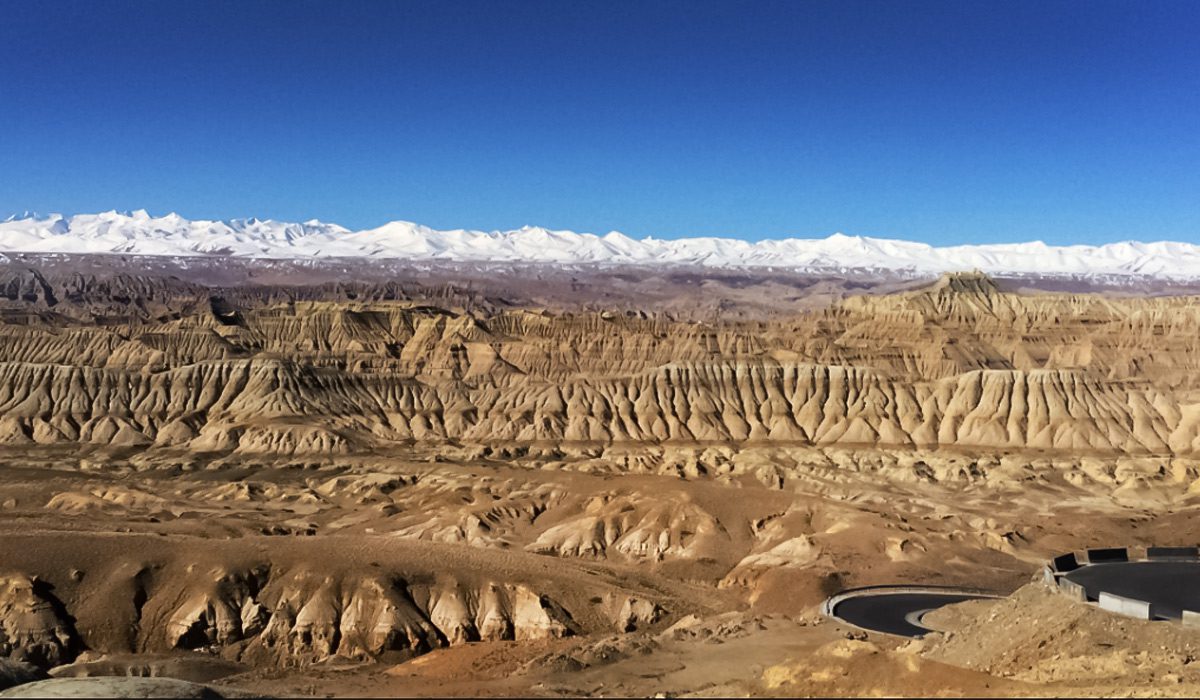
The Ngari overland journey is a seasonal route. The window is roughly May through October, with the peak months being June, July, August, and September.
May is a good choice if you want cooler temperatures and fewer other travelers. Some roads are still clearing from winter and early spring conditions, so check current conditions before finalizing.
June through August is peak season. The weather is the most reliable, temperatures are manageable even at altitude, and the scenery around Manasarovar and Kailash is at its most vivid.
September is many experienced travelers’ preferred month. The crowds thin, the light gets golden in the afternoons, and the landscape takes on different colors. Temperatures start dropping at night.
October is possible but increasingly risky the later you go. Snow can close mountain passes with little warning.
Winter travel to Ngari is not recommended for most travelers. The extreme cold, potential road closures, and limited infrastructure make it a serious undertaking even for experienced high-altitude travelers.
How long does the Ngari overland journey take?
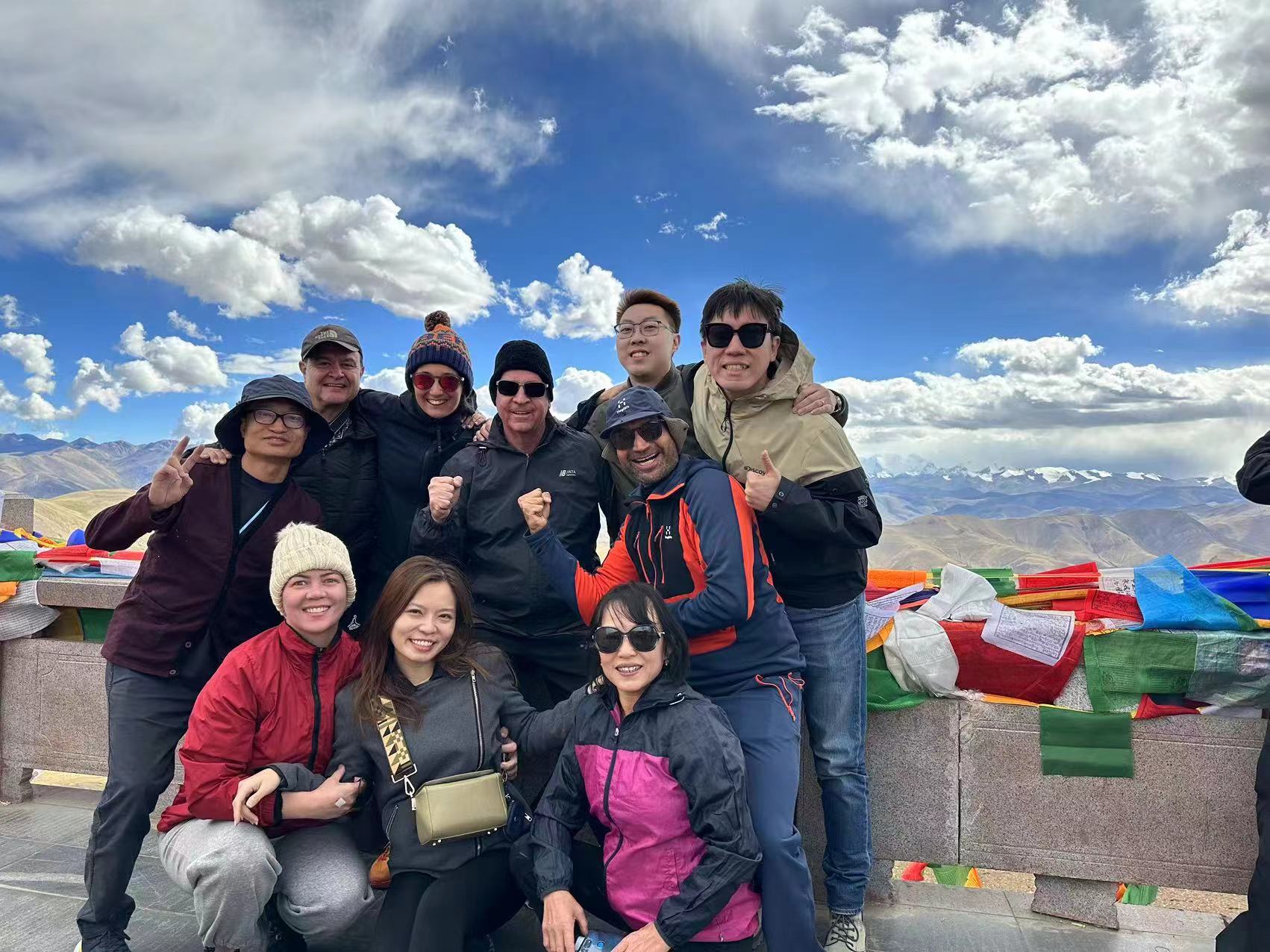
The full overland journey from Lhasa to Ngari and back takes a minimum of 14 to 17 days when done as a proper tour. You need those days. Rushing altitude is how people get in trouble, and the acclimatization schedule on a well-planned Ngari itinerary is there for a reason.
Experience Tibet offers a 17-Day Mt Kailash & Guge Kingdom Tour from Lhasa starting from US$2,530 per person, which combines the overland journey with proper time at both Kailash and Guge. If you want the full route done properly, this is the tour to look at.
If you’re coming from Nepal rather than Lhasa, the approach is different and involves crossing the Himalaya via the Gyirong border. That’s another option worth considering if your starting point is Kathmandu. The 10-Day Mount Kailash Tour from Kathmandu gives you access to the Kailash and Manasarovar part of the Ngari region from that direction, starting from US$1,890.
Practical things to know before you go
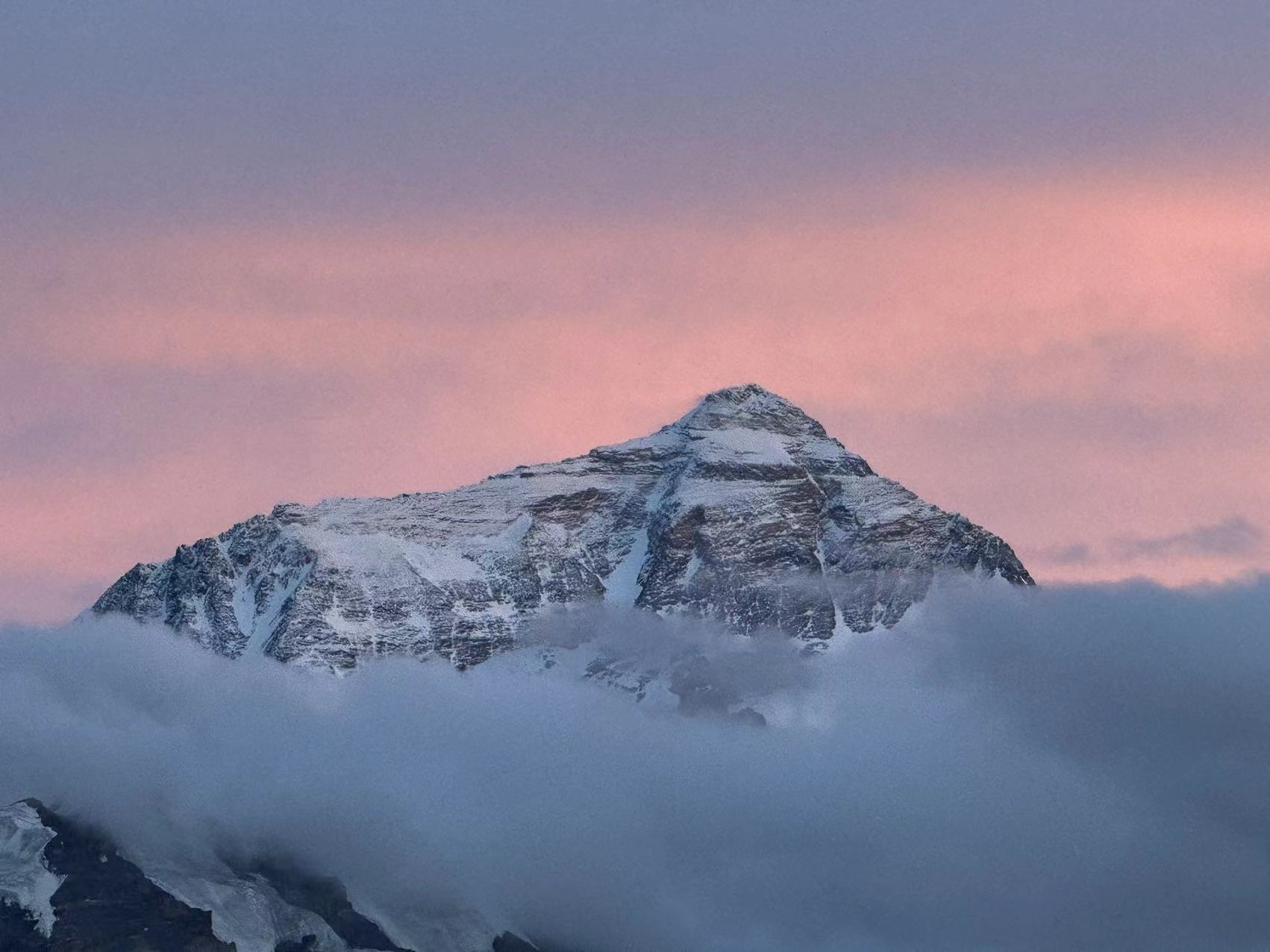
Altitude. Zanda County sits at approximately 3,700 meters. Manasarovar is at 4,590 meters. The road passes over higher points than that. Acclimatize in Lhasa first and don’t push it.
Accommodation. In Zanda County near Guge, accommodation is basic but functional. Guesthouses rather than hotels. Your tour agency will handle bookings in advance, and you should confirm what’s included.
Food. Western Tibet is remote. You’ll eat at small local restaurants along the route, and food options are limited compared to Lhasa. Think simple Chinese and Tibetan food. It’s fine. It’s not the highlight.
Mobile data and internet. Connectivity in Ngari is limited. Download offline maps and whatever you need before you leave Lhasa.
Photography. The Guge Kingdom ruins are extraordinary for photography, particularly at golden hour. The murals inside the temples are sometimes no-flash and no-tripod zones. Respect those rules.
Physical condition. This is not a demanding trek, but the road conditions, altitude, and duration require reasonable fitness. You need to be comfortable with long driving days on unpaved roads and able to walk the hillside paths at the Guge site.
Who is this journey for?
Honestly? Not everyone. And that’s fine.
The Ngari overland journey is for travelers who have a genuine interest in the place rather than the itinerary. It’s for people who find the history of the Guge Kingdom as interesting as the landscape. It’s for those who are comfortable with basic accommodation and some physical challenge, and who don’t need a resort at the end of each day.
It’s also for travelers who’ve already done central Tibet and want to understand something deeper about what this plateau holds.
If any of that sounds like you, the Ngari overland journey is probably exactly what you’re looking for.
Other Tibet routes worth combining or considering
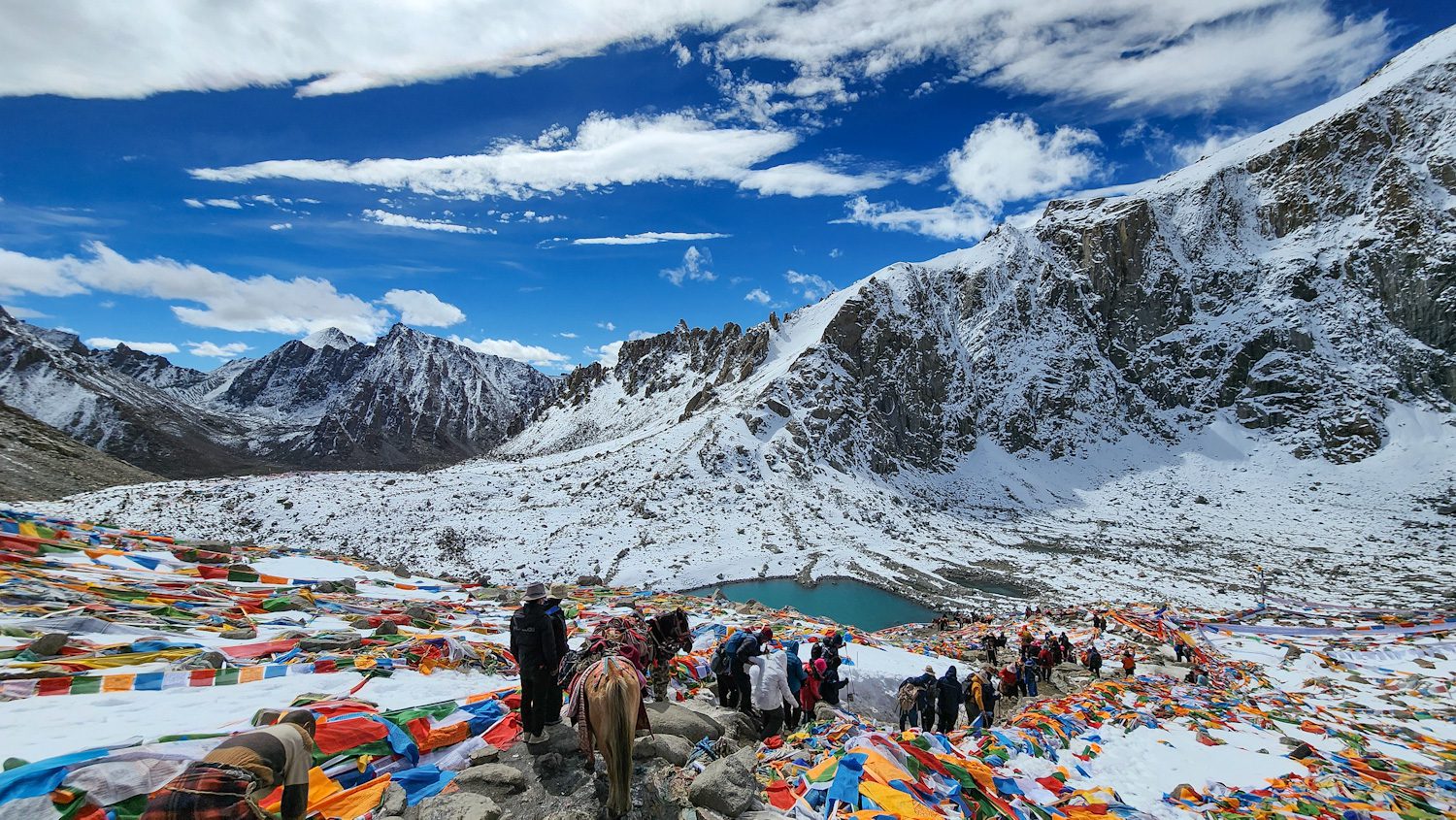
If the Ngari overland journey feels like too long a commitment for your first trip to Tibet, there are other routes that give you a serious introduction to the plateau before you take on the full western route.
The 15-Day Mt Kailash Trekking Tour combines Lhasa, Everest Base Camp, and the Kailash kora with actual trekking, starting from US$1,972. It’s a more physically demanding option that adds real walking to the overland drive.
For a first-time Tibet experience that still gets off the standard Lhasa circuit, the 10-Day Lhasa, Everest, Namtso Tour covers three very different landscapes in a manageable timeframe. Many travelers come back a second time for Ngari after doing this one first.
And if you want to understand how the permit system works before committing to the full Ngari overland route, the Tibet Travel Permit guide is a good starting point.
FAQs about the Ngari overland journey and Guge Kingdom
Can independent travelers do the Ngari overland journey?
No. Foreign visitors to Tibet must travel with a registered Tibetan travel agency, and the Ngari Prefecture requires additional permits beyond the standard Tibet Travel Permit. Your agency handles all of this.
Is the Guge Kingdom ruins site safe to visit?
Yes. The paths and temple interiors are accessible and maintained. The hillside climb to the royal palace requires reasonable fitness but is not technical.
Do I need special altitude medication for the Ngari overland journey?
Talk to your doctor before traveling. The route reaches altitudes above 4,500 meters at several points. Your tour agency will build in acclimatization time, but individual responses to altitude vary.
How many people visit Guge Kingdom each year?
Visitor numbers are not publicly tracked in detail, but it’s one of the least-visited major archaeological sites in Tibet. You’ll often have sections of the ruins entirely to yourself.
What is the closest airport to the Guge Kingdom ruins?
Ngari Gunsa Airport, located near Ali city. From there it’s approximately 250 kilometers by road to Zanda County and the Guge ruins, which takes around 6 to 7 hours.
Ready for the Ngari overland journey?
Most travelers who come to Tibet leave having seen something genuinely extraordinary. The Ngari overland journey is for those who want to take that further.
The Guge Kingdom ruins are some of the most significant and least-visited archaeological sites in all of Asia. The road to get there is one of the great overland routes on the planet. The landscape in between belongs to a part of the world that very few people ever see.
Experience Tibet has been running tours to western Tibet for over 15 years. Our guides know these roads and these ruins personally. We handle all permits, logistics, accommodation, and the acclimatization schedule so that you can focus entirely on what you came for.
View the 17-Day Mt Kailash & Guge Kingdom Tour from Lhasa — from US$2,530 per person, all permits included.
Or contact us directly on WhatsApp (+86 158 2853 5300) or through our contact page if you want to talk through a custom itinerary. We’re based in Lhasa. We know this route.