 About
About









 Tibet Tours
 Tibet Train Tours
 Himalaya Tours (Tibet-Nepal-Bhutan)
 Private Tours
 Mount Kailash Tours
 Trekking Tours
 Travel Guide
 Tibet Travel Blog
 FAQ
FAQ About us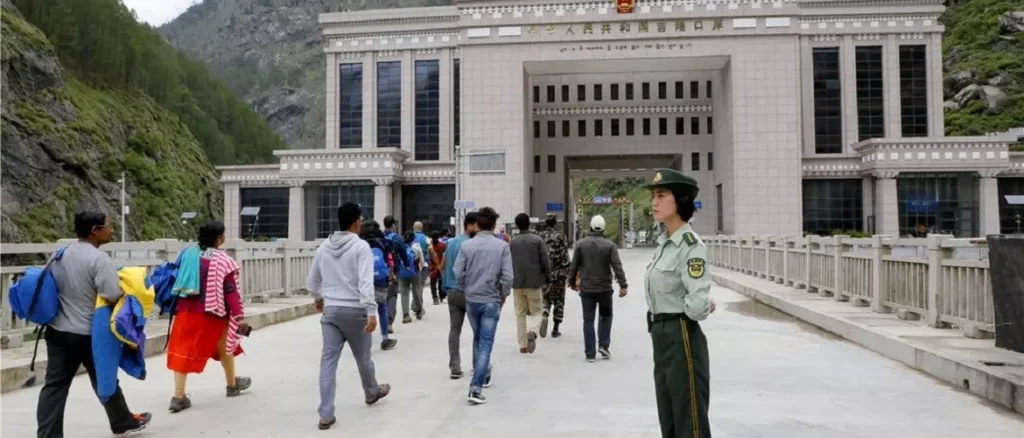
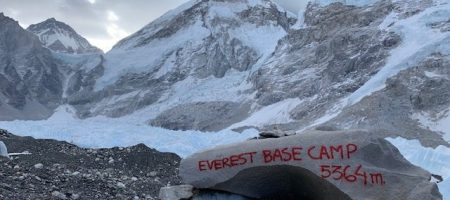
⚠️ Update: Everest Base Camp Status Changed (September 20, 2026)
After initial Everest Base Camp Tibet Reopening announcements on September 15, 2026, Everest Base Camp access from the Tibet side became temporarily unavailable again due to operational and access restrictions.
Read the latest news about Everest here: Everest Base Camp Tibet: Reopening 2026 – Permits & Latest Updates
⚠️ Latest Tibet–Nepal Border Update — September 15, 2026
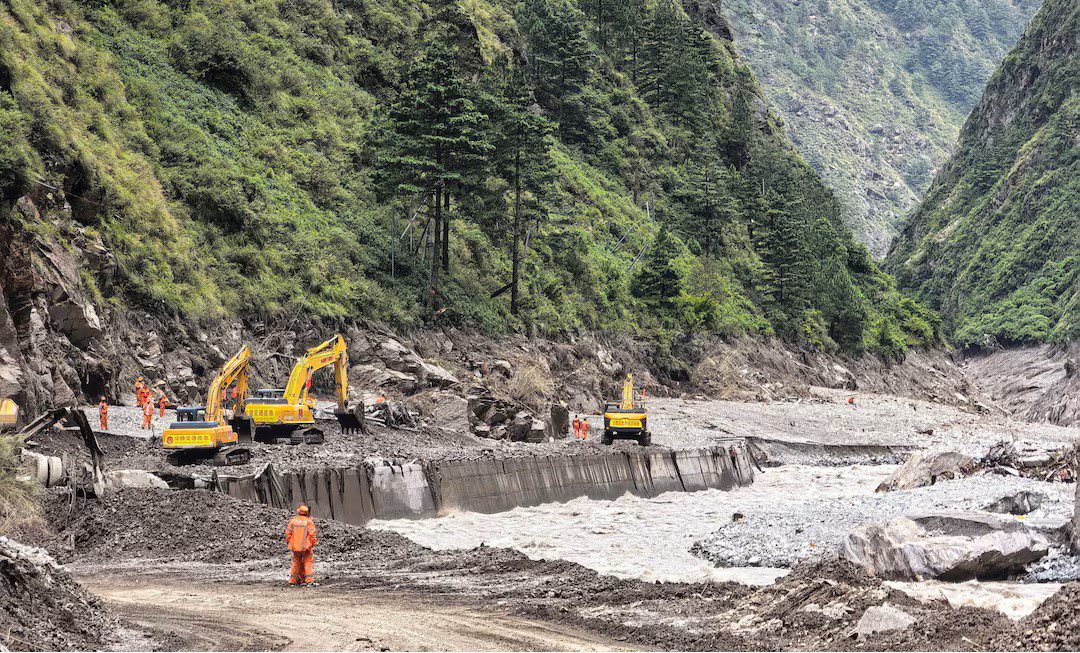
Travel conditions in western Tibet are improving following the August 26 flooding at Gyirong, but the Tibet–Nepal land border is currently not available for tourist crossings.
Gyirong Port remains unavailable for normal tourist crossings following the severe flood damage. Although road access in parts of the affected area has improved, this should not be understood as a reopening of the Gyirong border crossing.
Zhangmu Port may become an alternative crossing while Gyirong remains unavailable, but it is not currently open for tourist crossings and no reopening date has been confirmed.
We are closely following updates from our local partners and will update this page as soon as there is confirmed information.
There are, however, positive updates for travel within western Tibet:
- Everest Base Camp (EBC): permit applications are available again.
- Saga and the route toward Ngari: the road is passable again according to our latest local operational update.
- Gyirong Port: remains unavailable for regular tourist crossings.
- Zhangmu Port: not currently available for tourist crossings and no reopening date has been confirmed.
Because border procedures and road conditions can change at short notice, travelers planning a Tibet–Nepal overland journey should confirm the latest situation with us before making fixed travel arrangements.
Recommended Tibet Tours Available Now
While the Tibet–Nepal land border remains unavailable, travelers can still explore Tibet through routes currently operating within Tibet. Based on the latest permit and road updates, these are some of our recommended tours:
8-Day Everest Base Camp Tour
Travel from Lhasa through Gyantse and Shigatse to Everest Base Camp on the Tibetan side. EBC permit applications are available again, making this one of the best options for travelers wanting to experience the Himalayas without crossing the Nepal border. View Everest Base Camp Tour →
8-Day Tibet Tour: Lhasa, Tsedang & Namtso
A great alternative for travelers who want to explore Tibet without depending on the Nepal border route. Discover Lhasa, the Yarlung Valley around Tsedang and the spectacular landscapes of Namtso Lake. View Lhasa, Tsedang & Namtso Tour →
15-Day Mount Kailash Kora Tour
For travelers planning a longer journey into western Tibet, the route through Saga toward the Ngari region is passable again according to our latest local update. This itinerary combines Lhasa with the remote landscapes and sacred pilgrimage route around Mount Kailash. View Mount Kailash Tour →
Last updated: September 15, 2026
⚠️ Important travel update — September 2, 2026
Gyirong Port is currently closed following severe flooding on August 26, 2026. The crossing was badly damaged and has no confirmed reopening date. Zhangmu Port was also temporarily closed shortly after due to continuous rain, though we expect it to reopen. Both Tibet–Nepal overland routes are suspended until further notice.
Routes are being adapted as conditions change. If you have a trip planned that uses either crossing, contact us directly.
Current tour options: what’s running, what’s adapted, what’s on hold
Nepal → Tibet: 8-Day Himalayan Adventure from Nepal to Tibet (Lhasa)
This tour was designed for the Nepal → Tibet direction with permits, border logistics, and a Tibetan guide all included. The overland version is currently suspended while land crossings remain closed.
If you still want to travel from Nepal to Tibet right now, flying is the active option. Direct flights between Kathmandu and Lhasa operate regularly and are not affected by the border situation. Contact us and we’ll put together a Kathmandu–Lhasa flight itinerary that works for your dates.
We’re monitoring the Zhangmu reopening closely. The overland version of this tour will resume as soon as a reliable crossing is confirmed. If you have a booking or are planning dates from late 2026 onward, contact us.
Tibet → Nepal: 7-Day Tibet to Nepal Overland Tour
Starting in Lhasa with acclimatization time before heading overland toward Nepal. The overland route is suspended while crossings remain closed. As with the reverse direction, flying Lhasa to Kathmandu is currently the only active way to complete this connection. Talk to us about adapting your itinerary.
We expect this tour to resume overland once Zhangmu reopens. Based on current conditions, we estimate Zhangmu will become the primary alternative to Gyirong in the near term.
8-Day Lhasa to Everest Base Camp Tour: currently rerouted
Shigatse is open and accessible. Everest Base Camp itself is temporarily off-limits. Active groups on this itinerary are currently rerouted after Shigatse to the Tsetang region, which includes Samye Monastery and the Yarlung Valley — one of the most historically significant areas in all of Tibet and one that most travelers on a standard EBC tour never see. If you have this tour booked, your experience is different from what was originally planned, but it’s genuinely not a lesser one.
We’ll update EBC access as soon as it reopens. Contact us for the latest status on your specific dates.
Kailash pilgrims: there’s a route that works right now
Mount Kailash is open. The standard Saga road is currently blocked, so active Kailash groups are traveling via the Northern Grand Route. It’s a longer road but a confirmed working route — and the kora itself is fully accessible.
Note: new Tibet Travel Permit applications for the Shigatse and Ali (Ngari) regions — including Kailash — were temporarily frozen immediately after the August 26 disaster. Travelers with permits already approved can continue their journeys. If your application is pending or you haven’t applied yet, contact us to understand your current options.
We’ve also designed a new itinerary built specifically around the current road conditions:
NEW: 15-Day Tibet Odyssey: Sacred Kailash Kora & Wild Changtang Expedition
A 15-day private loop from Lhasa designed for the current road conditions. The route heads west through Shigatse and across the Northern Tibetan Plateau to reach Ngari — then circles back through the remote Changtang grassland via Dangra Yumco and Namtso before returning to Lhasa.
What you’ll do on this route:
- Walk the full 52 km Kailash Kora over 3 days, crossing Drolma La Pass at 5,630 m
- Visit Lake Manasarovar and the sacred Bon lake Dangra Yumco — rarely visited by standard tours
- Drive through the wild Changtang plateau spotting Tibetan antelopes, wild yaks, and kiangs
- Explore the ancient Zhangzhung traces in Wenbu South Village beside Dangra Yumco
- End the loop at Namtso lake before returning to Lhasa on Day 14
This itinerary uses the Northern Grand Route — the confirmed working route to Kailash right now. All permits are handled. Departures available for travelers with approved permits for the Ali region.
View tour page For the full itinerary, availability, and pricing
All other Tibet tours: running normally
Lhasa city tours, Tibet train tours, and all itineraries that don’t route through the Nepal border or the temporarily restricted areas are operating without disruption.
Browse all available Tibet tours →
The Nepal to Tibet border crossing Gyirong was, until August 2026, the main overland gateway for travelers going between Kathmandu and Tibet. And it was also the part of the journey that caused the most stress — because it was never “just drive up and cross.” Documents, timing, inspections, weather variables, altitude changes that hit fast.
This guide still covers how that crossing works in practice, what’s changed since August 26, 2026, and how we’re adapting for travelers who still want to connect Tibet and Nepal. That connection isn’t gone. It’s just taking a different shape right now.
Still deciding between flying and going overland? Read our complete guide to routes, flights, and permits here: How to travel from Nepal to Tibet
Quick answers (for people who just want the essentials)
Is Gyirong (Kyirong) still the main Nepal–Tibet border crossing?
Not right now. Gyirong Port was destroyed by flooding on August 26, 2026, and is currently closed with no confirmed reopening date. Zhangmu Port, the alternative crossing, was also temporarily closed due to continuous rain but is expected to reopen. Once a crossing reopens, this guide will tell you which one to use.
Can I cross from Nepal to Tibet independently?
No. International tourism in Tibet requires arranging permits and traveling with a registered agency. This applies regardless of which crossing is open.
How many days do I need minimum for the overland crossing?
When crossings are operating, plan for a multi-day process, not a single quick border stop. Road times are long, border hours matter, and buffer days save trips. Right now, overland crossings are suspended — contact us to discuss your travel dates and alternatives.
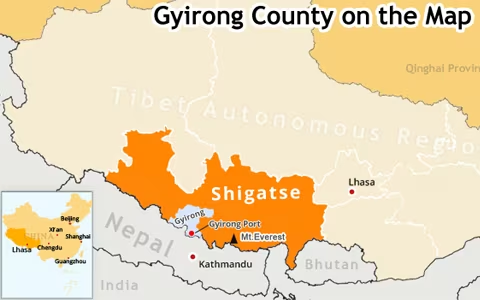
1) Gyirong, Kyirong, Gyirong Port… what’s the difference?
You’ll see multiple spellings across travel sites:
- Gyirong (common in English-language sources)
- Kyirong (another valid transliteration of the same Tibetan name)
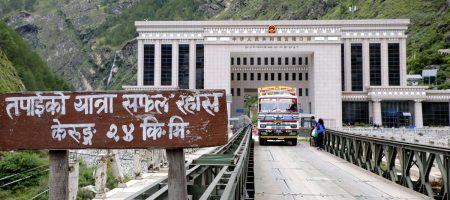
- Gyirong Port (the official border crossing area)
All of them refer to the same place. As of August 2026, that place has suffered major structural damage from flooding and is not operational.
2) What happened on August 26, 2026
Severe monsoon flooding hit the Gyirong area on August 26, 2026, destroying the border infrastructure. The crossing is currently inoperable.
Zhangmu Port, the other Tibet–Nepal land crossing, was also temporarily closed shortly after due to persistent rain on the approach roads. We expect Zhangmu to reopen. Based on how the situation is developing, our best current assessment is that Zhangmu will become the primary overland alternative to Gyirong in the near term.
Tibet travel policies have shifted regularly since the pandemic, and this situation is no different. Conditions are being monitored closely. Here’s the specific picture as of early September 2026:
- Gyirong Port: Destroyed. No confirmed reopening date.
- Zhangmu Port: Temporarily closed due to continuous rain. Expected to reopen.
- Mount Kailash: Open and accessible. The Saga (萨嘎) road is currently blocked, so active Kailash groups are traveling via the Northern Grand Route (大北线).
- Everest Base Camp: The Shigatse region is open, but EBC itself is temporarily inaccessible. Our 8-day Lhasa to EBC tours are currently rerouted to the Tsetang region after Shigatse — which includes Samye Monastery and the historically significant Yarlung Valley.
- Permits for Shigatse and Ali regions (including Kailash): New applications are temporarily frozen following the disaster. Travelers with permits already approved can continue their journeys.
We’re updating itineraries in real time. If you have a trip planned or are considering one, contact us and we’ll give you the current picture honestly.
3) Nepal ↔ Tibet via Gyirong: the route in one glance
This section covers how the overland crossing worked — and will work again when crossings reopen. It’s still relevant for planning ahead.
Nepal → Tibet
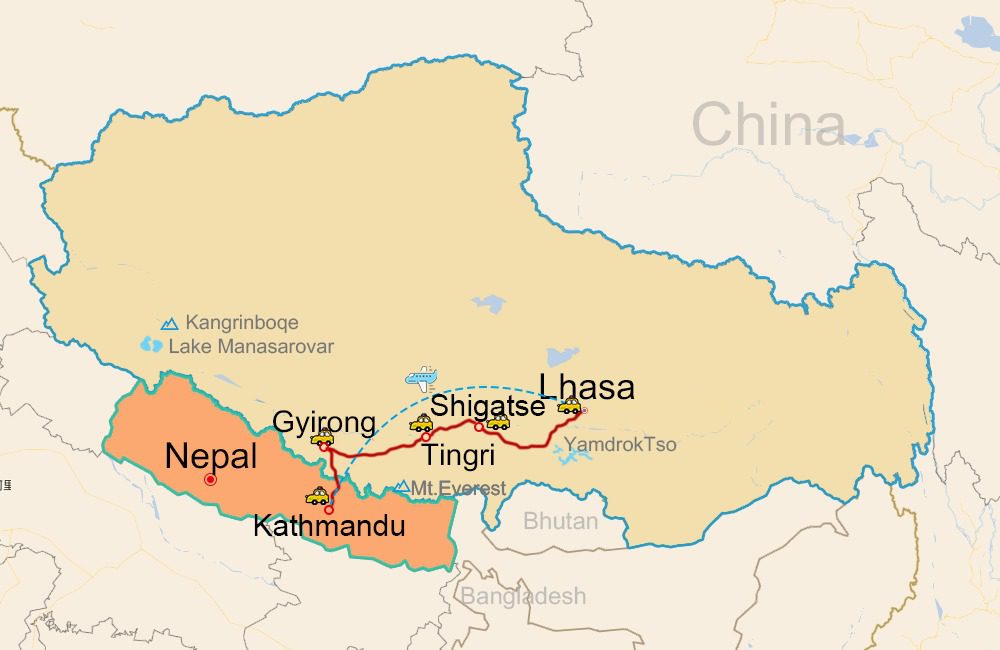
Kathmandu → Rasuwa Gadhi (Nepal side) → Gyirong Port (Tibet side) → onward through the Shigatse region → Lhasa
Overland travel involved long days on rough roads, an overnight stop near the crossing area, and a full day’s drive on the Tibet side before reaching Shigatse. It was not a quick transit.
Tibet → Nepal
Lhasa → Shigatse → Gyirong area → Gyirong Port → Nepal side → Kathmandu
If you’re looking for a ready-made route in this direction, ExperienceTibet has a 7-day Tibet to Nepal overland tour that starts with arrival and acclimatization in Lhasa. This tour is currently suspended while crossings remain closed, but will resume as soon as a reliable route is confirmed.
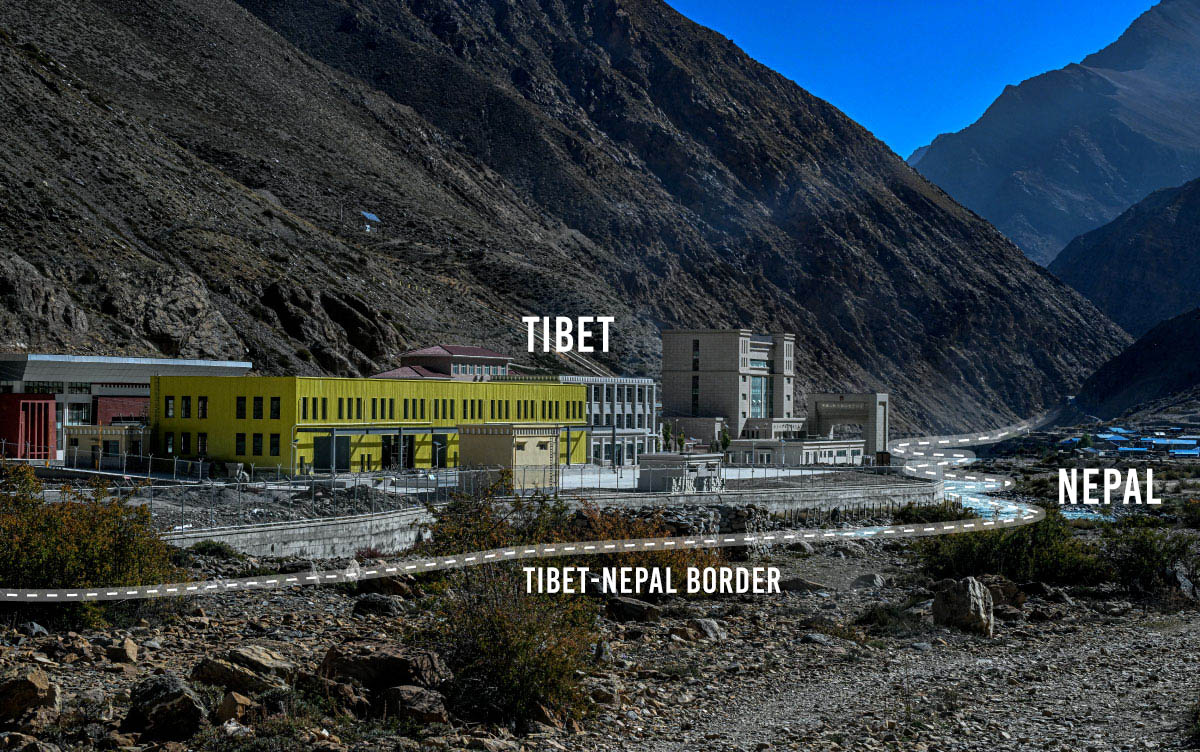
4) Step-by-step: Nepal to Tibet border crossing at Gyirong (Kyirong)
This is the “what actually happens” section. The procedures below reflect how the crossing operated and will operate again. Keep this as your planning reference for when the route reopens.
Step 1: The night before — plan for an early start
If you start late, two problems stack up fast:
- You reach the border too close to closing time
- Any small delay becomes a large one
Tip: Keep the crossing day clear. No fixed activities, no tight commitments.
Step 2: Before leaving Kathmandu — your crossing-day checklist
- Passport (plus physical copies)
- China visa / visa documents (rules vary by nationality — confirm with your agency)
- Tibet Travel Permit (your agency arranges this with your booking)
- Extra passport photos (just in case)
- Cash
- Snacks and water
- Power bank
- A warm layer — weather changes fast in the Himalayas
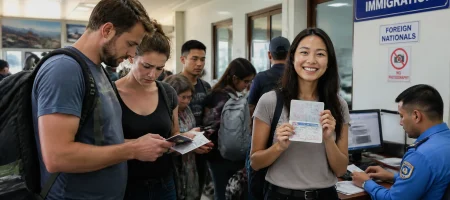
Step 3: Arriving near the border — expect waiting and checks
Queues, document checks, and baggage inspections are normal. The key is arriving with enough time that none of these become a crisis.
Step 4: Crossing — go through the required immigration and customs steps
You’ll move through multiple checkpoints on both sides. Keep documents in an accessible inner pocket, not buried deep in your bag. You’ll need them several times.
Step 5: After you enter Tibet — onward transfer and the altitude reality
Two things happen quickly once you’re on the Tibet side:
- Logistics: vehicle transfers and onward travel coordination
- Altitude: you feel the change, especially coming from lower elevation in Nepal
This is why good itineraries build in buffer time near the border rather than rushing straight to Lhasa.
Step 6: Common mistakes that cause delays
- Arriving at the border too late in the day
- Missing document copies
- Packing your passport or permit at the bottom of your bag
- Booking tight activities or connections on the crossing day

5) Documents & requirements (2026): what you must have ready
Tibet Travel Permit is mandatory
You need a Tibet Travel Permit arranged before you travel. You cannot arrive at any entry point and sort it out on the spot. ExperienceTibet handles this as part of every tour booking.
Note: as of late August 2026, new permit applications for the Shigatse and Ali (Ngari) regions are temporarily frozen while authorities assess the situation. Lhasa-only permits continue to be processed normally. If you’re unsure whether your planned itinerary is affected, contact us and we’ll check for you.
For a broader overview of routes, distance, and planning basics: Nepal–Tibet Travel overview
China visa rules vary by nationality
Some travelers need a standard China visa; others have different arrangements depending on current bilateral policies. Confirm your specific situation with your agency before booking international flights.
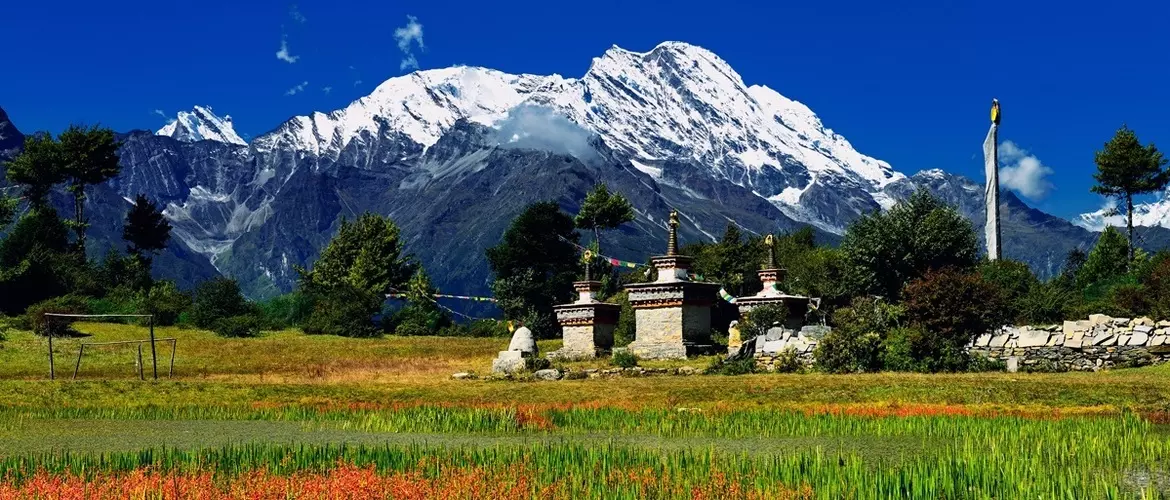
6) When not to go overland: monsoon season, landslides, and temporary closures
The August 2026 flooding is an extreme version of a risk that was always there. The Nepal–Tibet overland route passes through one of the most geologically active regions on the planet. Monsoon season — roughly July to October — brings landslides, road damage, and unpredictable border closures.
The practical rules haven’t changed:
- Build at least one buffer day into any overland plan
- Have a backup option ready — alternate crossing or flying — before you depart
- Don’t treat the border crossing as a fixed appointment you absolutely cannot miss
- Work with an agency that monitors ground conditions in real time, not one that set your itinerary months ago and left it unchanged
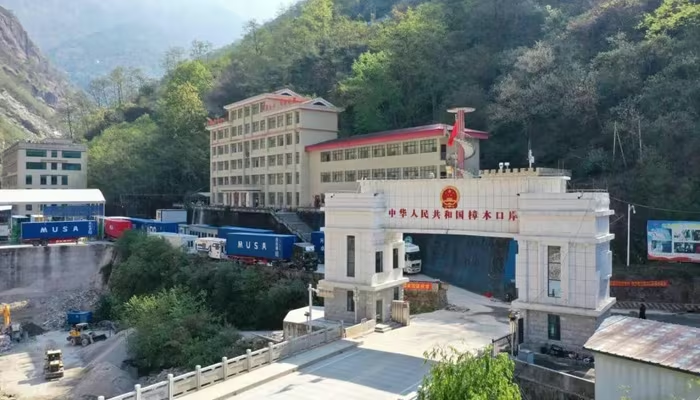
7) Gyirong vs Zhangmu: which border crossing makes sense now?
This question has a different answer in September 2026 than it did six months ago.
Gyirong Port was, until this year, the preferred crossing for international travelers — lower altitude approach, better road condition history, and established logistics. It is currently destroyed and has no confirmed reconstruction timeline.
Zhangmu Port sits at a higher elevation. The road down to the Nepal side is steeper and more exposed to landslide risk during monsoon. It was the primary crossing before Gyirong reopened after the 2015 earthquake. Based on what we’re seeing on the ground, our current expectation is that Zhangmu will reopen and serve as the main overland alternative in the near term.
As conditions become clearer, we’ll update this article. If you’re planning a trip and need current information before we publish it here, contact our team directly.
8) Packing, money, and phone tips that make the crossing easier
Pack like you’re going through multiple checks
- Keep documents and essentials in a small accessible daypack
- Avoid overpacking — heavy luggage becomes a problem fast at altitude
Power matters more than you think
A dead phone at the border is unnecessary stress. Bring a power bank and the right cables for your devices.
Keep some cash
Cards and mobile payments work well in Lhasa and Kathmandu. At the border area itself, cash is more reliable for small needs.
10) FAQ
Can I cross the Nepal–Tibet border without booking a tour?
No. Tibet travel requires permits and organized arrangements through a registered agency. You cannot cross independently.
How long does the Gyirong (Kyirong) crossing take?
When operating: plan for a full travel day, not a quick transit. Queues, document checks, and road conditions all add time. Right now the crossing is closed — see the update above for current alternatives.
What if the border closes last minute?
August 2026 is the answer to that question. Buffer days and a Plan B are not optional — they’re what separates a good trip from a cancelled one. Work with an operator who monitors conditions actively.
When will the Nepal-Tibet overland route reopen?
We don’t have a confirmed date for Gyirong. Zhangmu is expected to reopen sooner and will likely become the primary crossing in the near term. We’ll update this article when confirmed dates are available. For real-time information, contact our team.
Is it better to travel Nepal → Tibet or Tibet → Nepal?
When crossings are open, direction affects altitude management more than anything else. Nepal to Tibet means ascending quickly — you need to pace it. Tibet to Nepal is a descent, physiologically easier but with the same road and logistics variables. Either way, a local operator who knows the current conditions is what makes the difference.
Final note
The Nepal to Tibet overland route is one of the great Himalayan journeys. A damaged border crossing changes the timing, not the destination.
We’ve been running these routes for 15 years. Policy changes, border closures, earthquake damage, flooding — we’ve navigated all of it. We’ll navigate this too, and so will you with the right planning.
If you’re planning a Tibet trip that involves Nepal crossings, Kailash, or Everest — tell us your dates and what you’re hoping to see. We’ll tell you honestly what’s possible right now and what’s worth waiting on.