 About
About






 Tibet Tours
 Tibet Train Tours
 Himalaya Tours (Tibet-Nepal-Bhutan)
 Private Tours
 Mount Kailash Tours
 Trekking Tours
 Travel Guide
 Tibet Travel Blog
 FAQ
FAQ About us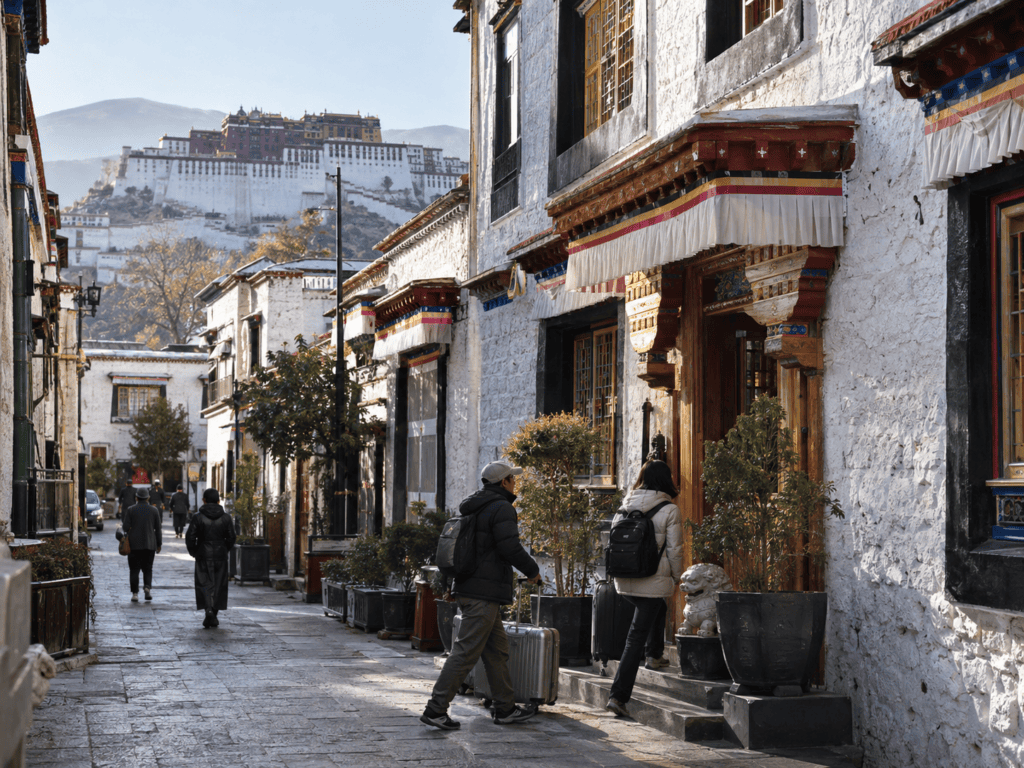
Choosing where to stay in Lhasa looks simple on a map.
Then you arrive at 3,650 meters above sea level and discover that the difference between “five minutes away” and “twenty minutes away” feels rather more important than it did while planning the trip from your sofa.
Location matters here.
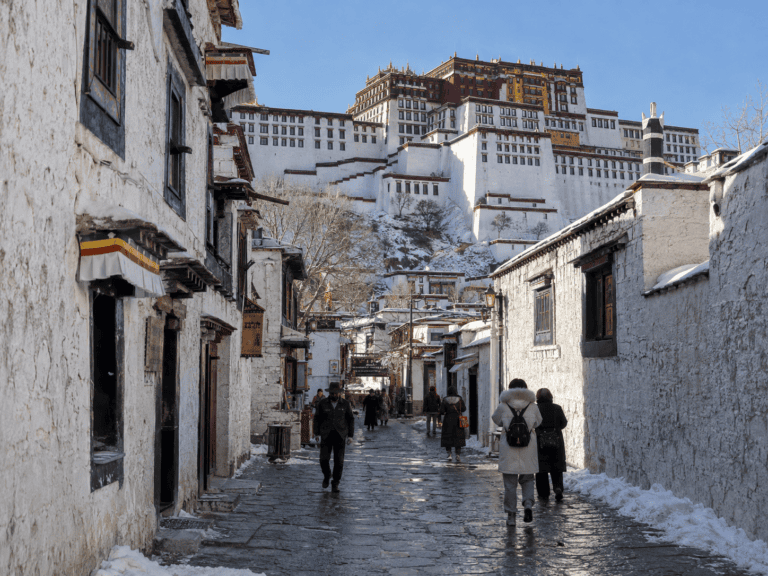
Stay around Barkhor Old Town, and you can step outside into narrow lanes, tea houses and the pilgrim circuit around Jokhang Temple.
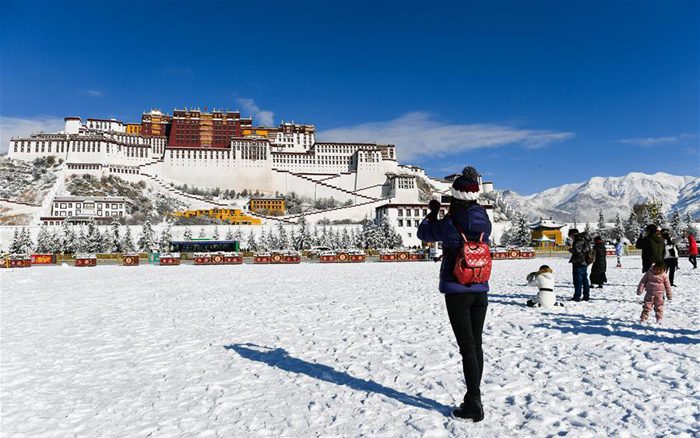
Stay closer to Potala Palace and Beijing Road, and you’ll have a more central urban base with straightforward vehicle access and one of Lhasa’s most famous landmarks nearby.
Or move slightly away from the busiest sightseeing areas and you’ll usually find a quieter setting, often with larger, newer hotels, at the cost of needing more transfers.
So which is best?
There isn’t one correct answer. It depends on how many days you have, how much walking you want to do and what you want Lhasa to feel like when you step out of your hotel.
Where to stay in Lhasa: the quick answer
If you don’t want to read the whole guide, here’s the short version.
| Area | Best for | Main advantage | Main trade-off |
|---|---|---|---|
| Barkhor Old Town | First-time visitors, culture, photography | Walk straight into historic Lhasa | Some lanes can be busier and vehicle access varies |
| Potala / Beijing Road area | Short stays, sightseeing, convenience | Central location and easy transfers | Less old-town atmosphere |
| Quieter modern areas | Longer stays, families, travelers who value rest | More space and calmer surroundings | More taxi or tour-vehicle journeys |
| Outer resort-style hotels | Travelers prioritizing hotel facilities | Larger rooms and grounds | Less convenient for spontaneous Old Town walks |
For most first-time travelers, I’d narrow the decision down to Barkhor Old Town or the Potala area.
They give you easy access to the places you’re probably coming to Lhasa to see in the first place.
If you haven’t planned your sightseeing yet, our What to See in Lhasa guide covers Barkhor Street, tea houses, local food and the city’s main attractions.
Where to stay in Lhasa Old Town: best for atmosphere and walking
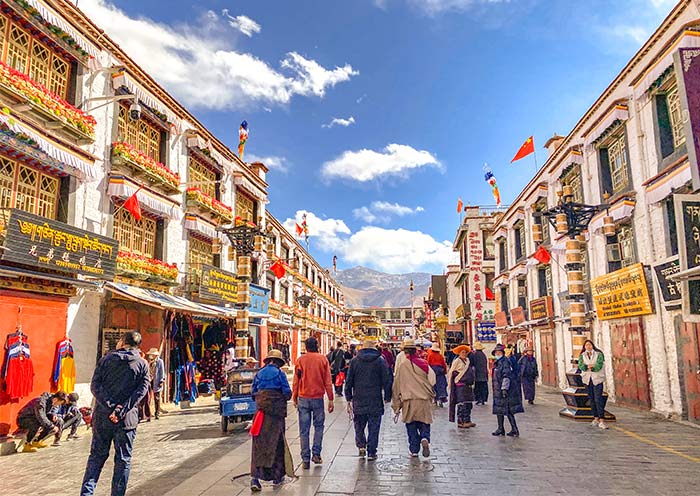
If your idea of Lhasa involves pilgrims, incense, whitewashed buildings and the lanes around Jokhang Temple, stay around Barkhor Old Town.
Barkhor Street circles Jokhang Temple and remains one of the main centers of everyday religious activity in central Lhasa.
Early in the morning, you’ll see pilgrims walking clockwise around the temple. Later, shops open, tea houses fill and the lanes become busier.
And this is the biggest advantage of sleeping here: you don’t have to schedule Old Town as an attraction.
You’re already in it.
Want to take an early walk before breakfast? Easy.
Want sweet tea after your guided sightseeing is finished? Walk outside.
Want to return to Barkhor around sunset rather than squeeze everything into a one-hour sightseeing stop? You can.
For travelers who enjoy wandering on foot, this is difficult to beat.
Who should stay around Barkhor?
Barkhor Old Town works particularly well for:
- first-time visitors who want the strongest sense of old Lhasa;
- photographers;
- travelers interested in Tibetan daily life and Buddhism;
- people who enjoy exploring independently during free time;
- visitors who want restaurants and tea houses within walking distance;
- anyone spending several days in Lhasa rather than treating it purely as a transit stop.
Our What to See in Lhasa guide is useful here because many of the tea houses, markets and local food experiences discussed there are concentrated in or around the Old Town.
What’s the downside?
Historic neighborhoods aren’t designed around modern tour buses.
Depending on the exact location of your hotel, your vehicle may not be able to stop directly outside the entrance. Some lanes are pedestrian-heavy, and a property that looks wonderfully atmospheric in photos may involve a short walk with your luggage.
Noise also depends heavily on the individual street.
A room directly beside a busy pedestrian lane will feel different from one tucked into a quieter side street.
So don’t choose based on “Barkhor” alone. Check the exact location.
Where to stay near Potala Palace: best for an easy central base
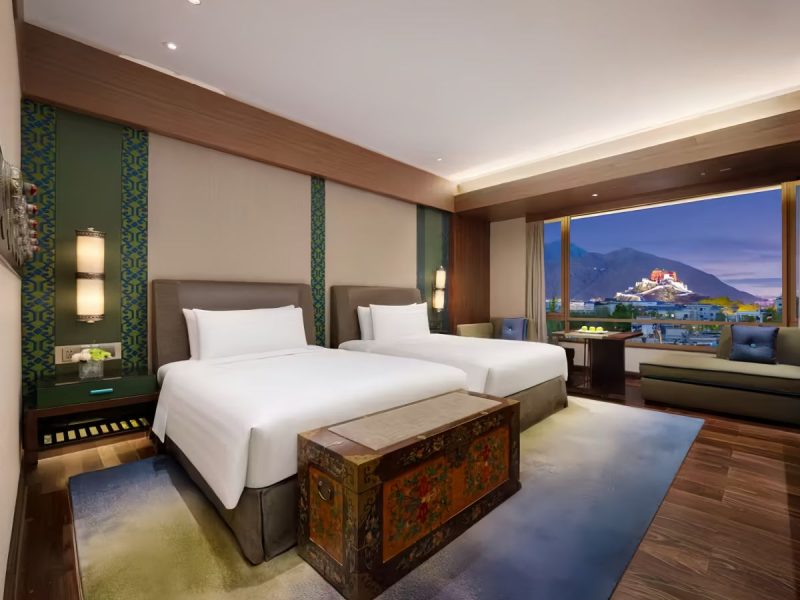
The area around Potala Palace and the Beijing Road corridor is the strongest alternative to Barkhor.
You lose some of the narrow-lane Old Town feeling, but you gain convenience.
Potala Palace sits beside Beijing Middle Road, one of central Lhasa’s main east-west routes. Hotels around this part of the city generally provide easier vehicle pick-up than properties deep inside pedestrian lanes, while Barkhor and Jokhang remain a short transfer away.
That makes this area particularly practical if you only have a few days.
You can visit the Potala, travel easily to Drepung or Sera Monastery with your guide, and still reach Old Town without turning every outing into a cross-city expedition.
Who should stay near Potala Palace?
I’d look here if you’re:
- in Lhasa for only three or four nights;
- traveling with older family members;
- more interested in convenience than staying inside a historic lane;
- planning several guided excursions requiring vehicle pick-ups;
- interested in photographing Potala Palace at different times of day;
- happier with a conventional city hotel than a small traditional guesthouse.
Our 4-Day Lhasa Holy City Tour follows exactly this kind of short Lhasa itinerary, with Potala Palace, Jokhang Temple, Barkhor Street, Drepung and Sera included.
Does staying near Potala mean you’ll have a Potala view?
No.
This is worth saying because hotel names can be creative.
“Potala Palace Hotel”, “Potala View”, “near Potala” and similar wording doesn’t guarantee you’ll open the curtains and find the palace filling your window.
Actual views depend on the building, room orientation, floor and what sits between you and Red Hill.
If the view matters to you, ask about the specific room category, not simply whether the hotel is “near Potala”.
Where to stay in Lhasa if you want somewhere quieter
Maybe you’ve already spent two weeks crossing China.
Maybe you’re traveling with children.
Maybe you simply don’t need pilgrims, scooters, shops and restaurant activity outside your window at 7:00 in the morning.
In that case, moving outside the immediate Barkhor and Potala sightseeing zone can make sense.
Lhasa has newer districts with wider roads and modern hotels. Some larger properties sit farther from Old Town and provide more space, larger public areas and a calmer setting.
The trade-off is obvious: you’ll rely more on vehicles.
That isn’t necessarily a problem on an organized Tibet tour because transport between your hotel and scheduled attractions is normally arranged.
But it changes what you can do during your free time.
In Barkhor, you can walk outside for twenty minutes and find yourself watching pilgrims circle Jokhang Temple.
Farther away, that same impulse probably starts with calling a taxi.
A quieter area works well for:
- families;
- travelers staying longer in Lhasa;
- travelers who prioritize room size and hotel facilities;
- people who sleep lightly;
- anyone who doesn’t plan to explore independently after the guided program;
- travelers who prefer modern hotels over historic-style accommodation.
It can also work well before or after a longer journey to Shigatse, Everest or Kailash when a comfortable rest day matters more than being in the middle of Old Town.
Where to stay in Lhasa during your first days at altitude
This deserves more attention than whether your hotel has a rooftop terrace.
Lhasa sits at around 3,650 meters, and your first day should be easy.
Experience Tibet’s itineraries deliberately begin with arrival, transfer to the hotel and time to rest before the main sightseeing starts.
That’s why I wouldn’t choose accommodation that adds unnecessary effort to your first 24 hours.
A charming guesthouse reached by climbing several flights of stairs may sound wonderful at sea level.
You may feel differently after arriving in Lhasa.
Look at practical things:
- Does the hotel have a lift?
- How far do you need to walk from vehicle drop-off to reception?
- Are there stairs before you even reach your room?
- Can you eat at or near the hotel if you don’t feel like going out?
- Is breakfast included?
- Is the room properly heated during winter?
- Is the room away from excessive street noise?
- What support can the hotel provide if a guest feels unwell?
And give yourself time.
Don’t arrive, throw your luggage onto the bed and immediately attempt to speed-walk to the Potala because the sunset looks nice.
The palace will still be there tomorrow.
For a fuller explanation of acclimatization and what symptoms to watch for, read our Altitude Sickness in Tibet guide.
What about hotels with oxygen rooms in Lhasa?
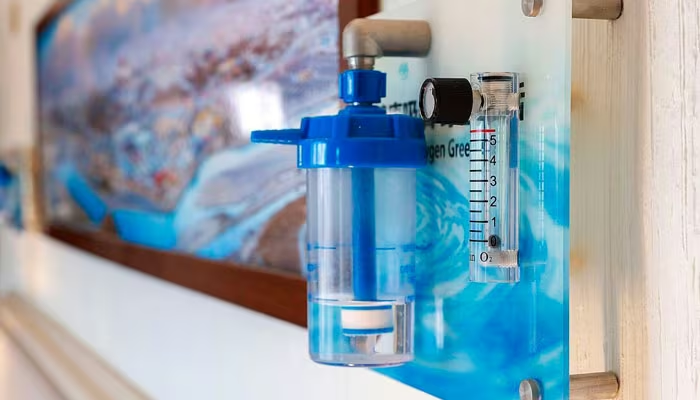
You’ll see oxygen mentioned frequently when searching for Lhasa accommodation.
Some modern hotels advertise oxygen equipment, oxygen-enriched rooms or oxygen available on request.
It can sound reassuring, especially if this is your first high-altitude trip.
But don’t choose your entire hotel around one word in a booking description.
First, find out what the hotel actually means by “oxygen”. Systems and availability differ between properties.
Second, hotel oxygen isn’t a substitute for sensible acclimatization or medical care if you’re genuinely unwell.
Your first days should still be paced carefully.
And if you have a heart, lung or other medical condition that could be affected by altitude, talk to your doctor before traveling.
Older travelers may also find our Tibet Tours for Seniors guide useful because it covers pacing, accommodation and the practical side of visiting Lhasa at altitude.
Barkhor Old Town vs Potala area: which would I choose?
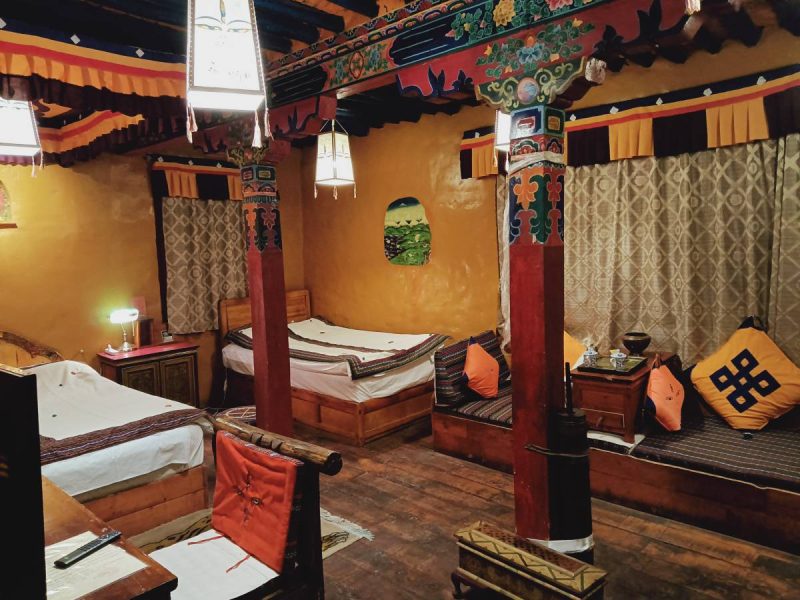
For a first trip with four or five days in Lhasa, I’d choose based on personality.
Choose Barkhor if this sounds like you:
“When the tour finishes, I want to walk around, find a tea house, photograph the lanes and see what is happening outside.”
Choose the Potala area if this sounds more familiar:
“I want a comfortable central base, easy vehicle access and simple logistics between sightseeing days.”
Neither choice leaves you stranded on the wrong side of the city.
Central Lhasa is compact enough that the main sightseeing areas remain reasonably close by vehicle.
This isn’t London or Tokyo. You don’t need to spend three hours studying metro maps to decide where to sleep.
The difference is about atmosphere and convenience.
Where to stay in Lhasa for a short trip
If you have only three or four nights, stay centrally.
The Potala/Beijing Road area is particularly practical because you’re well placed for guided sightseeing and transport.
Barkhor also works if you’d rather maximize free time in Old Town.
What I wouldn’t do on a very short trip is save a small amount on a hotel far from the center and then spend part of every free morning and evening traveling back to the places you came to see.
Location has more value when your time is limited.
Our 4-Day Lhasa Holy City Tour is built for exactly this type of traveler.
It includes:
- Potala Palace;
- Jokhang Temple;
- Barkhor Street;
- Drepung Monastery;
- Sera Monastery.
Accommodation and attraction transfers are included, so you don’t need to organize transport between every sightseeing stop yourself.
Where to stay in Lhasa for five days or more
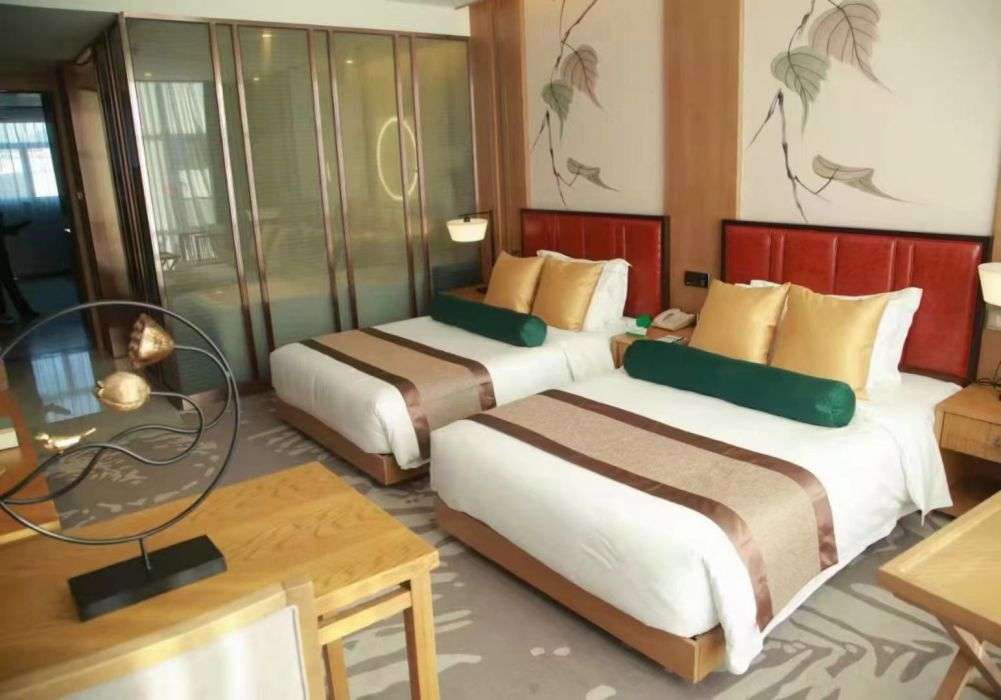
With more time, you have more freedom.
You can stay in Old Town and enjoy Lhasa slowly, or choose a quieter hotel because losing ten or fifteen minutes to a transfer isn’t going to ruin the trip.
A five-day stay also gives you enough time to combine Lhasa with somewhere outside the city.
Yamdrok Lake is one of the easiest additions.
Our 5-Day Lhasa & Yamdrok Lake Tour spends the first part of the trip exploring Lhasa before traveling to Yamdrok Lake and returning to the city.
For this type of itinerary, I’d prioritize a comfortable room and convenient tour-vehicle access over being directly on Barkhor Street.
Once you start making day trips, your hotel becomes a base as much as a sightseeing location.
What type of hotel should you choose in Lhasa?
Location is only half of the decision.
Think about the style of hotel too.
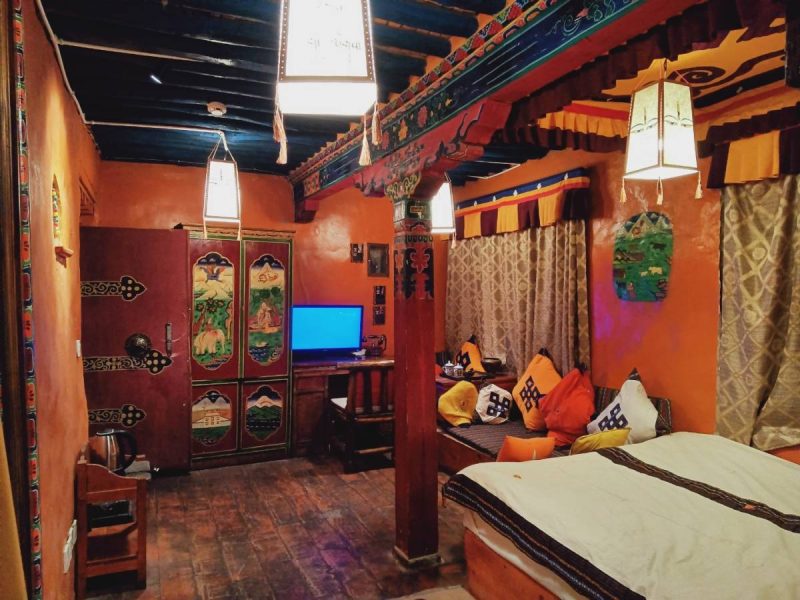
Traditional-style guesthouses
These make most sense around Old Town.
They’re appealing if atmosphere matters to you, and some occupy buildings with Tibetan decorative details, courtyards and rooftop spaces.
But check practical facilities carefully.
Pretty wooden stairs remain stairs.
Mid-range hotels
For most travelers, this is the sweet spot.
You get a private bathroom, breakfast, heating and the sort of straightforward comfort you appreciate after a day walking around monasteries.
Experience Tibet’s current Lhasa tours use premium 3- or 4-star hotels, with the exact property subject to the tour and departure.
Higher-end hotels
Luxury properties make sense if you want larger rooms, more hotel facilities and a quieter place to rest between sightseeing days.
They can be particularly appealing at the beginning or end of a longer Tibet trip.
Just remember that a wonderful hotel on the edge of the city isn’t automatically a wonderful location for walking around Old Town.
Choose what matters more to you.
Where does Experience Tibet normally place travelers in Lhasa?
On current Experience Tibet itineraries, accommodation is included as part of the tour.
For example, both the 4-Day Lhasa Holy City Tour and 5-Day Lhasa & Yamdrok Lake Tour currently list the Gang-Gyan Hotel Lhasa or similar, with premium 3- or 4-star accommodation included.
“Or similar” matters because hotel allocations can change according to departure date, group requirements and availability.
That’s why we recommend confirming the exact property for your departure rather than relying on an old blog article or review from someone who traveled several years ago.
The advantage of having the accommodation organized together with the tour is that the hotel, transfers and sightseeing schedule are planned as one itinerary.
You don’t need to discover after booking that your beautifully reviewed hotel is awkward for every morning departure.
How much should location influence your Lhasa hotel budget?
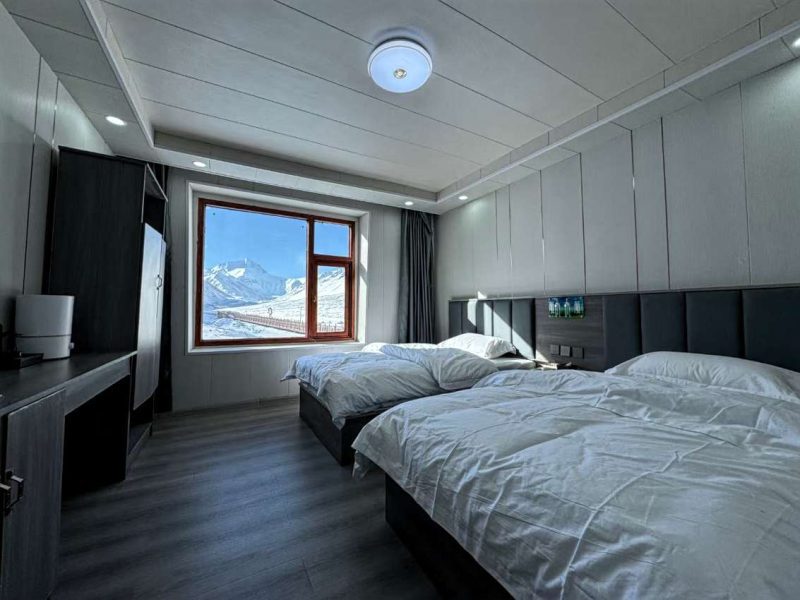
More than it would in many ordinary city breaks.
Paying slightly more for a useful location can save you repeated transport and give you much more freedom during unscheduled hours.
But paying a premium simply because a hotel’s name includes “Potala” doesn’t automatically make sense either.
Compare:
- room quality;
- exact location;
- breakfast;
- vehicle access;
- heating;
- lift access;
- cancellation terms;
- what is actually included;
- whether the hotel is part of your tour package already.
If you’re trying to estimate the whole trip rather than just accommodation, see our Tibet Trip Cost 2026 guide.
And check your tour inclusions before independently booking a room. You may already be paying for accommodation through the tour package.
Where to stay in Lhasa in winter
Winter changes the equation slightly.
A warm room and good heating suddenly become much more interesting than a rooftop terrace.
Days can be sunny, but mornings and evenings are cold. You may also spend more time returning to the hotel between outings instead of staying outside all day.
For winter, I’d prioritize:
- reliable heating;
- hot water;
- comfortable bedding;
- breakfast on site;
- easy vehicle access;
- a room that doesn’t require a heroic climb up five flights of stairs.
Barkhor remains atmospheric in winter, especially with fewer visitors.
But a centrally located modern hotel can be very comfortable if you’re using Lhasa as a base for winter sightseeing.
If you’re traveling between October 15, 2026 and March 15, 2027, also read our Winter Tibet 2026–2027 guide for the current winter tourism policy and seasonal attraction information.
The area I’d recommend by traveler type
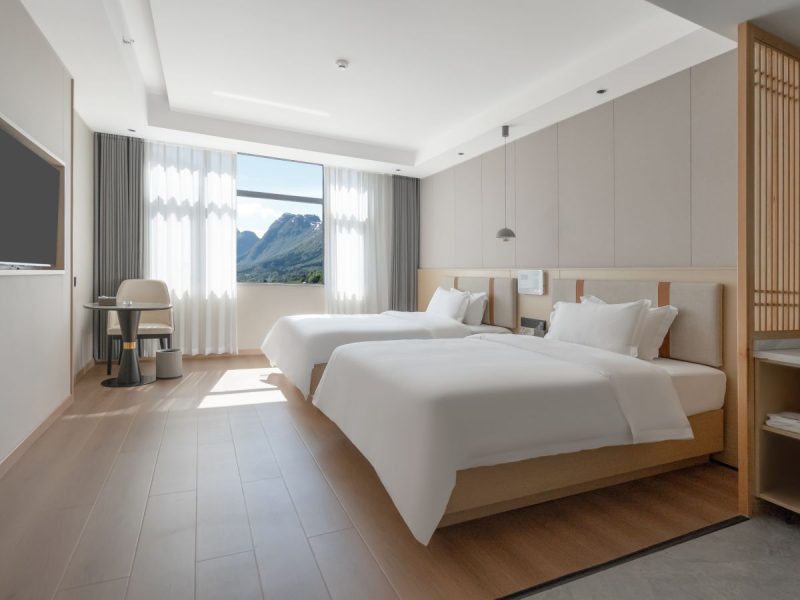
Still undecided?
Here’s how I’d match the areas.
| Traveler | Where I’d look first |
|---|---|
| First trip to Tibet | Barkhor or Potala area |
| Photographer | Barkhor Old Town |
| Couple wanting atmosphere | Barkhor |
| Senior traveler | Potala/central area with easy vehicle access and lift |
| Family | Central modern hotel or quieter area |
| Very short stay | Potala/Beijing Road |
| Long stay | Barkhor or quieter modern district |
| Winter traveler | Central hotel with strong heating and easy transport |
| Luxury-focused traveler | Larger hotel outside the tightest Old Town lanes |
| Repeat Lhasa visitor | Barkhor side streets or a quieter neighborhood |
The best hotel isn’t always the fanciest one.
It’s the one that fits how you actually plan to spend your days.
Frequently asked questions about where to stay in Lhasa
What is the best area to stay in Lhasa for first-time visitors?
For most first-time visitors, Barkhor Old Town or the area around Potala Palace makes the most sense.
Barkhor gives you the strongest local atmosphere and easy access to Jokhang Temple and the Old Town. The Potala area gives you a convenient central base with good vehicle access.
Is it better to stay near Barkhor Street or Potala Palace?
Stay near Barkhor if you enjoy exploring independently on foot and want Old Town directly outside the hotel.
Stay near Potala if you prefer easier transport and a conventional central-city location.
Can you walk from Potala Palace to Barkhor Street?
The two areas are in central Lhasa and can be connected on foot by travelers who are comfortable walking at altitude, but a taxi or tour transfer is easier if you’re newly arrived or tired.
Don’t plan walking distances in Lhasa exactly as you would at sea level.
Is Lhasa Old Town noisy?
Some parts can be lively, while side streets can be much calmer.
Noise depends heavily on the exact hotel and room position, so recent guest reviews are more useful than making assumptions about the entire Old Town.
Should I book a hotel with oxygen in Lhasa?
Oxygen availability can be useful, but it shouldn’t be the only reason you choose a hotel.
Ask exactly what type of oxygen service is provided, and remember that sensible pacing during your first days remains important.
Are hotels included in Experience Tibet tours?
Yes. Current Experience Tibet small-group tours include accommodation, with the hotel category and number of nights specified on individual tour pages.
The exact hotel can vary, so check your departure details before traveling.
How many nights should I stay in Lhasa?
Most Experience Tibet itineraries spend several nights in Lhasa before continuing to higher destinations.
A short Lhasa-only trip can work in four days, while five days gives you time to add a day trip such as Yamdrok Lake.
If you’re continuing toward Everest or Kailash, those first days in Lhasa also help your body adjust before the journey reaches higher elevations.
Choose your Lhasa base, then let the city do the rest
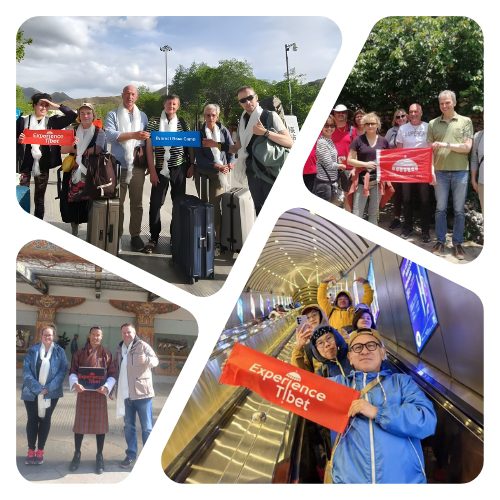
So, where should you stay in Lhasa?
If you want to open the hotel door and immediately feel the rhythm of the old city, choose Barkhor.
If you want a practical base for a short sightseeing trip, look around Potala Palace and central Lhasa.
And if you’re staying longer, traveling with family or simply value peace and hotel facilities more than being able to walk to Jokhang Temple, consider a quieter modern area.
There isn’t a bad choice among those three.
There is only the choice that fits your trip better.
Experience Tibet has been organizing Tibet journeys with local guides for more than 15 years. Our Lhasa tours include accommodation, airport or railway-station transfers, sightseeing transport and the Tibet Travel Permit, so you don’t have to piece together the logistics separately.
Start with the 4-Day Lhasa Holy City Tour for a compact introduction to the city, choose the 5-Day Lhasa & Yamdrok Lake Tour if you want to add mountain scenery, or browse our Tibet Tour Packages for longer routes.
Tell us your travel dates, who you’re traveling with and whether you prefer Old Town atmosphere, Potala convenience or a quieter hotel. We’ll help you choose the Lhasa stay that makes sense for your itinerary, not simply the hotel with the prettiest booking photo.