 About
About





 Tibet Tours
 Tibet Train Tours
 Himalaya Tours (Tibet-Nepal-Bhutan)
 Private Tours
 Mount Kailash Tours
 Trekking Tours
 Travel Guide
 Tibet Travel Blog
 FAQ
FAQ About us
A 32-day Himalaya Tour is not the kind of trip you plan on a Tuesday night after watching a mountain documentary. It is the kind of trip you decide to take after years of quiet daydreaming, one major life conversation, and the moment you finally say out loud: “Ok. We are actually doing this.” Janie and Stan, a couple from the United States, said that sentence. They sold most of their belongings and committed to a life of travel. Their 32-day Himalaya Tour is what happened next, across three countries, on us at Experience Tibet.
What many first-time travelers do not realize is that the route matters as much as the destinations. Their 32-day Himalaya Tour did not jump randomly between countries. It followed a deliberate arc:
- Start in Bhutan to acclimate gently into the Himalaya (and adapt to the country’s famous slow tourism policy).
- Move through Nepal for the cultural and ecological intensity of Kathmandu, Chitwan, and Pokhara.
- End in Tibet for the spiritual climax at Potala Palace and the geological climax at Mount Everest.
That sequence is now part of how we recommend building any deep Himalaya Tour for visitors with 25+ days.
Why They Chose a 32-Day Himalaya Tour
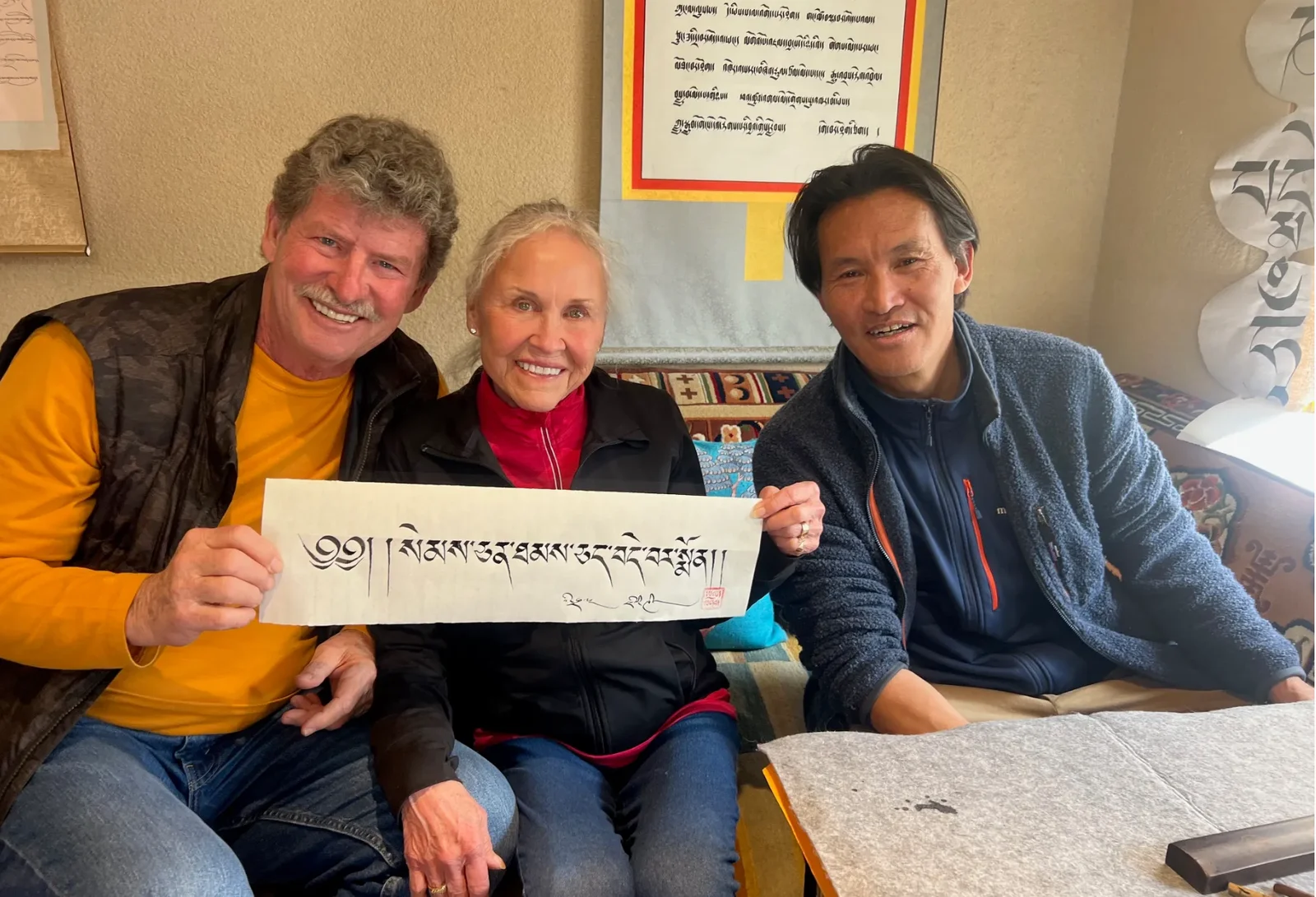
Janie and Stan had traveled Asia before, but never across the plateau and never at this scale. When they emailed us, the brief was clear:
- Live in local neighborhoods, not in international hotel chains.
- Eat in small restaurants, not hotel buffets.
- Use public transport where it made sense.
- Take their time. They did not want to feel rushed.
Most agencies treat a 32-day Himalaya Tour like a ticking clock. Popular stops in tight windows. We treat it like a chord progression: each country plays its part, and the silence between them matters. So we designed a custom adaptation of our published 16-Day Tibet, Nepal & Bhutan Trans-Himalayan Tour, extended with a slow Tibetan plateau entry and a final softer day at the end.
Day 1 to Day 7: Bhutan, the Gentle Beginning
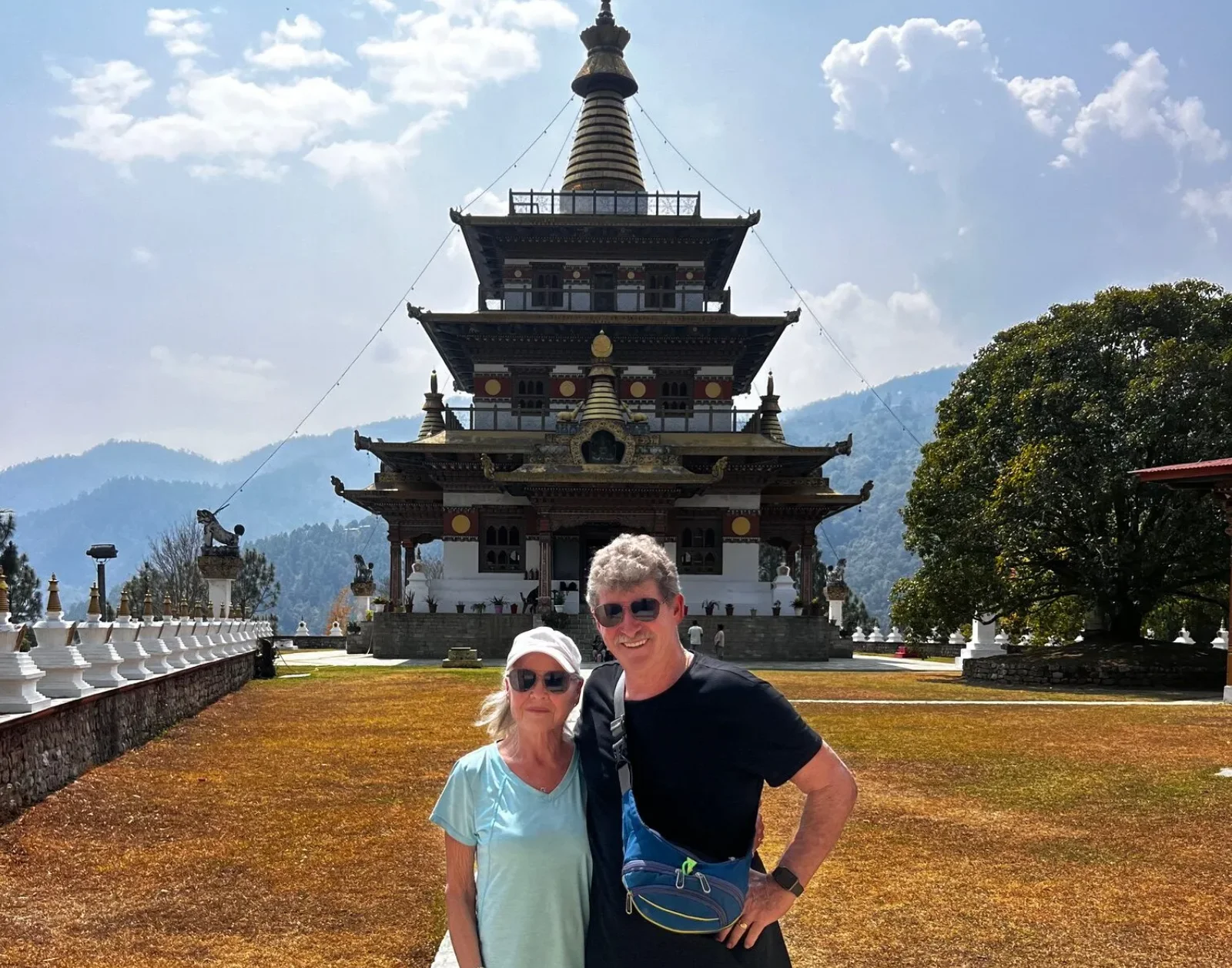
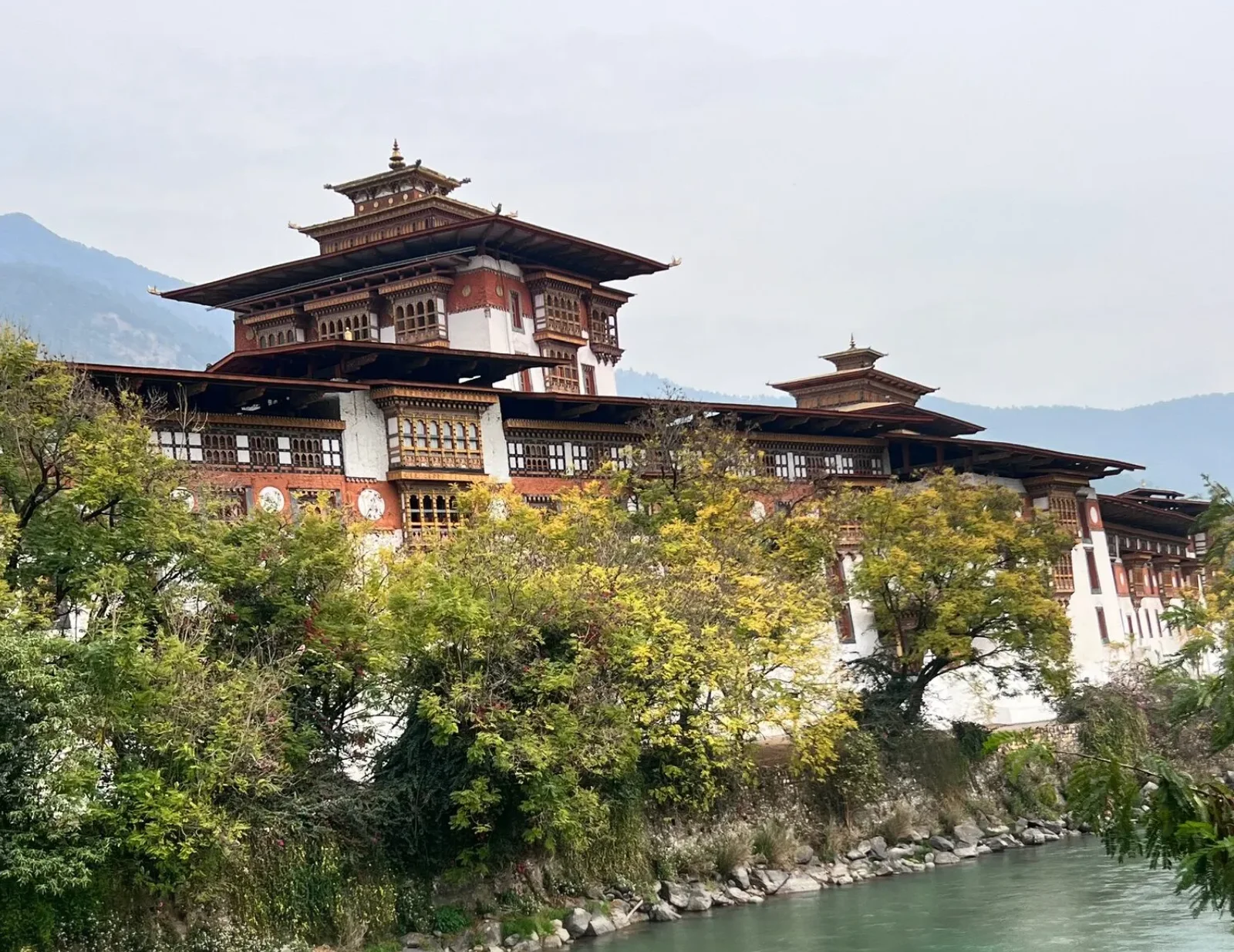
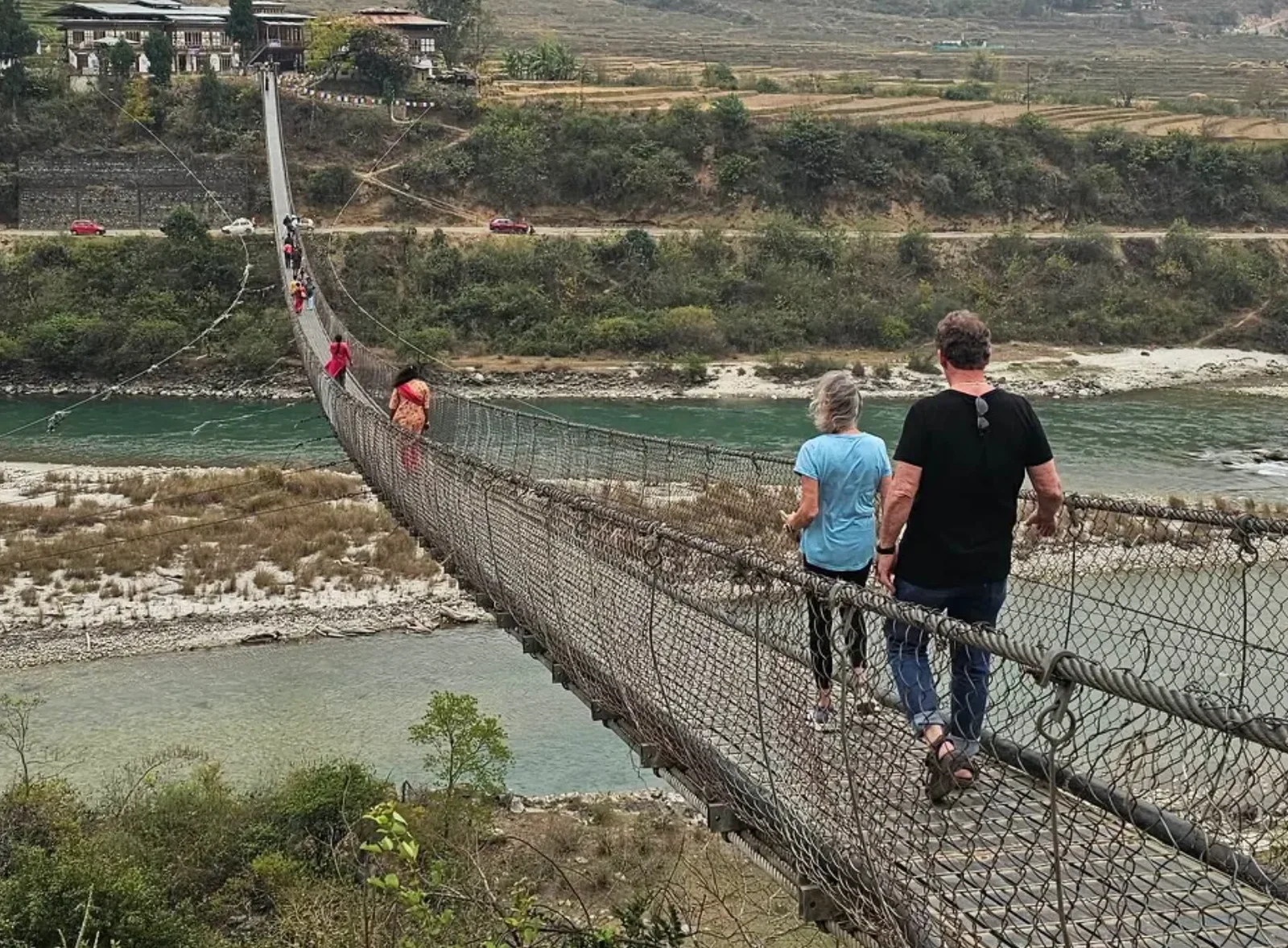
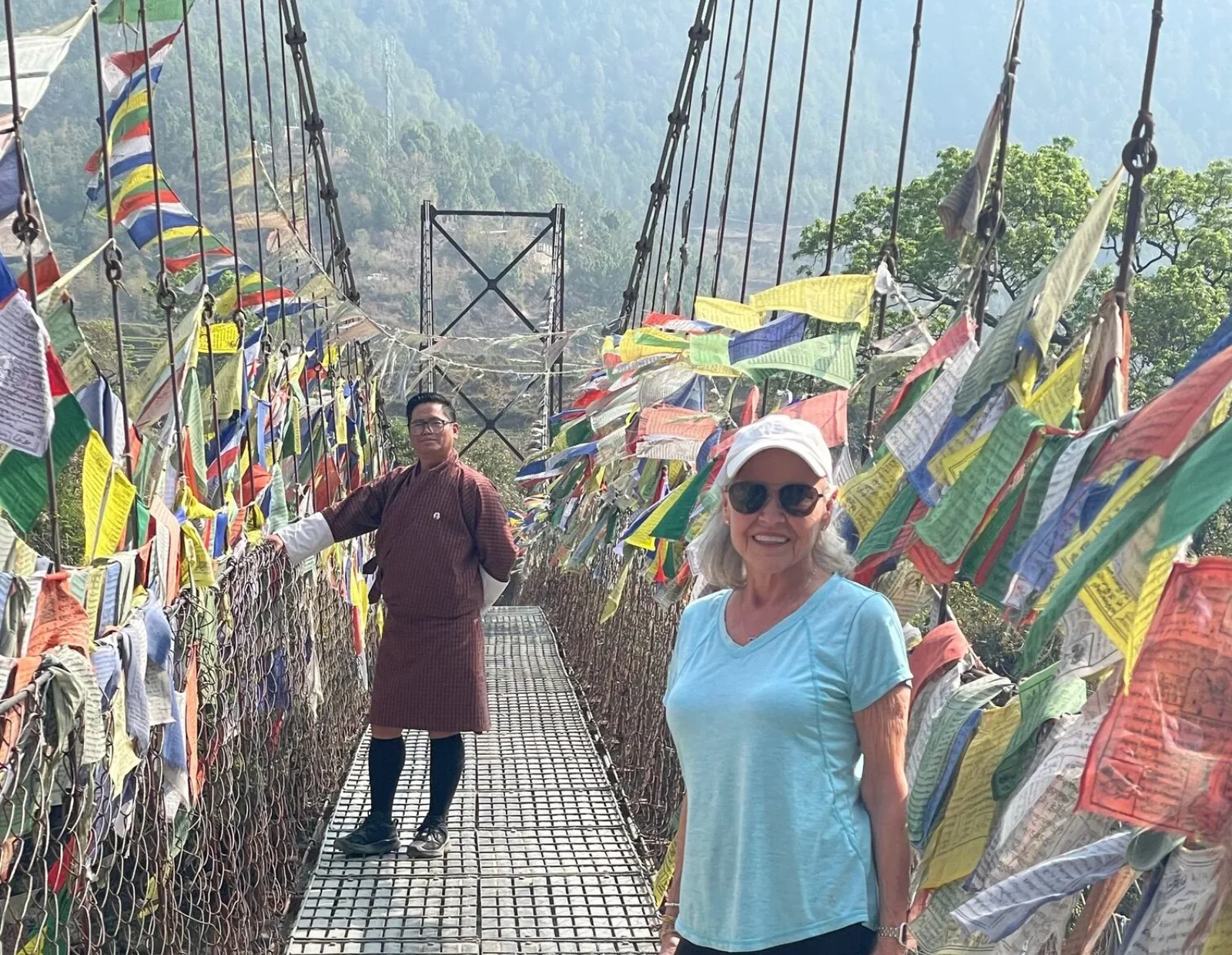
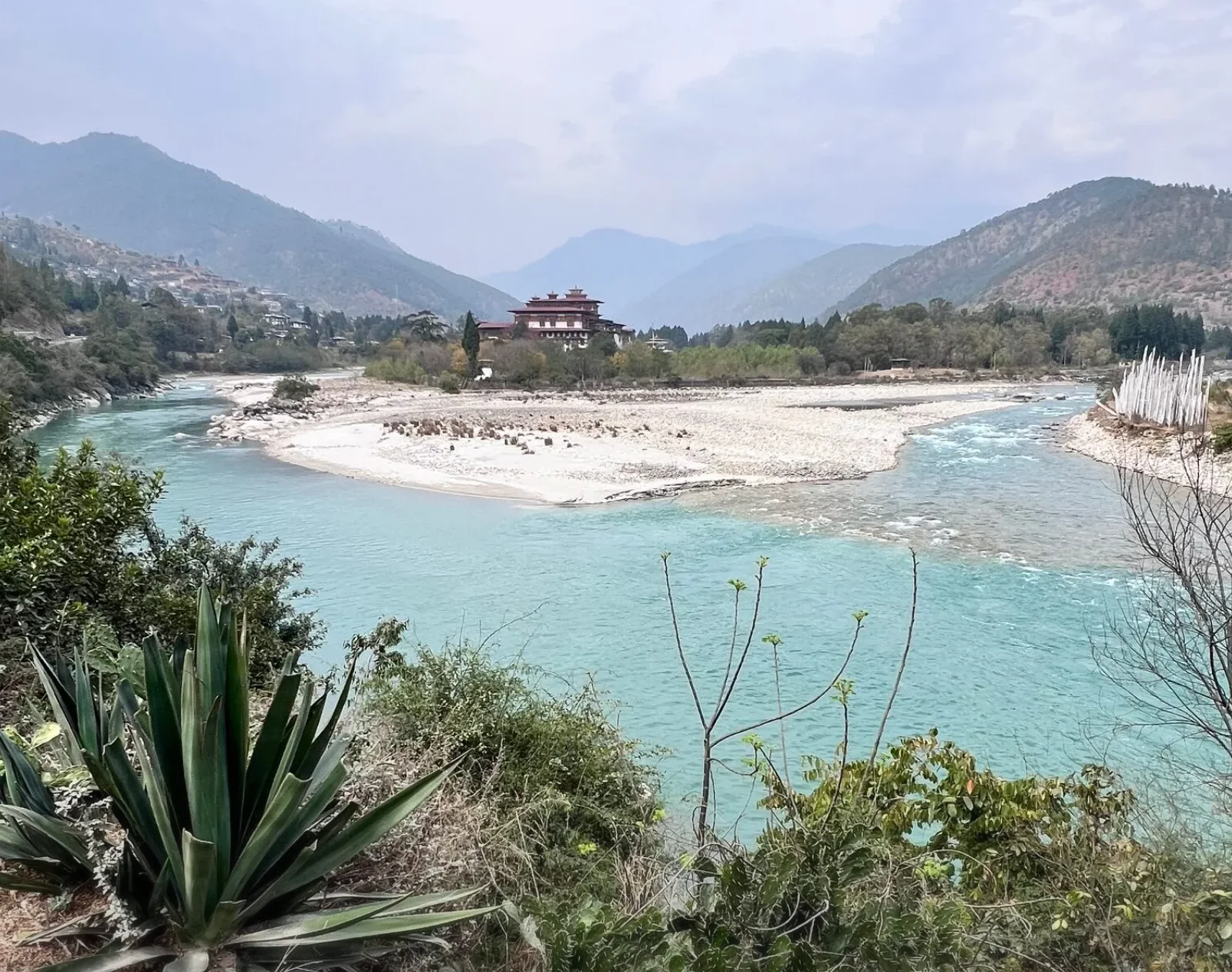
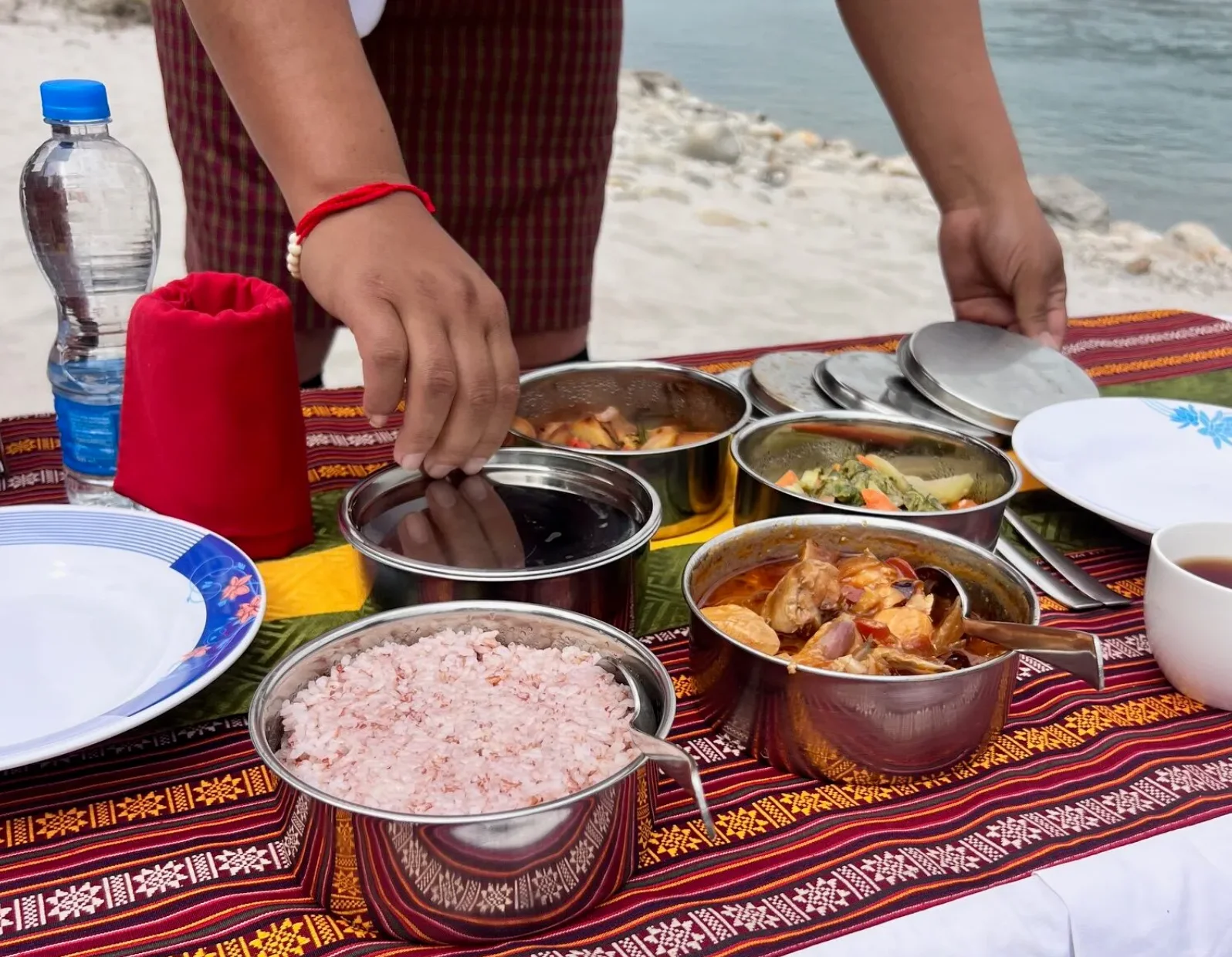
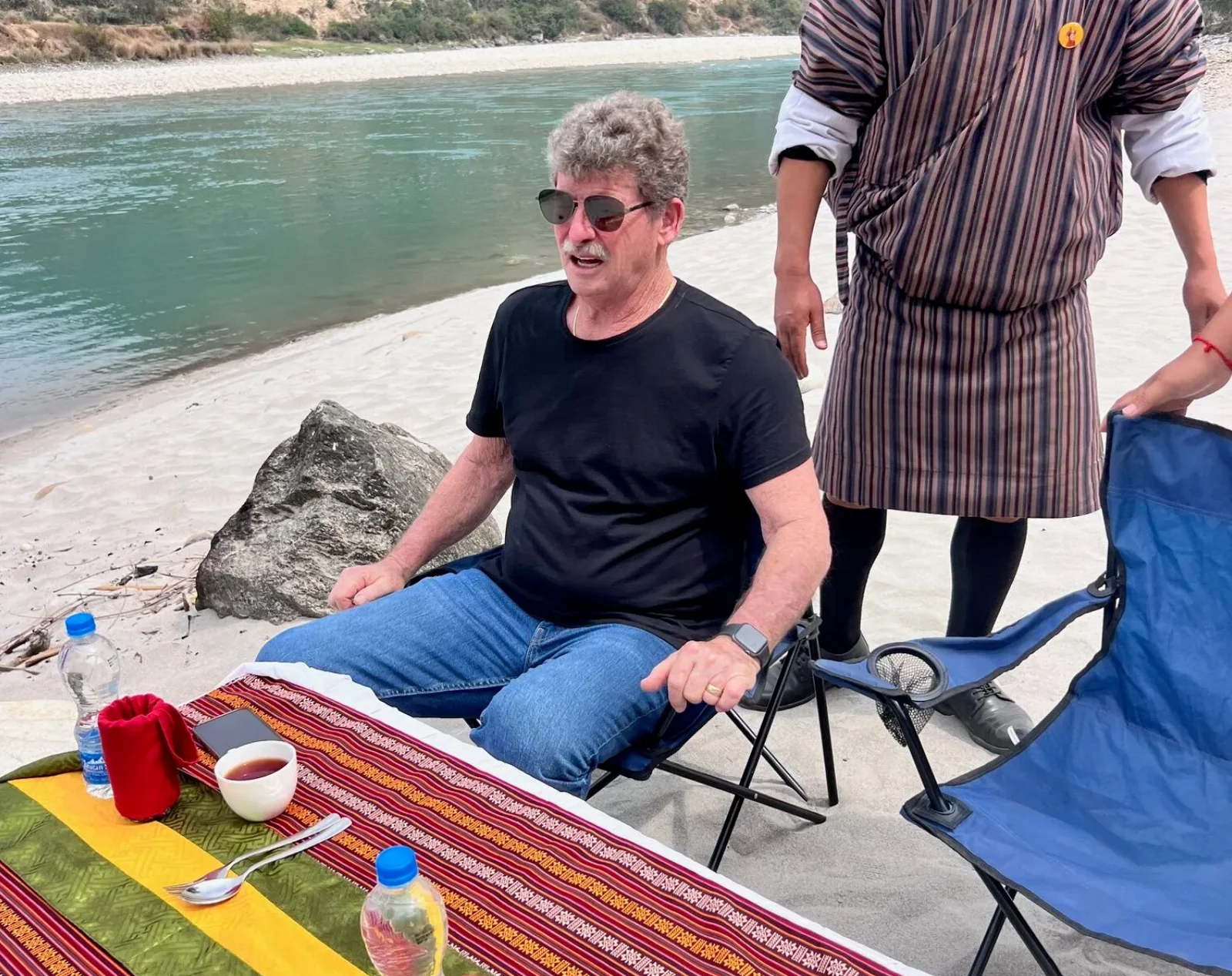
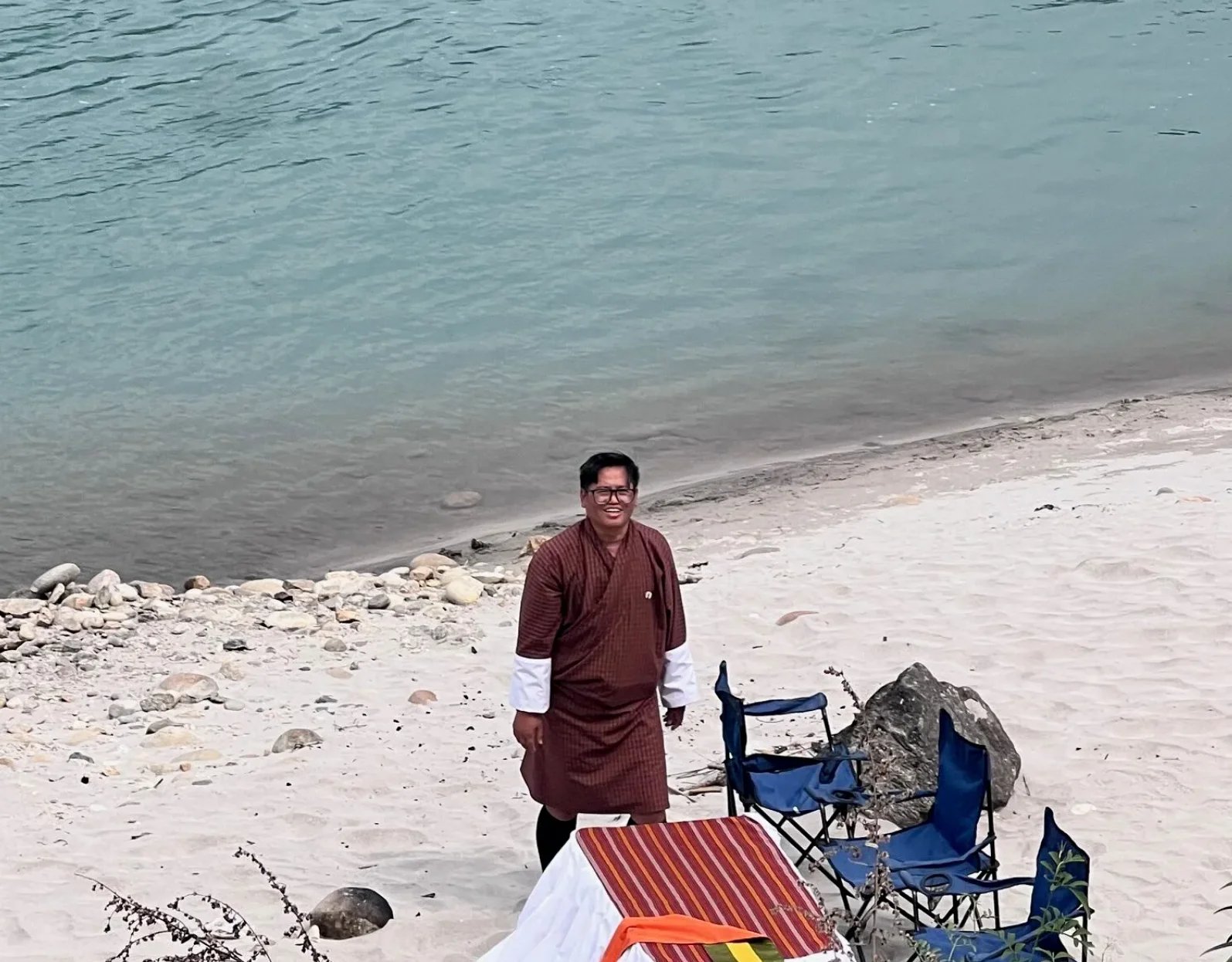
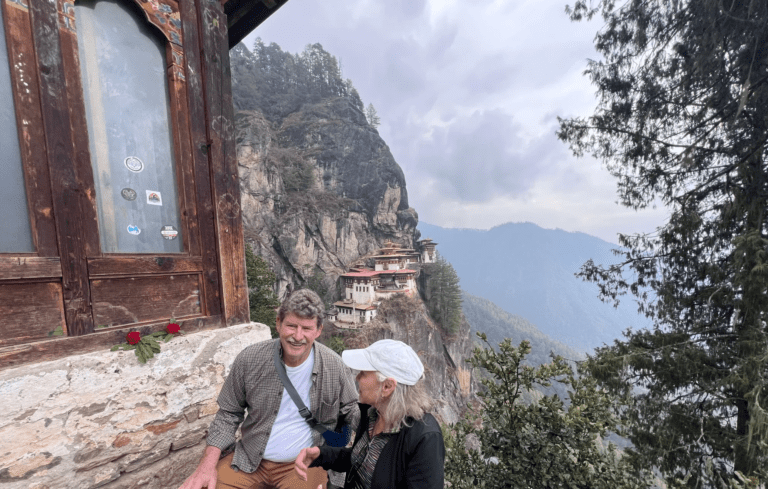
Their journey started in Bhutan. They landed at Paro International Airport, one of the most dramatic landings in commercial aviation (the planes thread between Himalayan peaks before touchdown), and the country immediately felt different. After decades of low-volume, high-value tourism policy, Bhutan has chosen to stay calm. There are no advertising billboards. There is no aggressive souvenir market. The architecture is required by law to maintain traditional Bhutanese design.
Over the next week they:
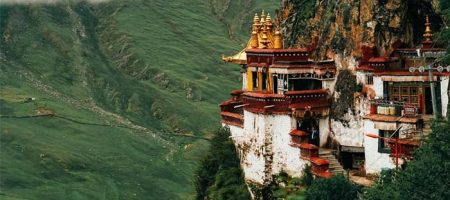
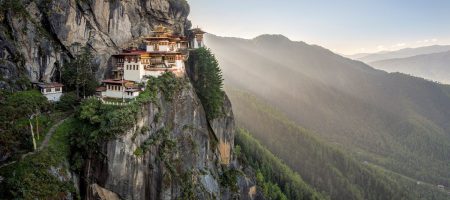
- Climbed up to Tiger’s Nest (Taktsang Monastery), the cliff-side monastery that is Bhutan’s most iconic image. The hike is around four hours, switchbacking through pine forest before the monastery appears, glued to a rock wall 900 meters above the Paro valley floor.
- Spent days in Thimphu, the small capital, walking markets, visiting the National Memorial Chorten, meeting monks at a small local monastery, and watching Bhutanese women weave traditional patterns by hand at a local textile museum.
- Took a quieter day in the Paro valley, where time genuinely slows down and you realize why Janie later called the country “gentle and spiritual” in her blog.
For travelers who want the Bhutan opener without committing to the full three-country 32-day Himalaya Tour, our Bhutan 7-Day Tour with Tiger’s Nest starting at $1,730 covers most of what Janie and Stan experienced in their first week.
Day 8 to Day 19: Nepal, the Sensual Explosion
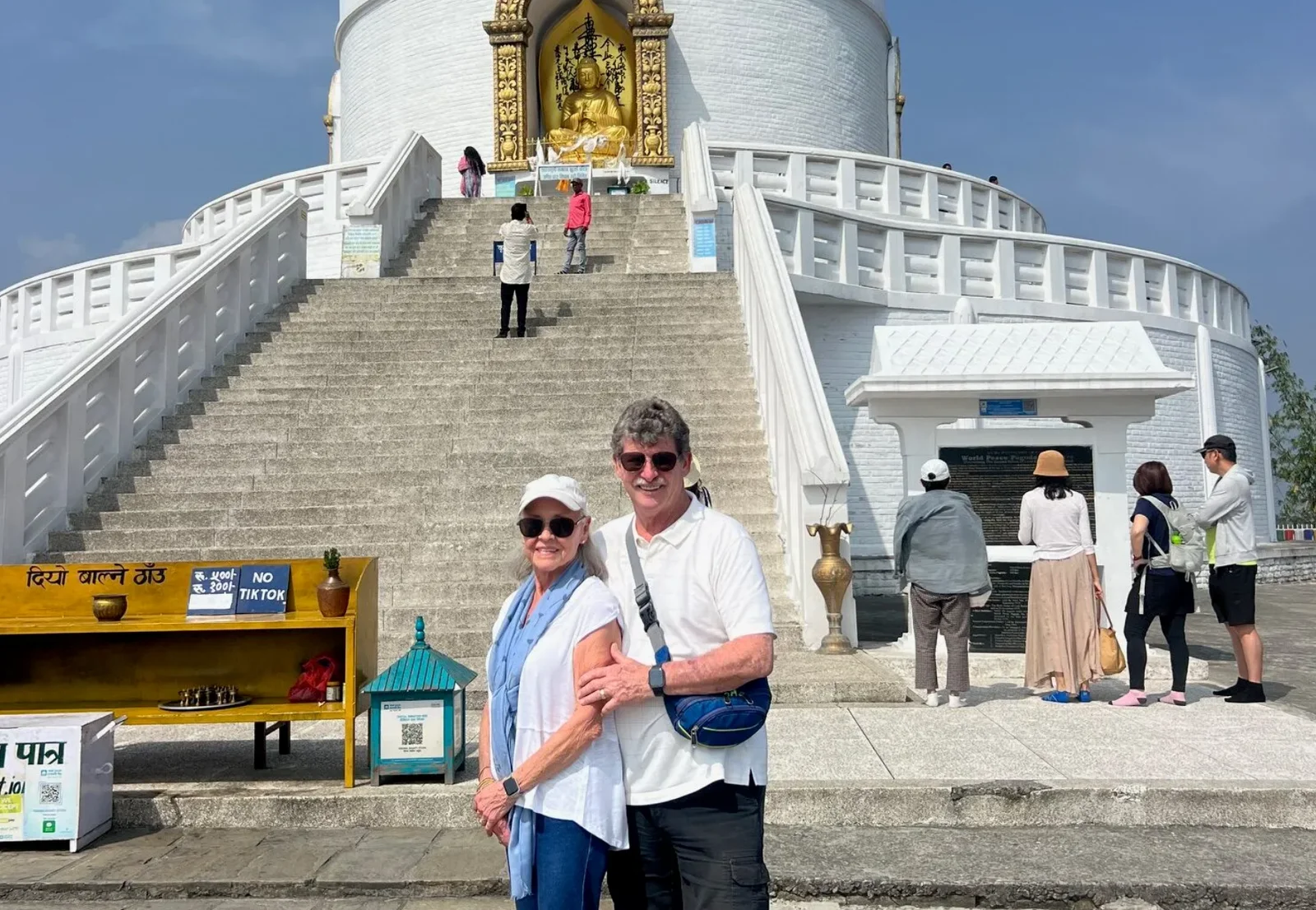
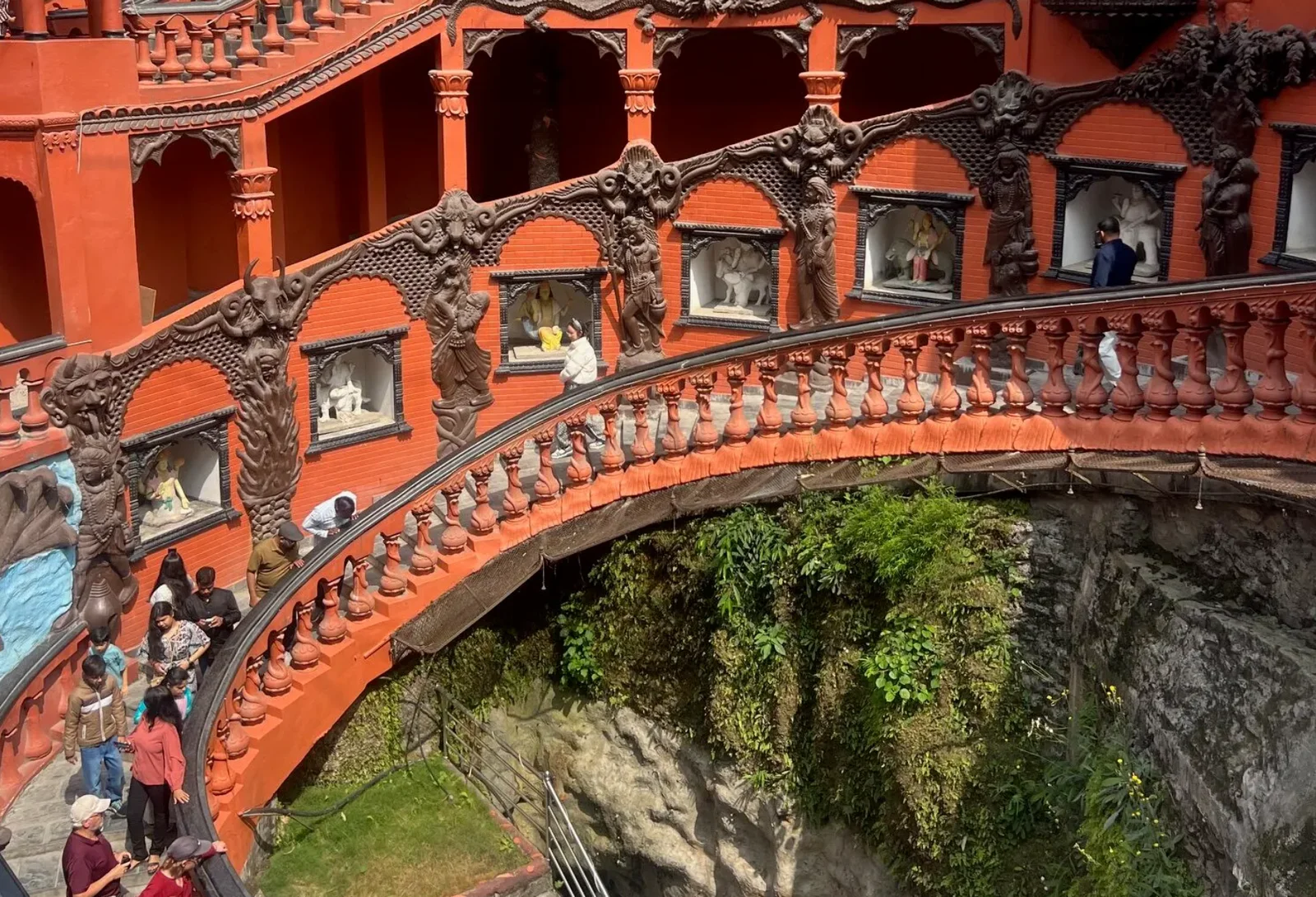
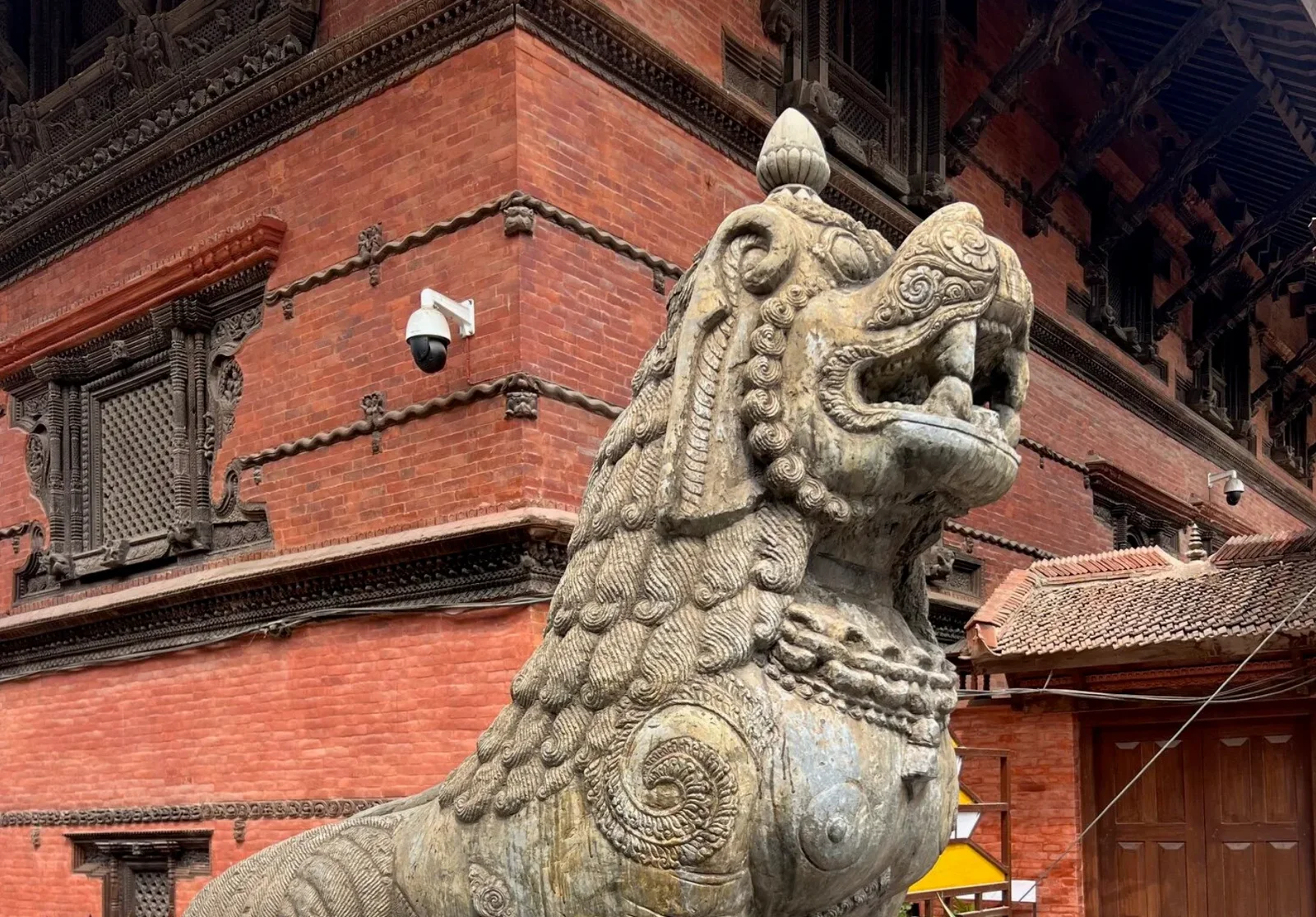
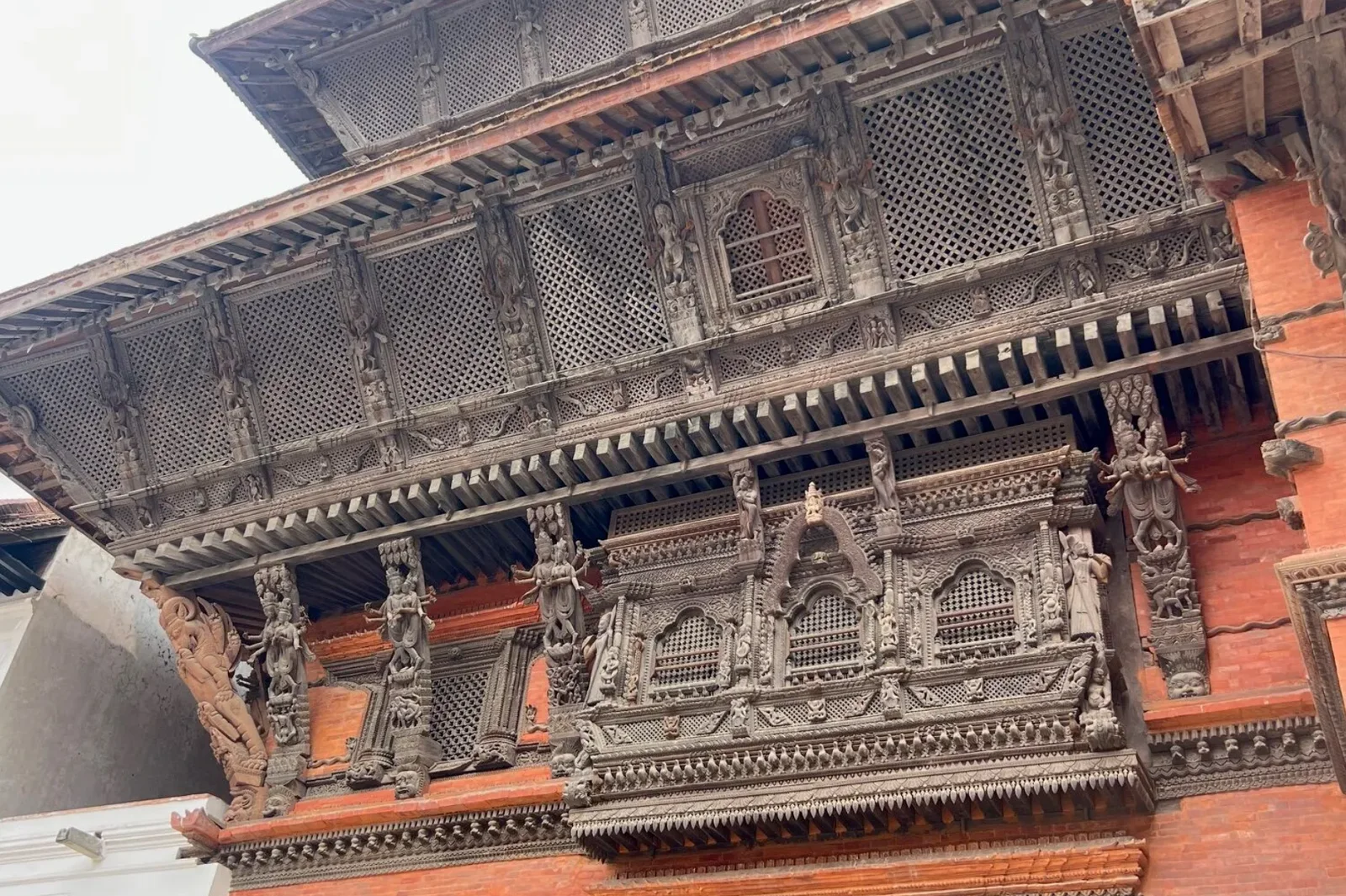
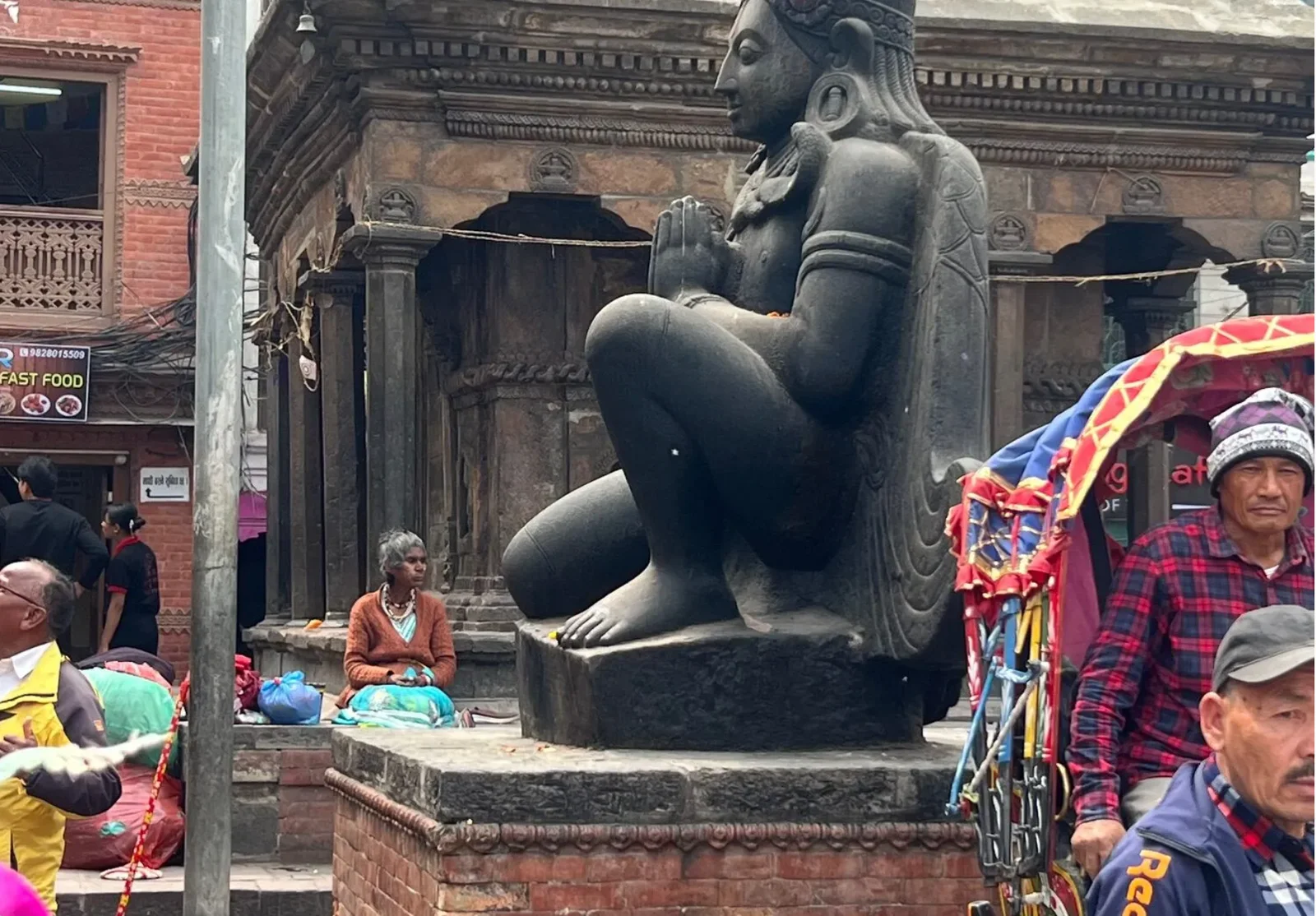
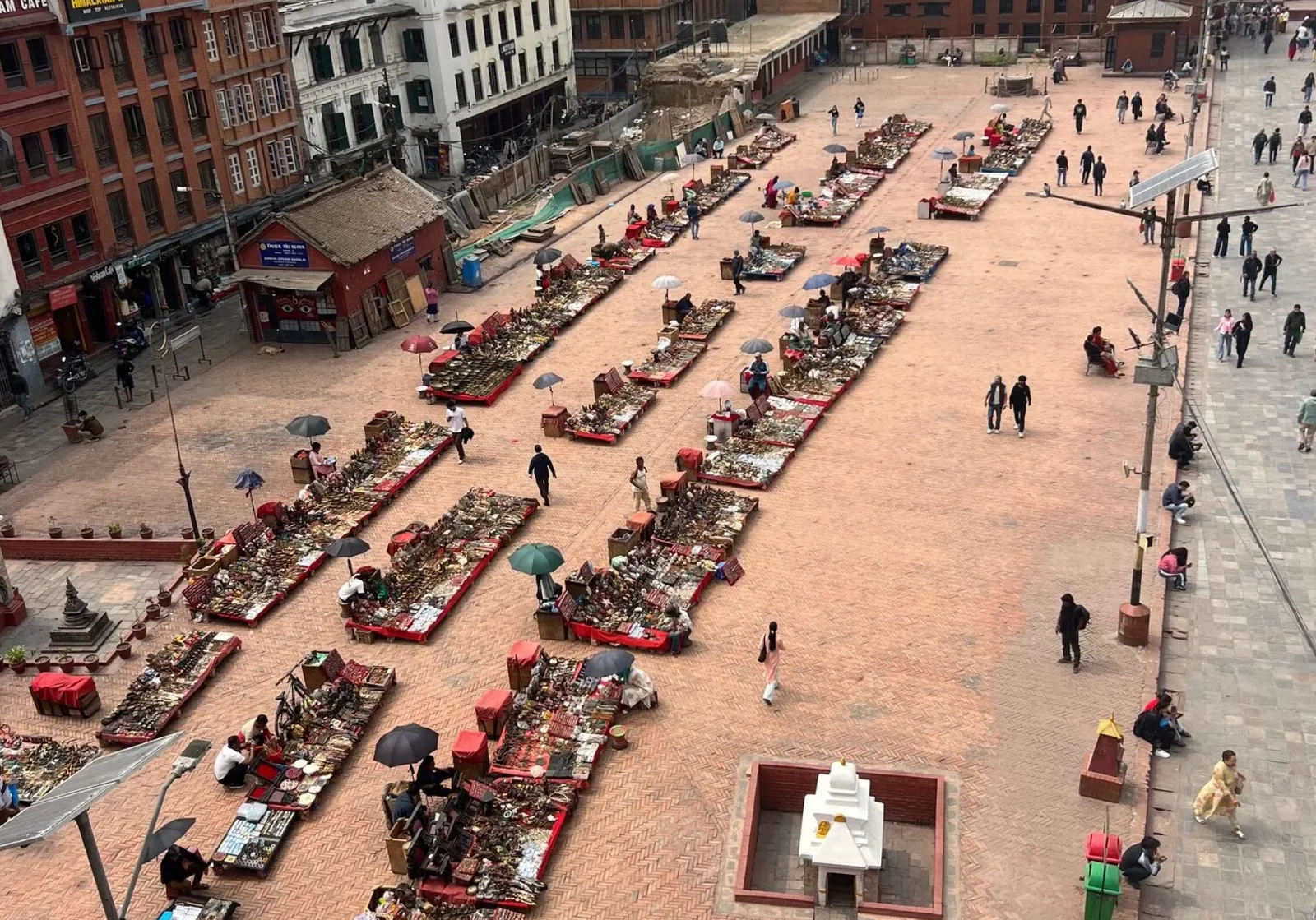
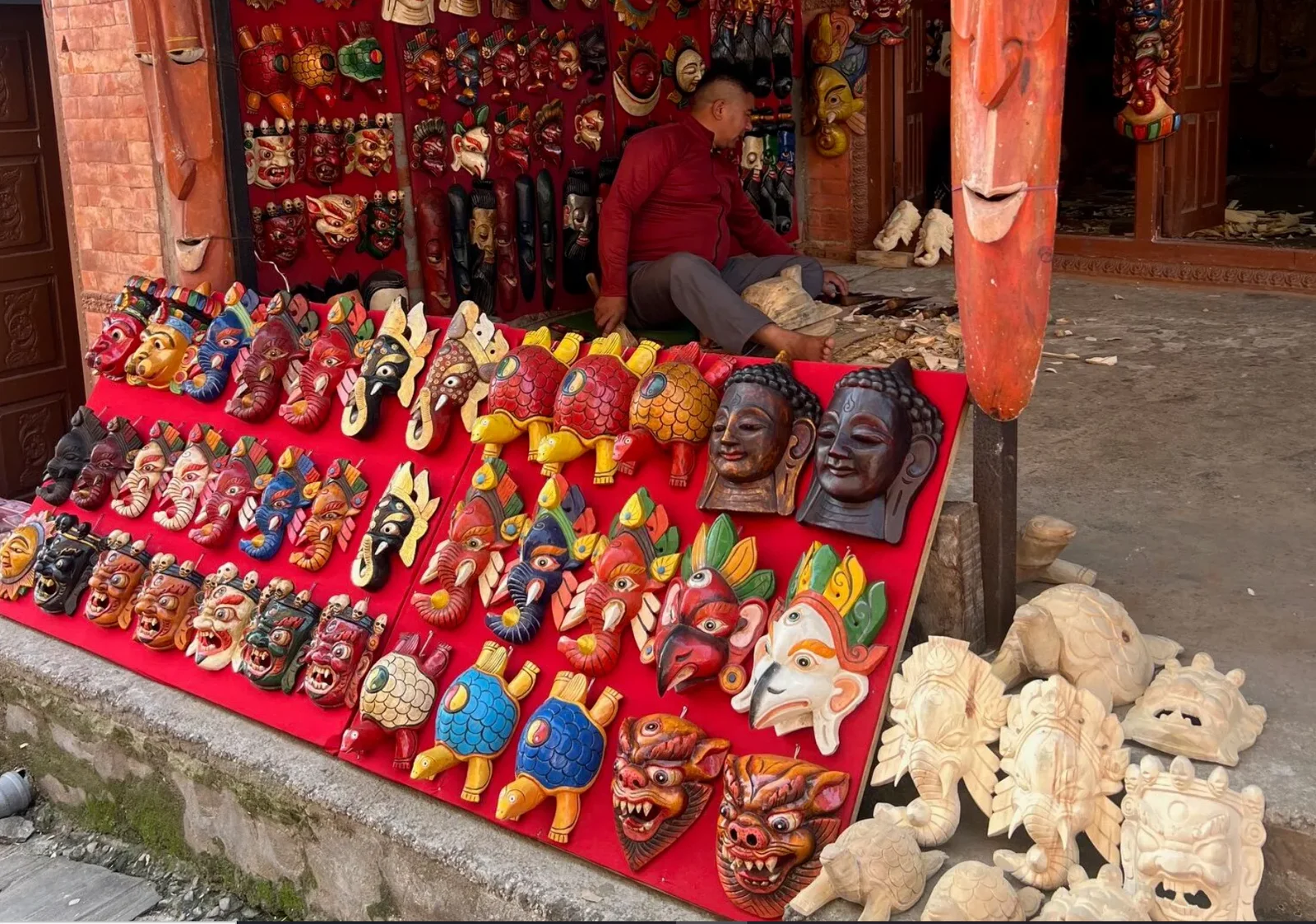
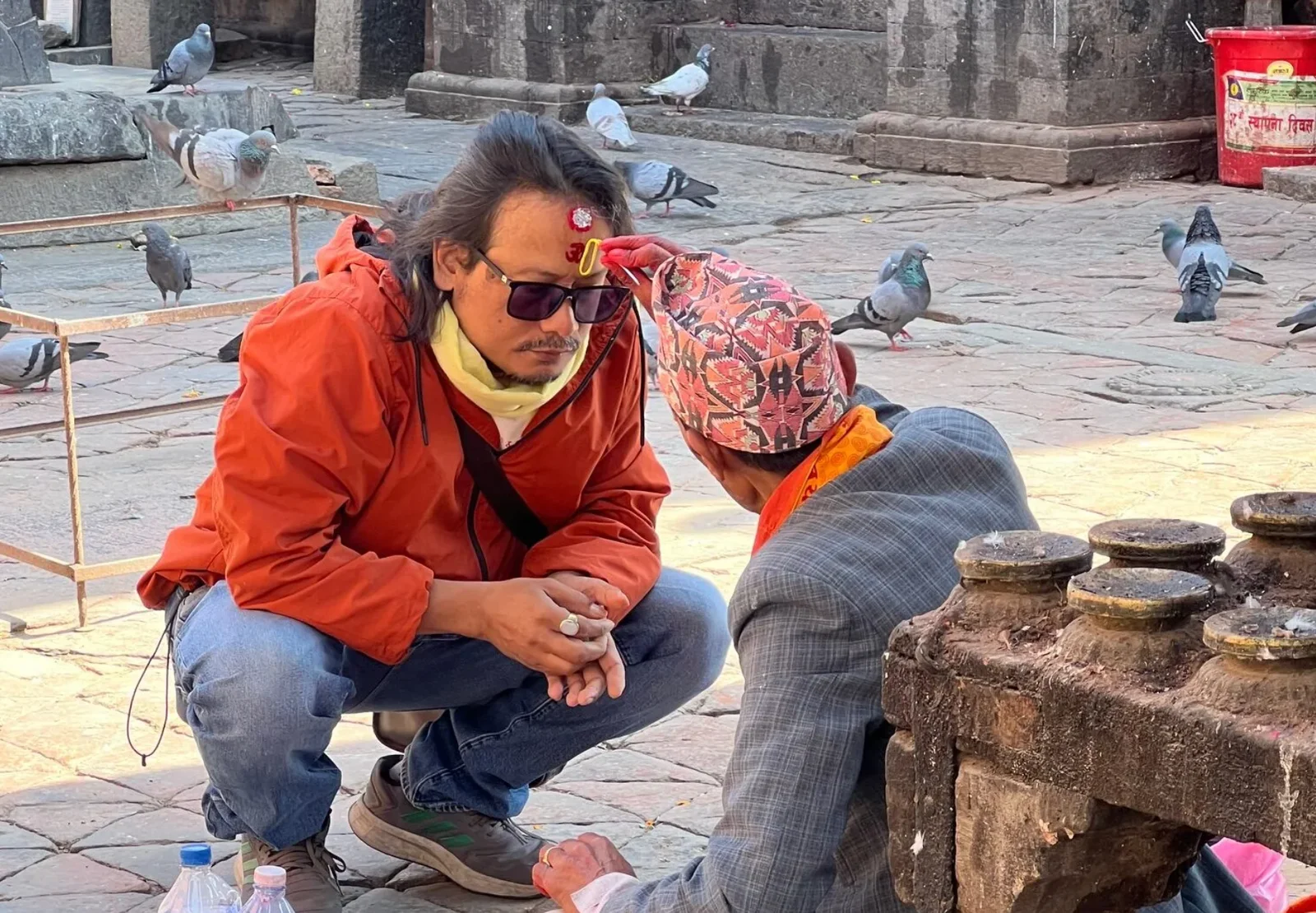
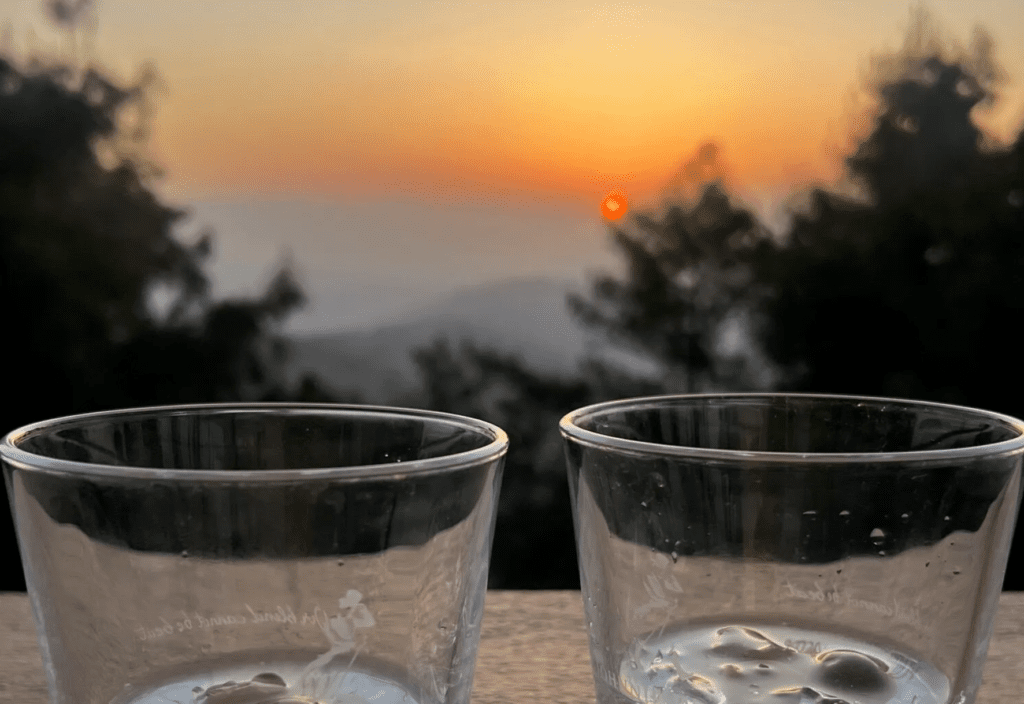
From Bhutan, the trip moved west into Nepal. The transition is sensory. After Bhutan’s quiet design and slow pace, Kathmandu hits you with its full urban force: incense, street dust, honking horns, the sizzle of momo dumplings, and the crush of one of the densest historic centers in Asia.
Janie later wrote about her Nepal section on her blog in very physical, very human terms. She called it a “sensual explosion.” Street dust, incense, the rattle of honking horns, the smell of momo dumplings, the crush of Kathmandu, then the green silence of Pokhara with the Annapurna range dropping into Phewa Lake below.
Their 32-day Himalaya Tour in Nepal was lived slowly across roughly twelve days. The essentials:
- Pashupatinath Temple on the banks of the Bagmati River, where cremation rituals happen in the open right next to where visitors stand. A powerful early encounter with how this part of the world treats life and death on the same sidewalk.
- Swayambhunath, the Monkey Temple, at sunrise, when the long staircase up to the stupa is washed in low golden light.
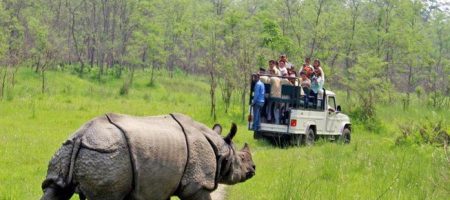
- A jeep safari in Chitwan National Park, where they watched a one-horned rhinoceros cross the road thirty meters in front of their vehicle. The sub-tropical jungle here is the surprising counterpoint to the alpine sections on either side of Nepal.
- Lake Phewa in Pokhara, followed by the Sarangkot sunrise, where the Annapurna range turns from grey to gold to pink in about ninety seconds.
For travelers who want to focus on Nepal alone without yet committing to the full cross-border 32-day Himalaya Tour, our guided 8-Day Nepal Tour through Kathmandu, Chitwan, and Pokhara covers this exact section of Janie and Stan’s journey.
Day 20 to Day 32: Tibet, the Roof of the World
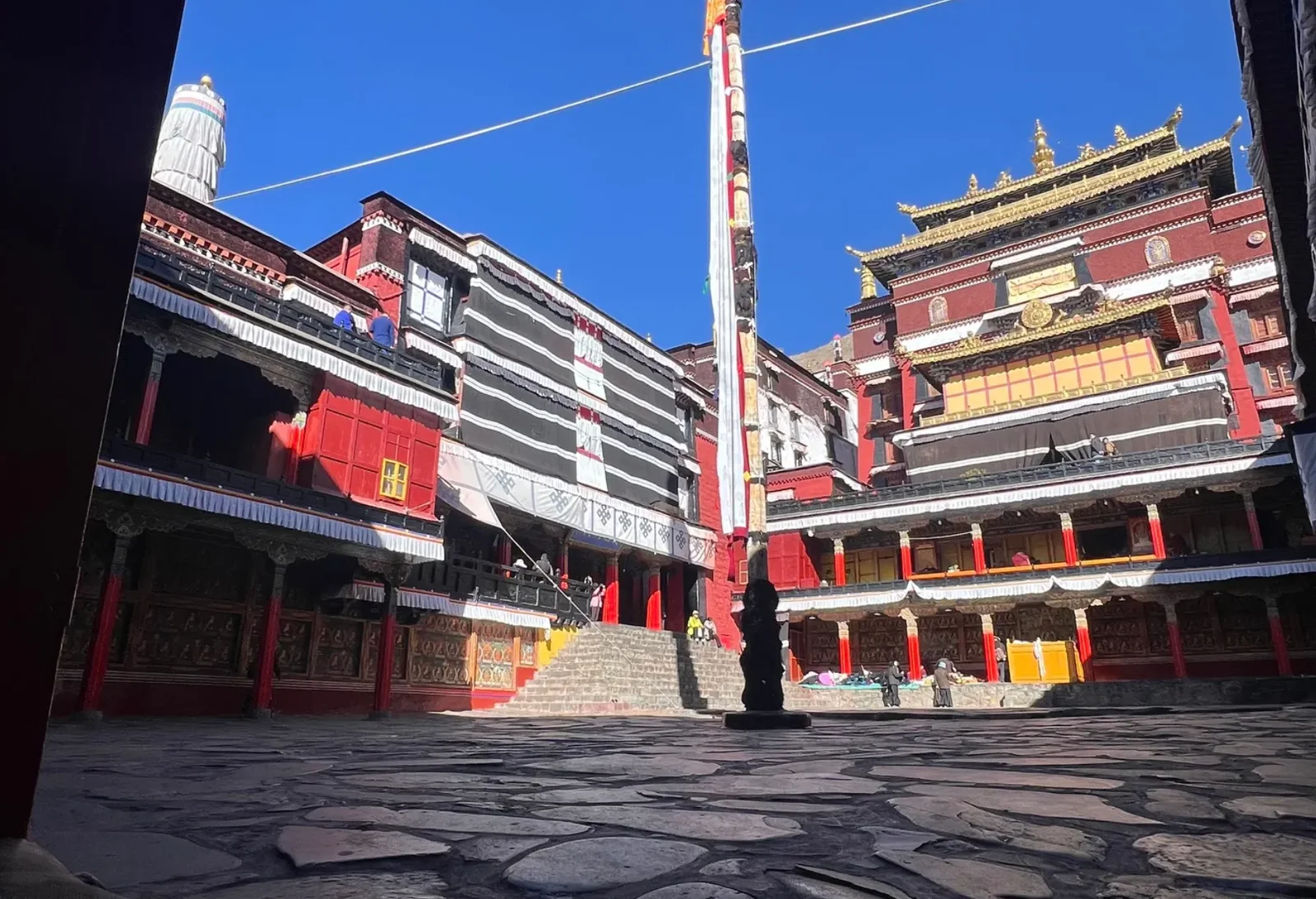
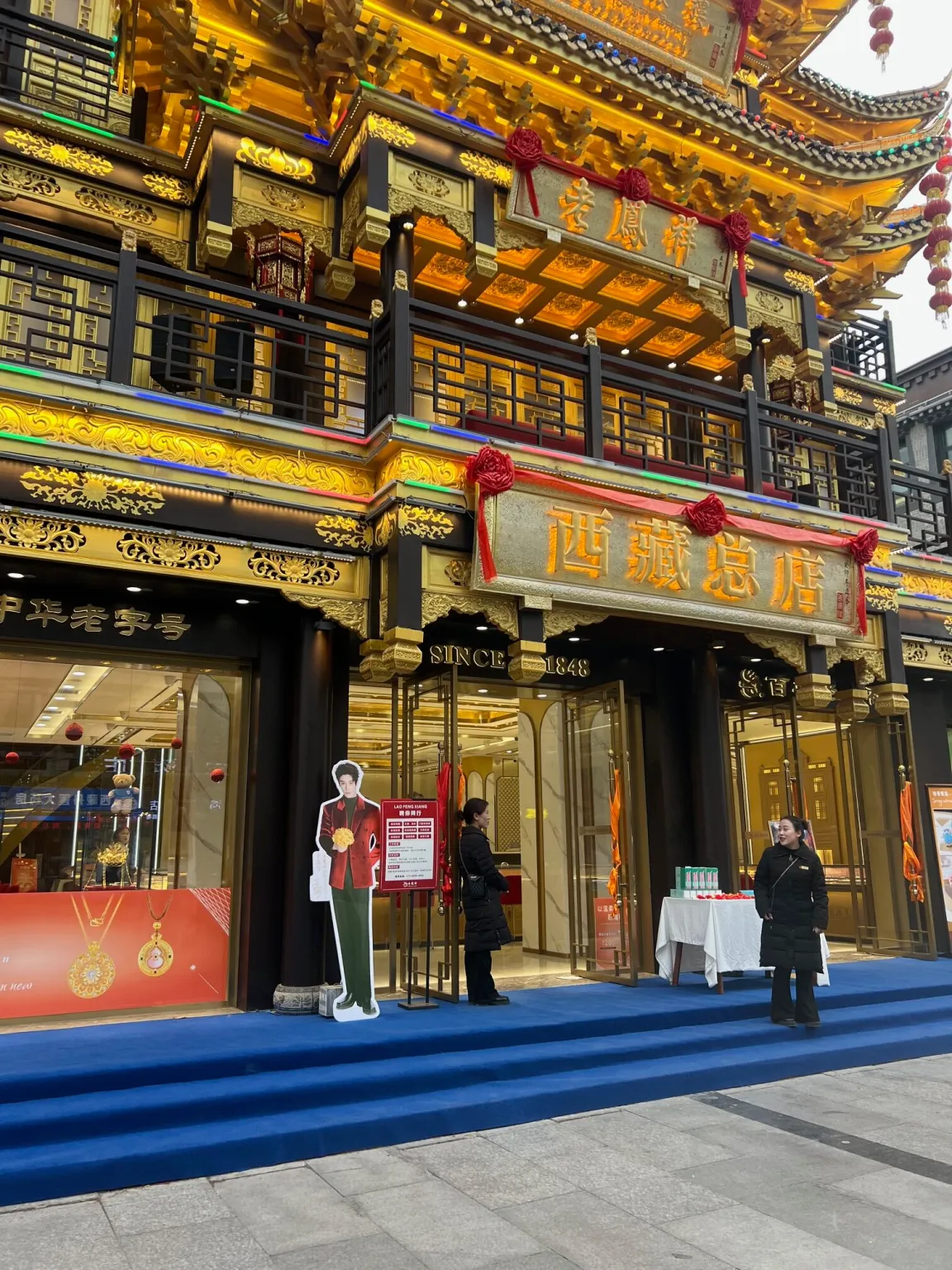
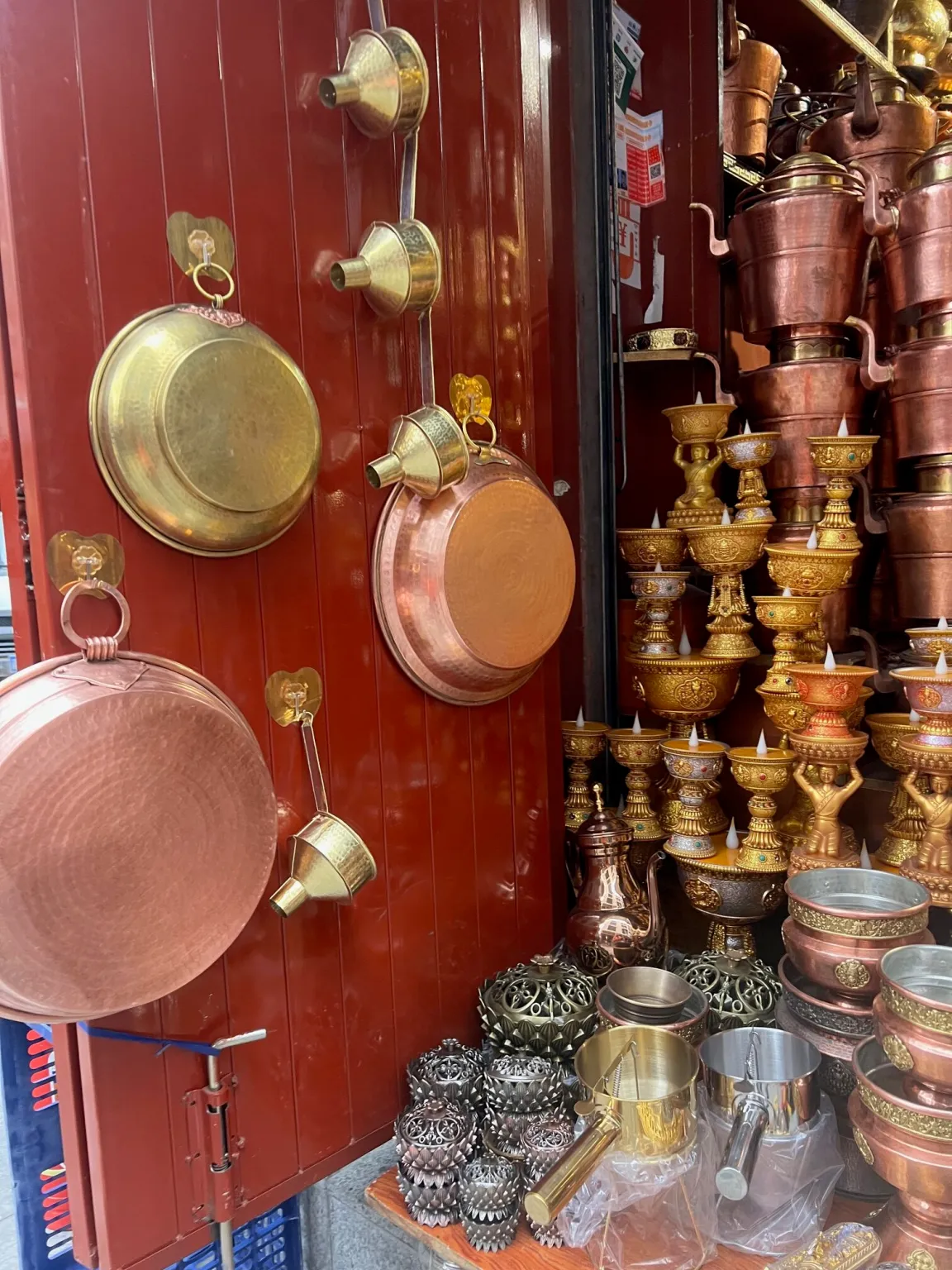
After two weeks of gradual Himalayan warm-up in Bhutan and Nepal, the trip crossed into the Tibetan plateau for its final and climactic act. The transition is one of the most dramatic on the planet: within hours, sub-tropical green gives way to high-altitude browns, skies bluer than you have ever seen them, and roads that climb until the air itself feels thinner.
Janie’s diary entry on day two of Tibet was about the air. The dryness, she said, “wreaks havoc on the sinuses and makes the insides of our noses feel like prickly pear cactus.” That is the honest Tibetan plateau for first-time visitors. Cold, dry, unforgiving if you arrive unprepared.
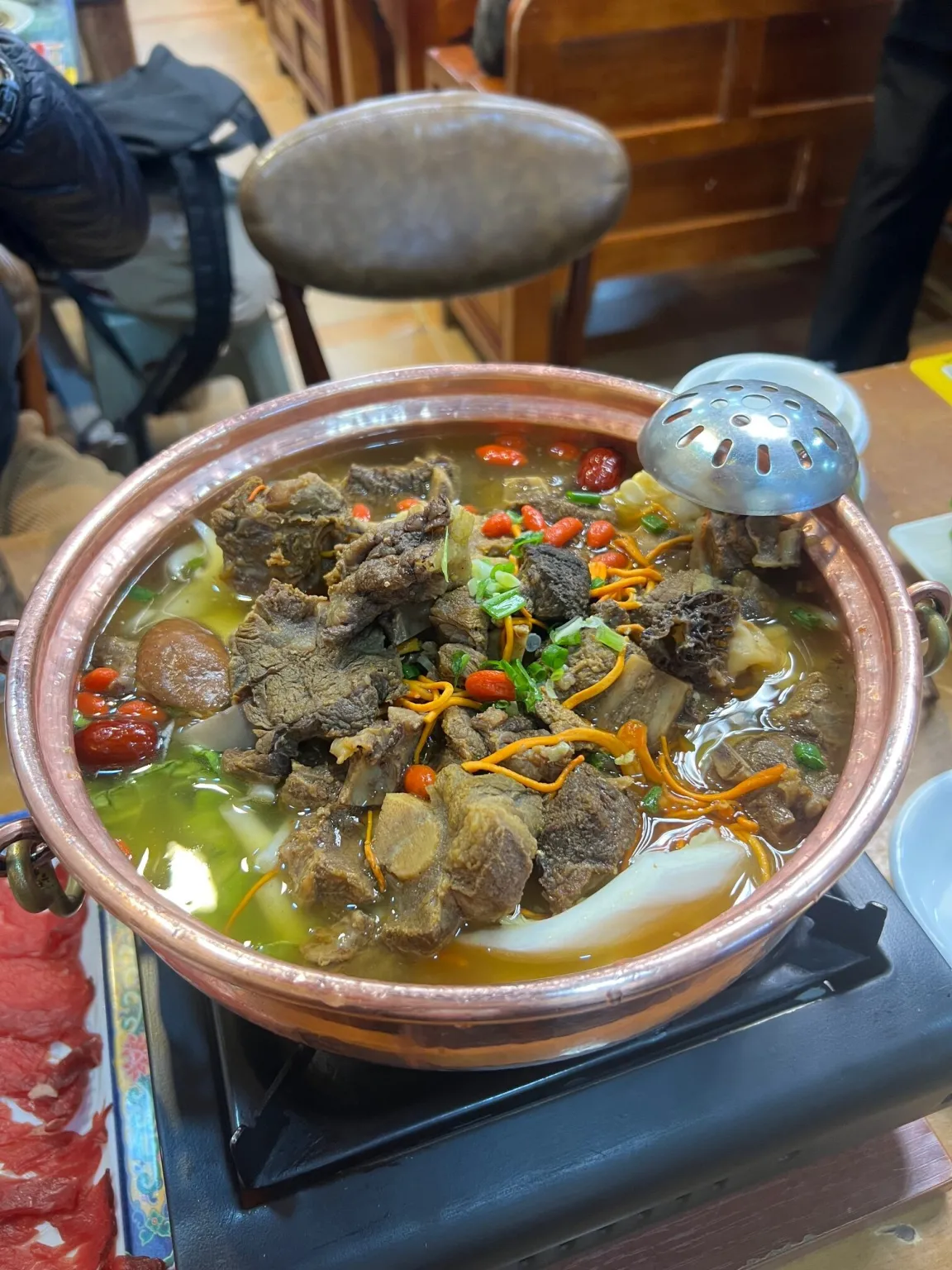
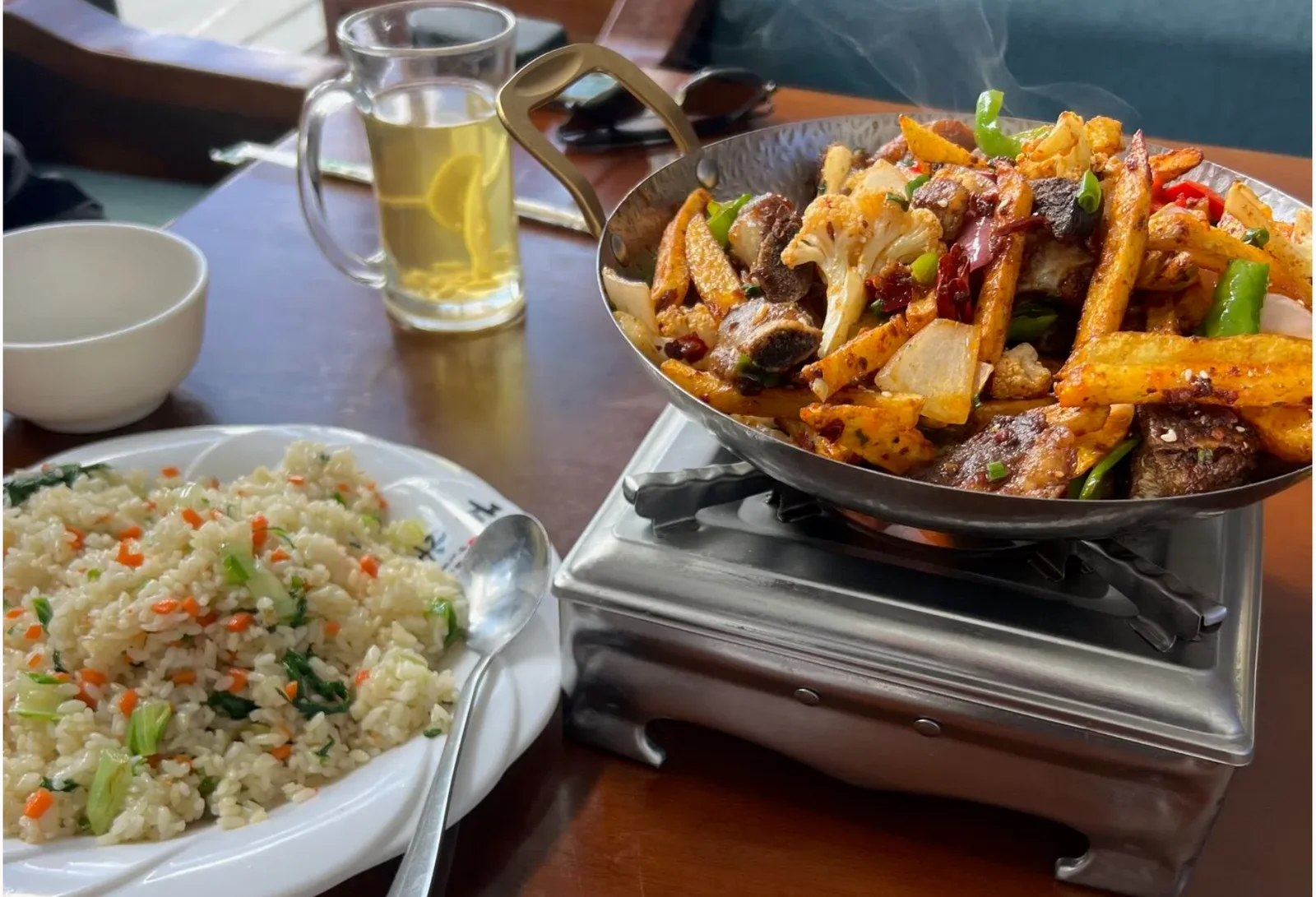
They stopped at small Tibetan towns, ate yak hot pot (Janie’s verdict: “tastes a lot like beef but far more nutritious”), and slowly acclimatized. Their guide briefed them daily on hydration, walking pace, and the right garments for altitude. That is the part of any Himalaya Tour that most brochures downplay: acclimatization is the entire foundation. Skip it, and the rest of the trip breaks.
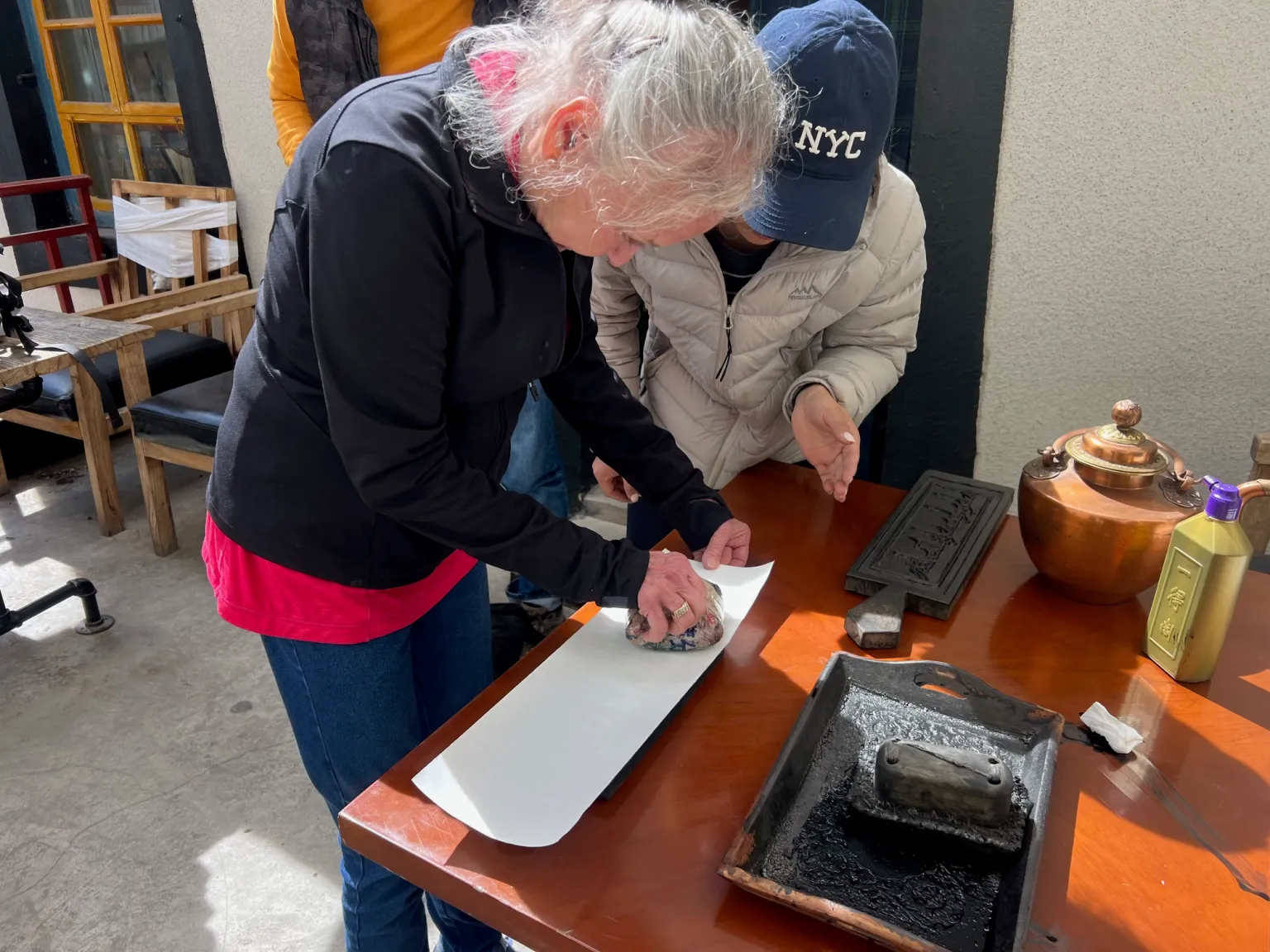
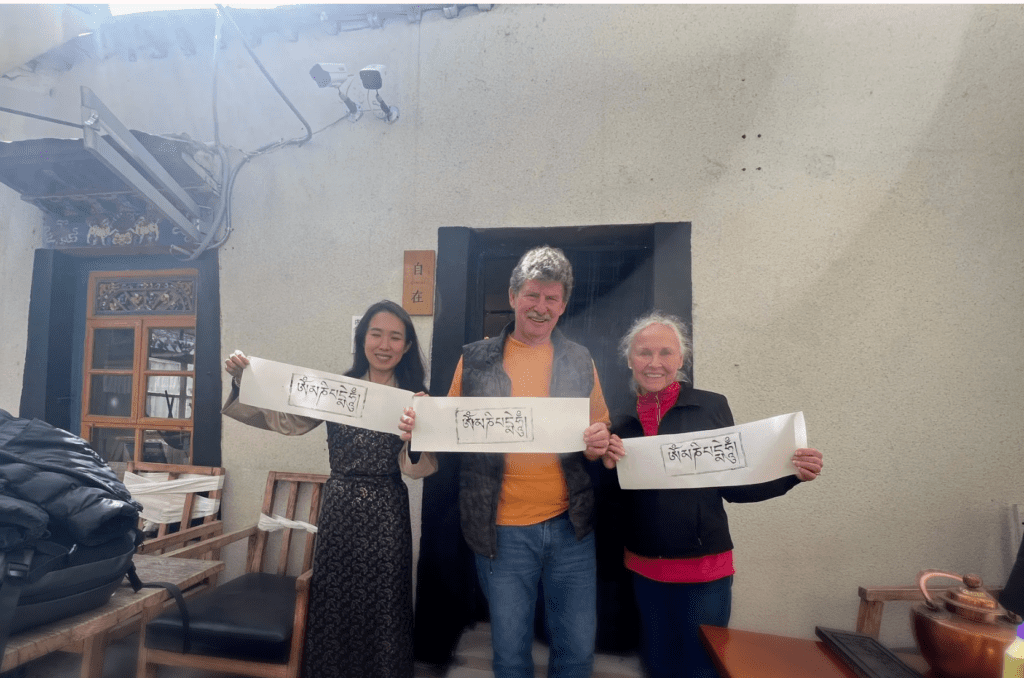
The Mt. Everest Encounter
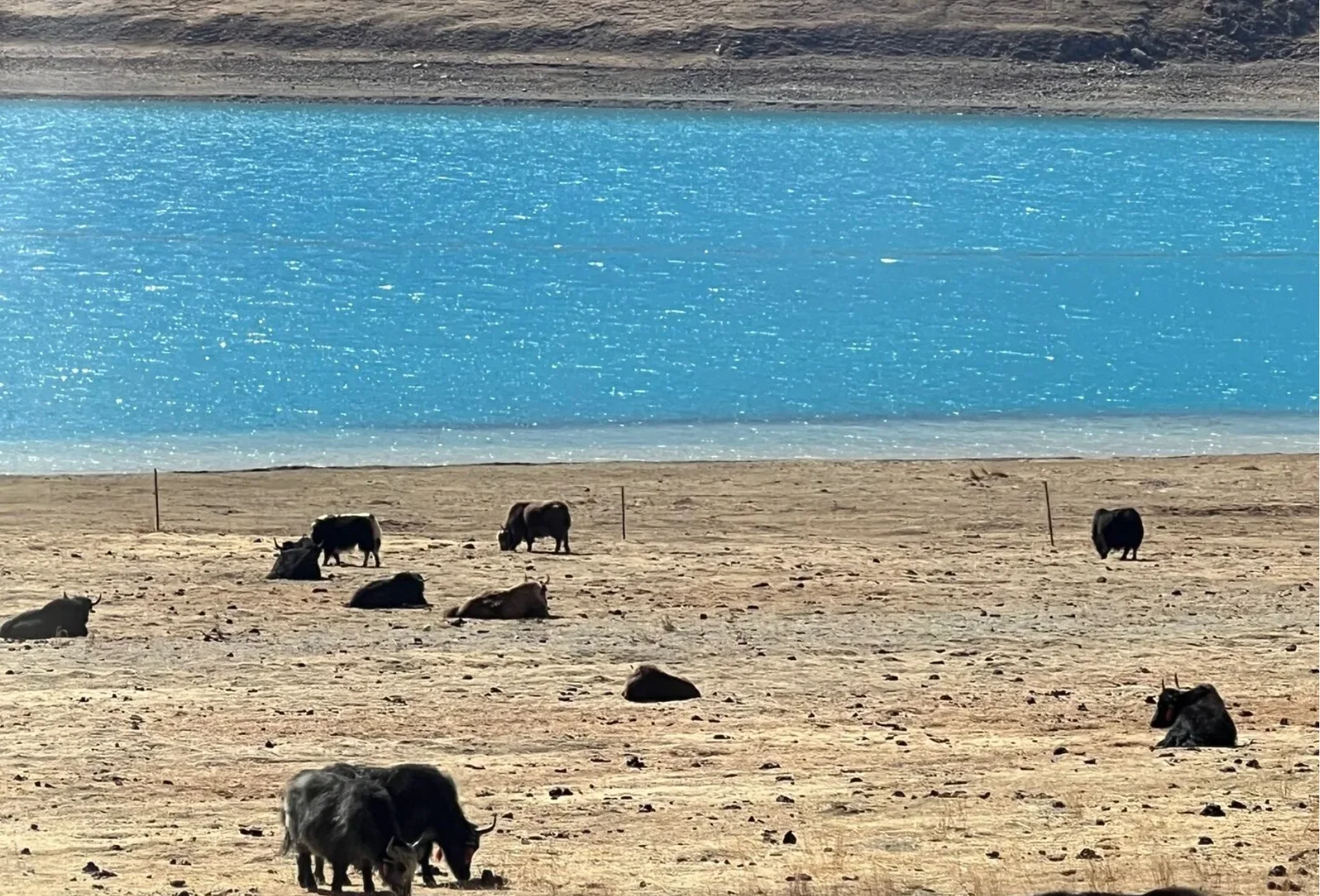
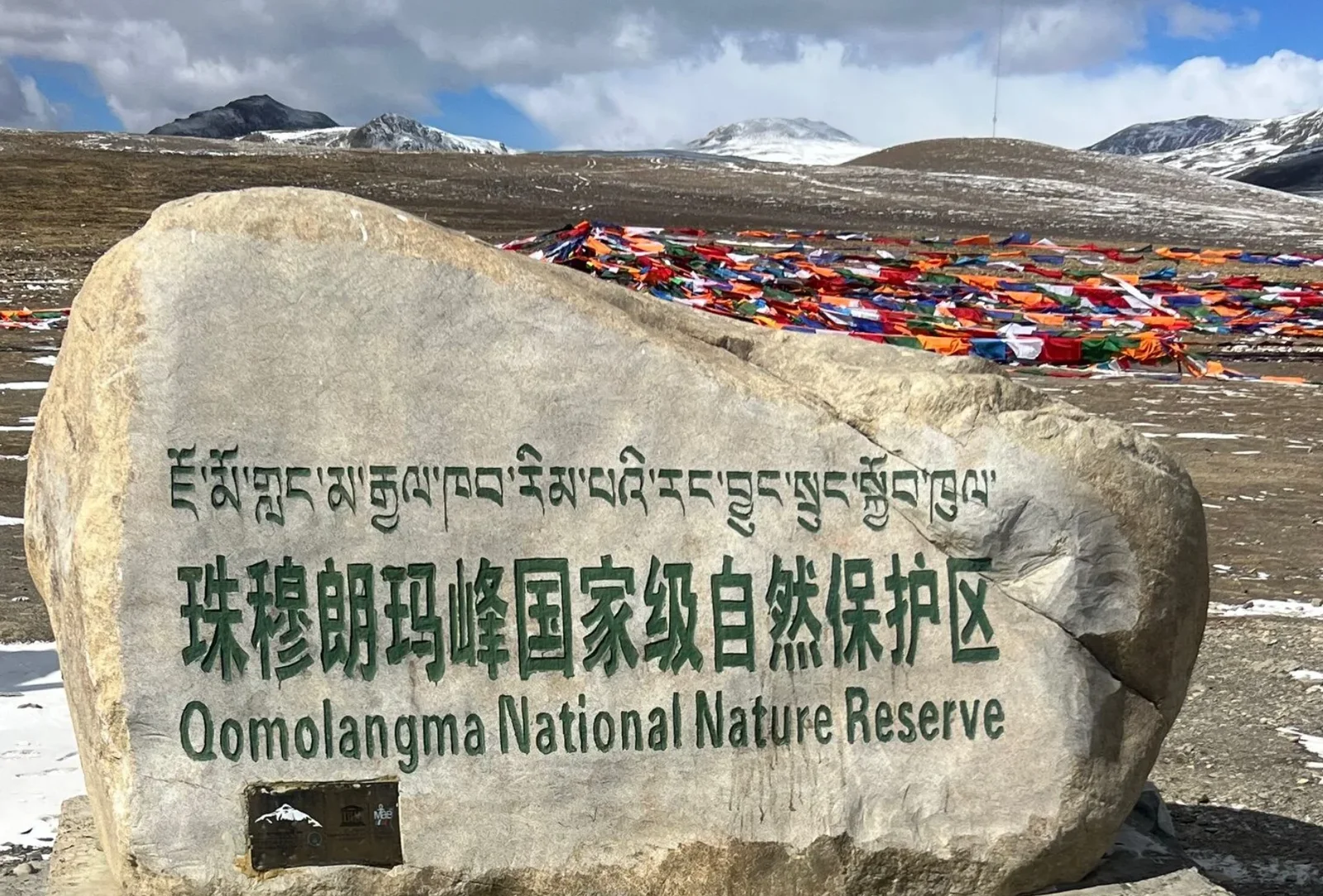
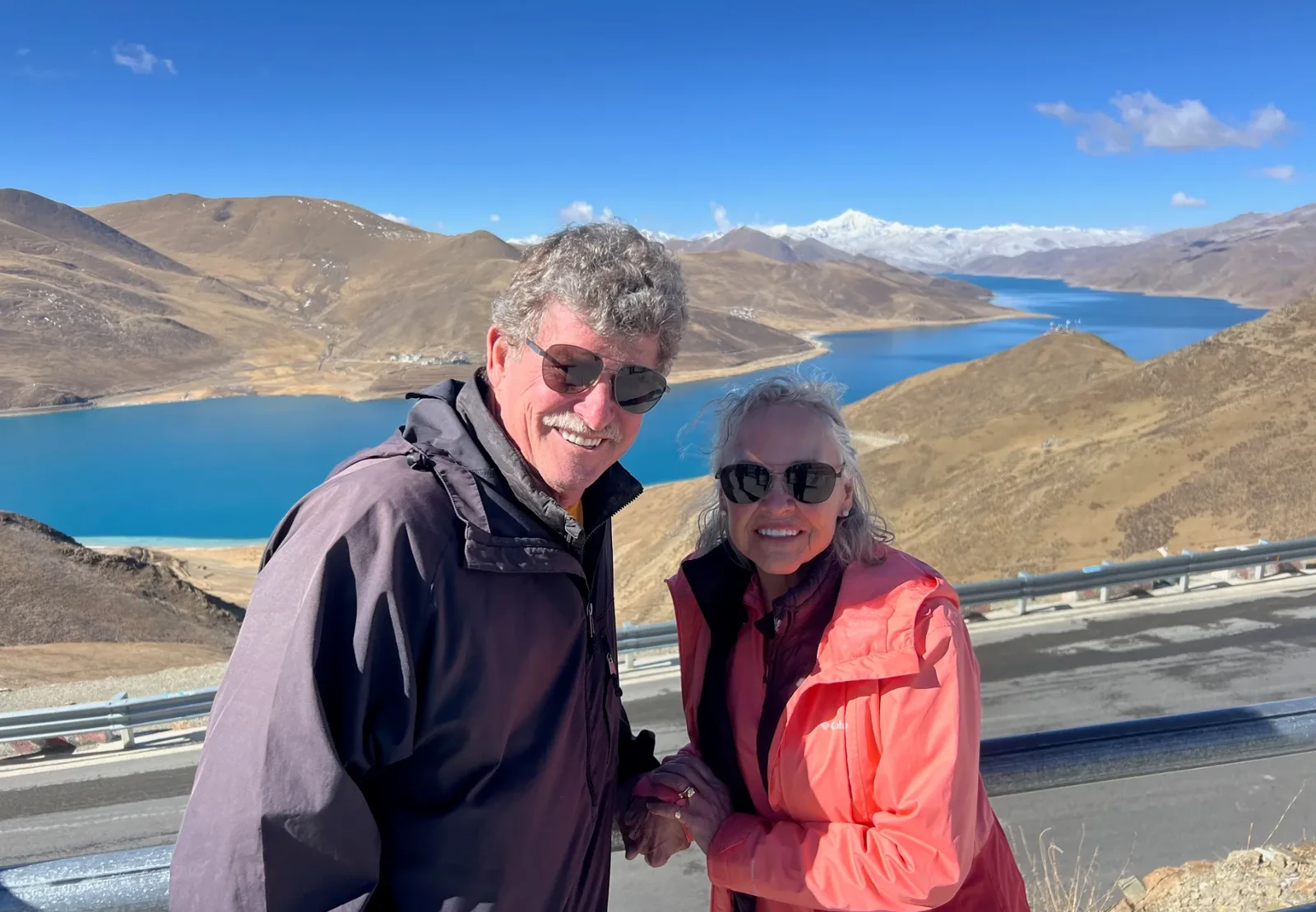
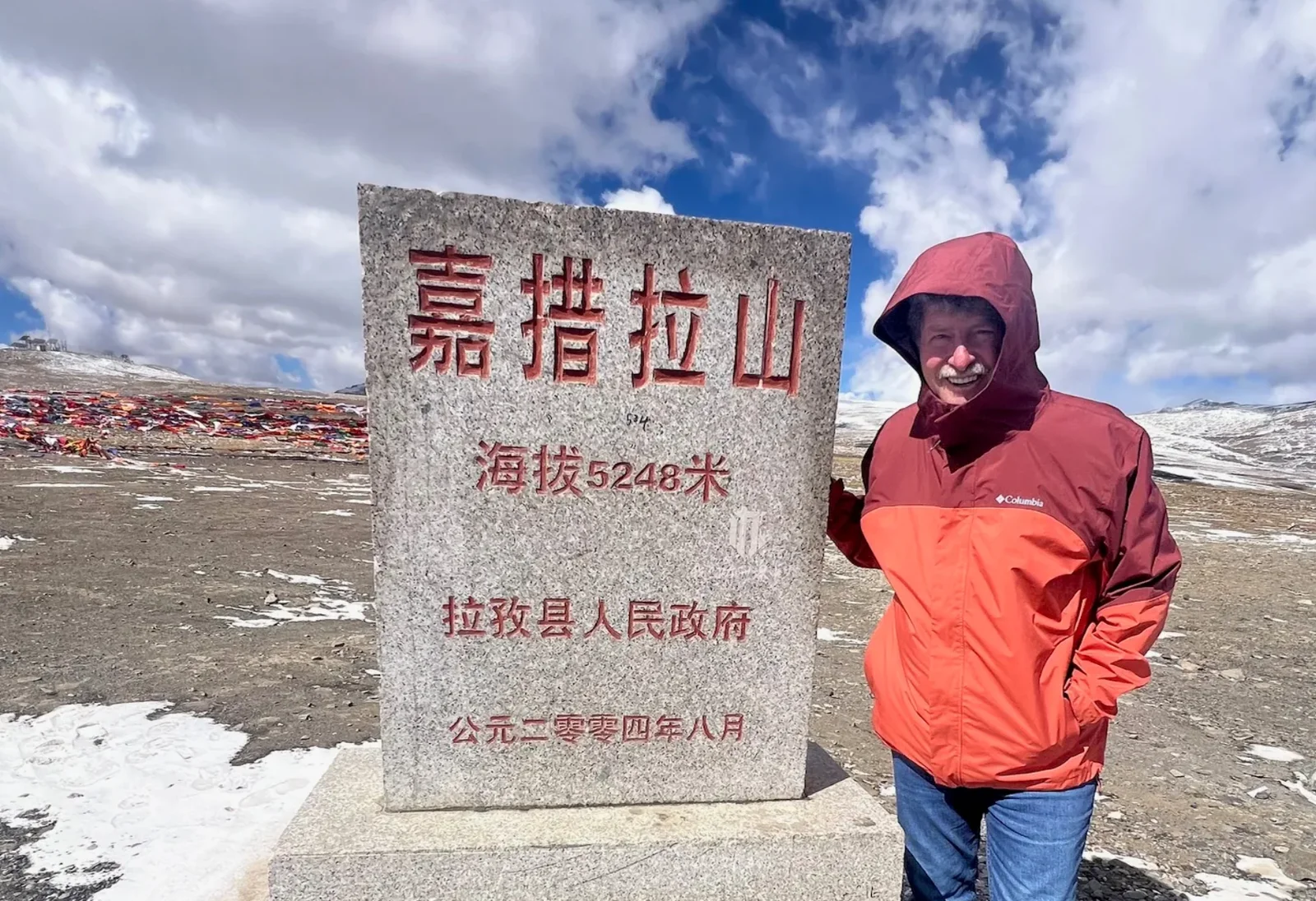
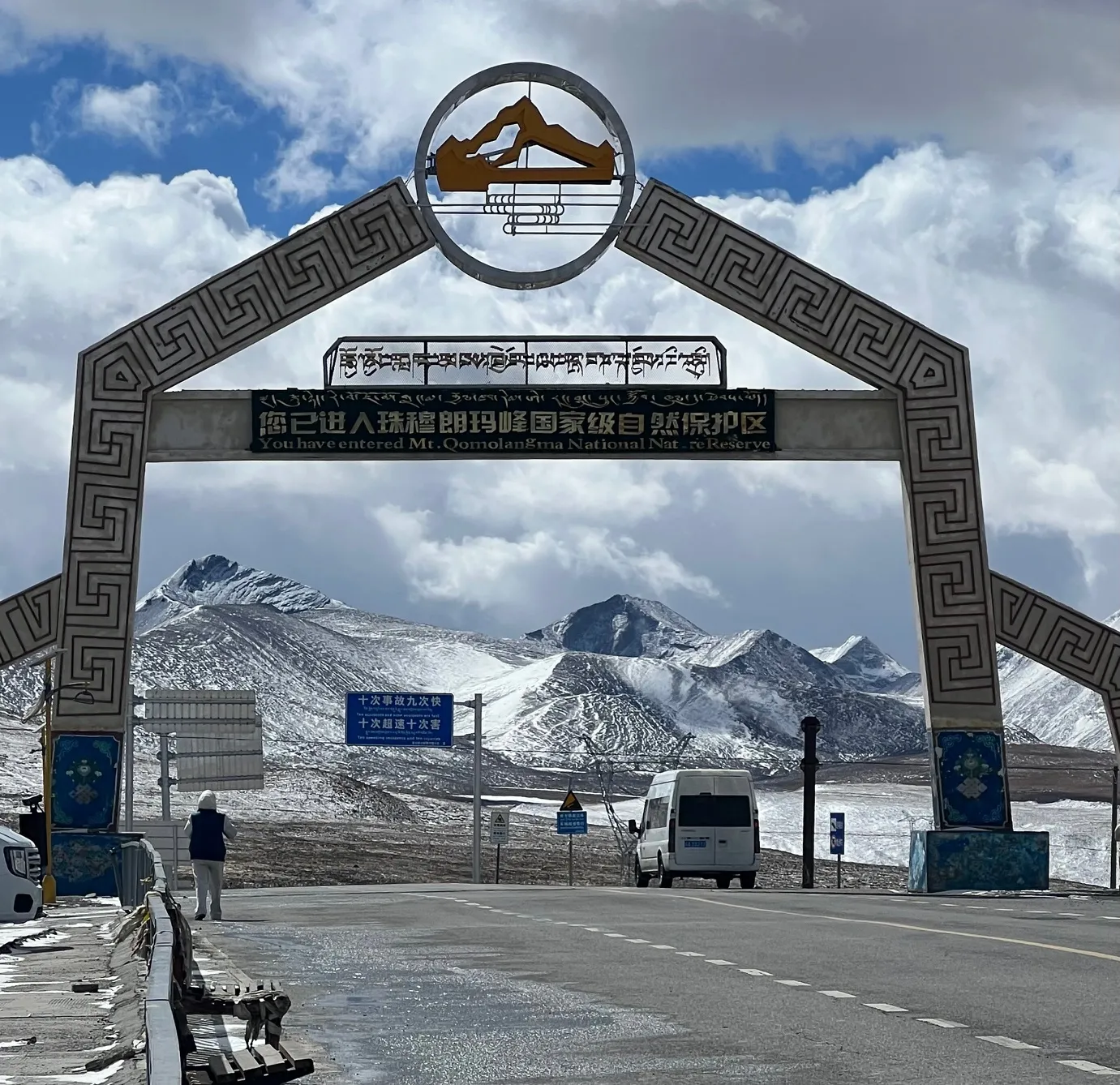
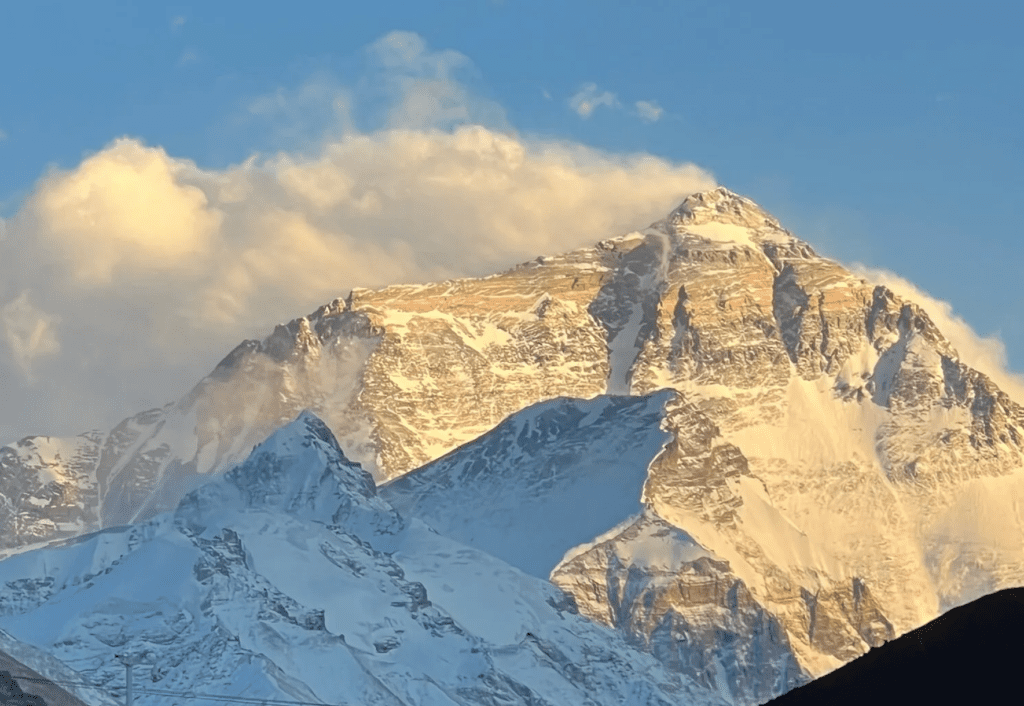
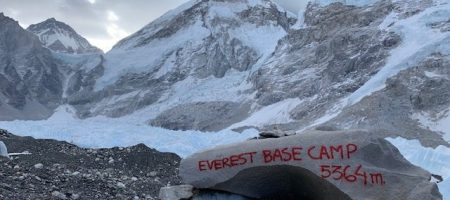
Around day 23 of their 32-day Himalaya Tour, the journey reached its geographical climax: the slow drive toward Mt. Everest North Face Base Camp.
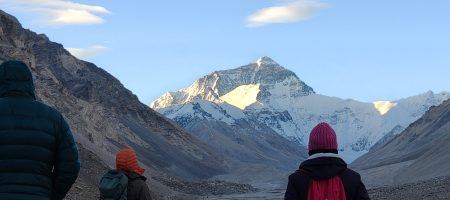
The visual hit them. Janie wrote that the first sight of Everest “makes a person drop to the knees.” She also noted that only a few visitors actually see the summit clearly. They were lucky. Everest showed itself, surrounded by a row of five Himalayan peaks each reaching over 8,000 meters, with Everest itself at 8,848 meters (29,032 feet). Stan added a quiet note that he could not imagine the desire to climb it.
Conditions at Rongbuk, the closest point to the North Base Camp, were raw: fierce wind, scarce oxygen, temperatures hovering around zero. They stayed for hours looking at the north face, took photos, and descended slowly. In Janie’s own words, this was the highlight of the entire 32-day Himalaya Tour.
Lhasa and the Spiritual Climax
Back in Lhasa by day 27, they visited the city’s great landmarks at a careful pace:
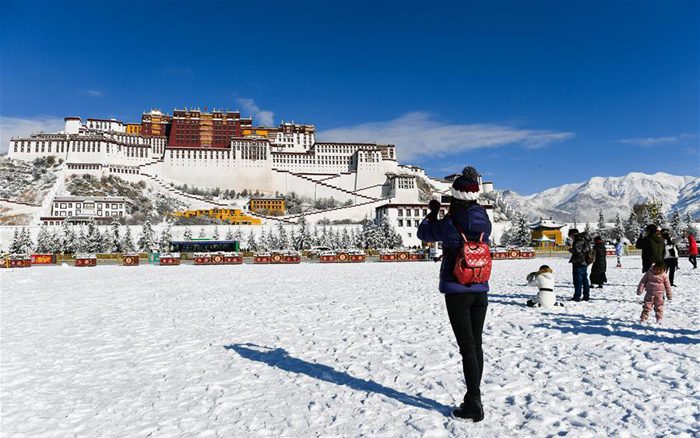
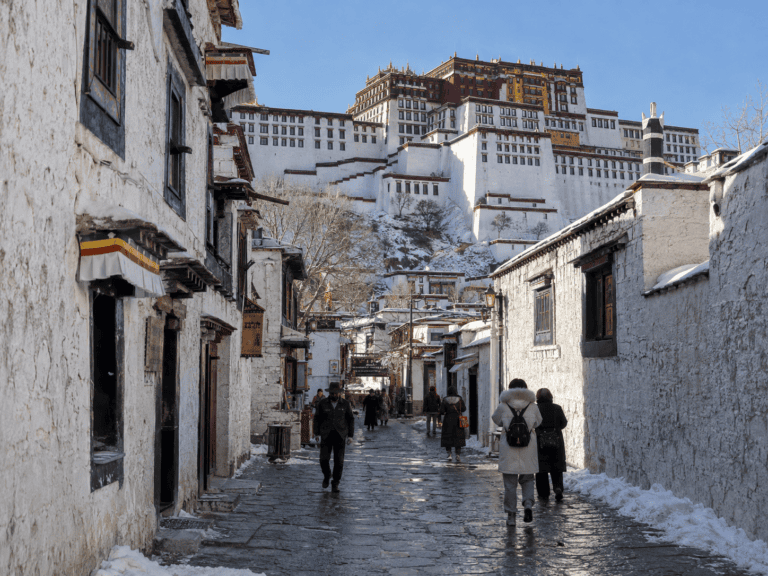
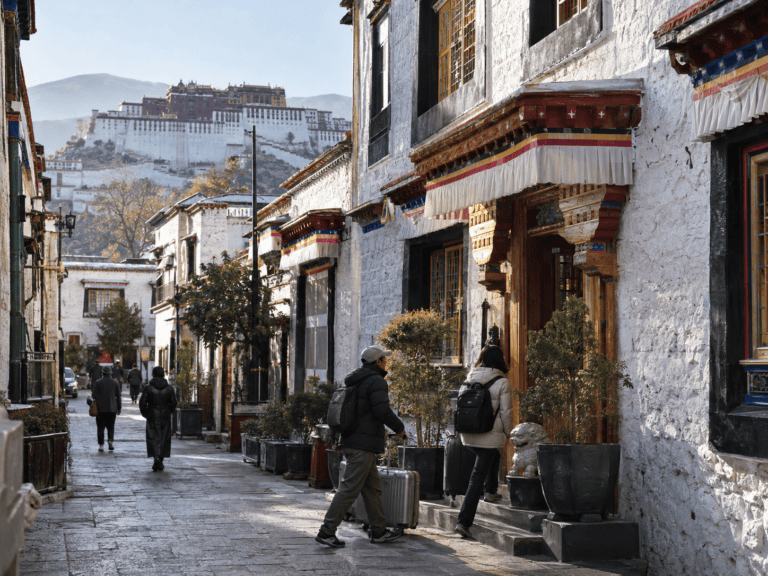
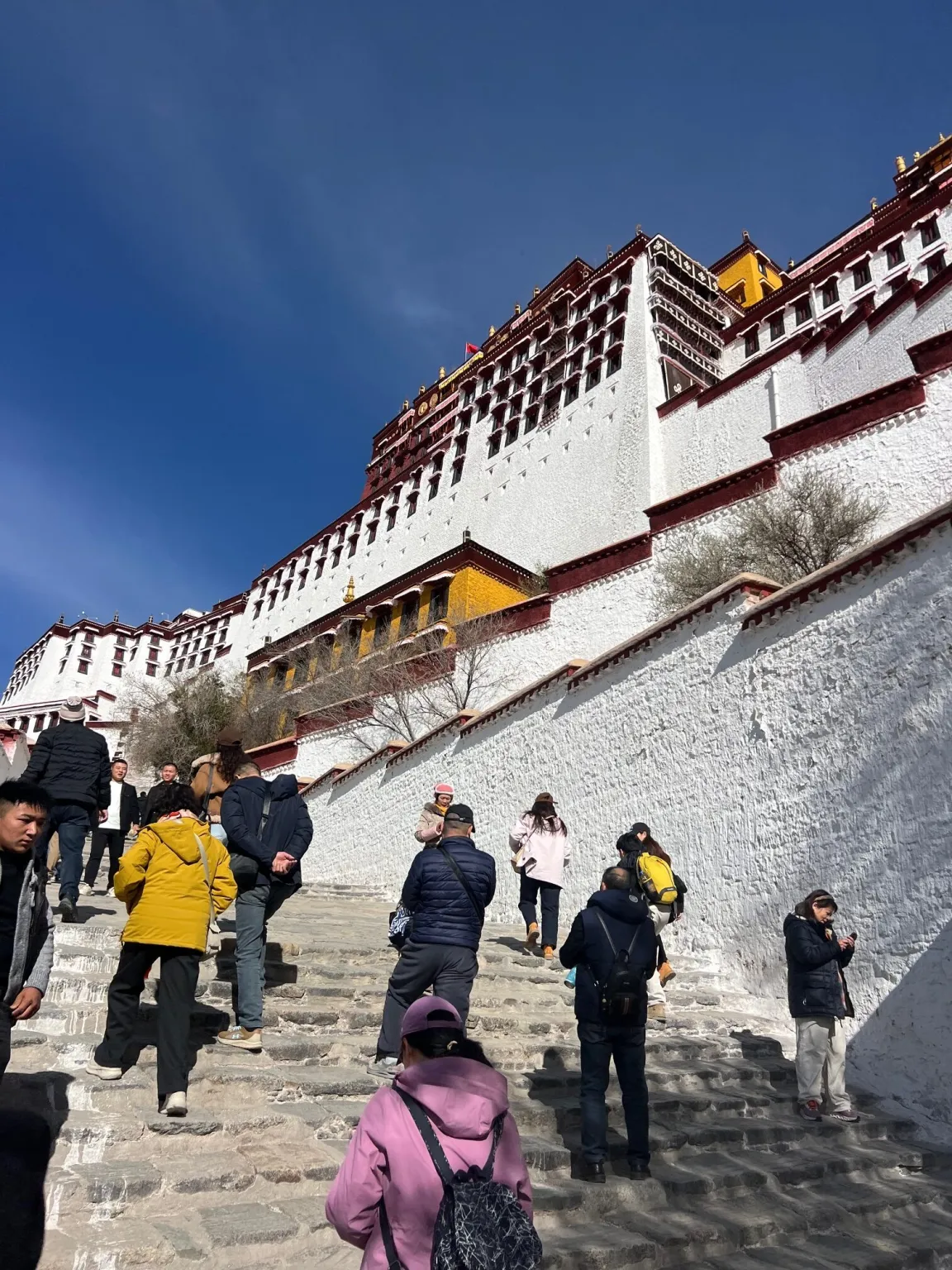
- An early climb up the Potala Palace, the gold-and-grand former winter palace of the Dalai Lamas until 1959.
- The evening noodle spots near Barkhor Street.
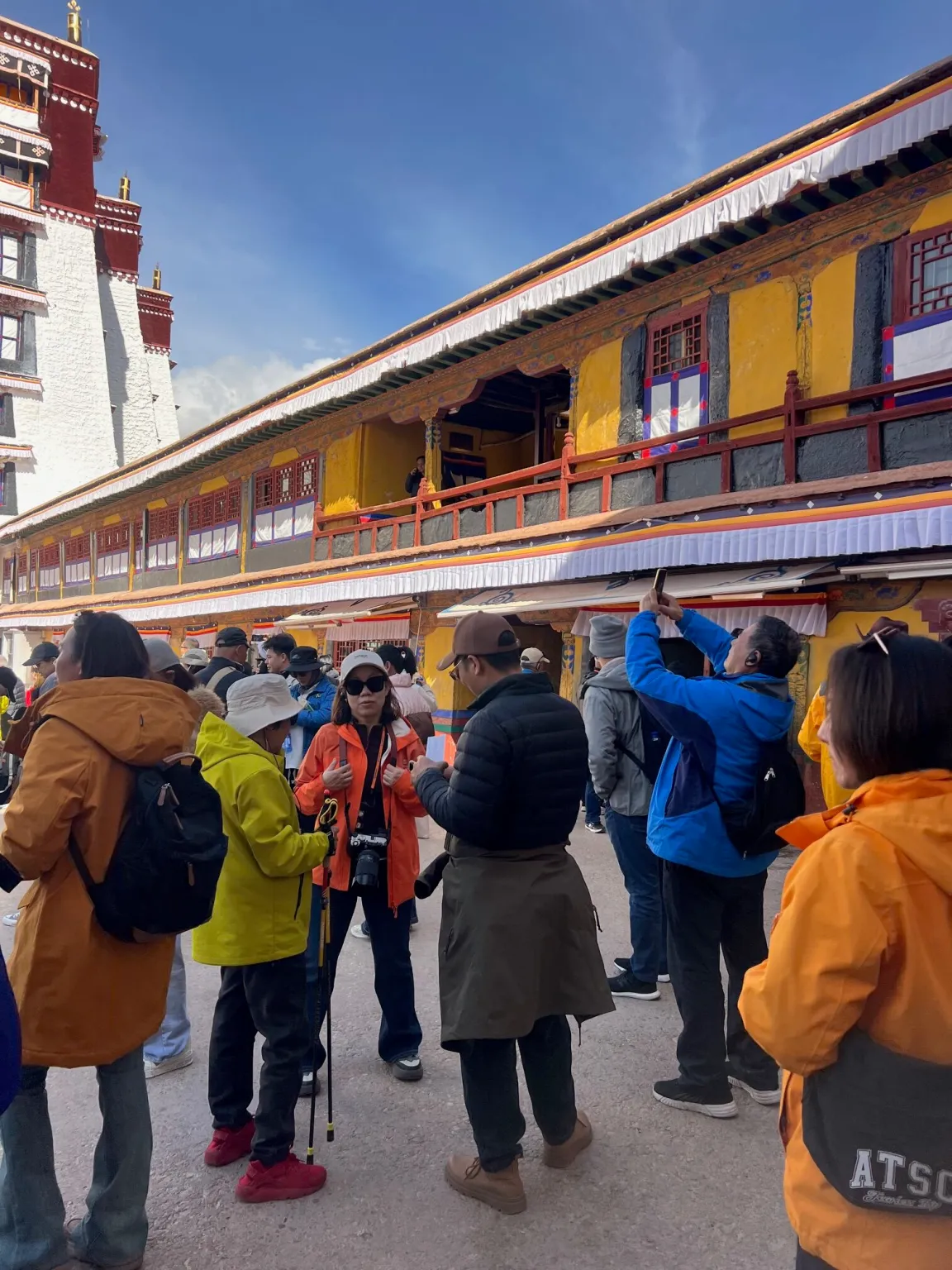
- A long afternoon around the monasteries on the edge of the old city.
- The Jokhang Temple and the pilgrim circuit that wraps around it. Janie was especially moved by this one.
Their Tibetan guide arranged a quieter day at a working monastery outside the city where Janie watched monks take their lunch in silence. We do not put that on the brochure. We arrange it whenever we can.
A lighter note from her diary that we loved: Tibetan hotel toilets sense your approach and open the lid automatically. The seats are heated. Once you are done, the toilet flushes itself and closes the lid. Very proper.
The Last Day
On the final day of her Tibet section, Janie wrote what became the closing line of her blog post titled “Tibet, The Roof of the World”:
“This wraps up perhaps the most exciting, soul-belittling adventure we have ever encountered. We are indeed lucky to have done so. We are lucky too, to have visited so many temples, monasteries, and stupas where we heard lesson after lesson about the kind, ‘take care of the world and each other’ Buddhist philosophy. It’s a nice way to live and a lot to think about.”
“Peace be with you.”
That is the kind of ending only a real Himalaya Tour earns.
How Their 32-day Himalaya Tour Was Built (and How Yours Can Be Too)
Janie and Stan’s 32-day Himalaya Tour was a custom build, but most of what they experienced came directly from our existing published itineraries, chained together and extended where they needed extra time. Here is how the legs folded into one another:
- A Bhutan opener mirroring our Bhutan 7-Day Tour with Tiger’s Nest at $1,730 — the gentle accli
- matization start.
- A Nepal middle leg mirroring our 8-Day Nepal Tour through Kathmandu, Chitwan, and Pokhara — the cultural and natural intensity.
- A Tibet closing leg mirroring the core of our 7-Day Tibet to Nepal Overland Tour from Lhasa to the Himalayas and the 8-Day Himalayan Adventure from Nepal to Tibet (Lhasa), designed in reverse so the cross-border direction matches their Bhutan → Nepal → Tibet flow.
- The overall structure, anchored on our published 16-Day Tibet, Nepal & Bhutan Trans-Himalayan Tour flow — extended where they wanted extra time.
The advantage of building a 32-day Himalaya Tour from published components is that you already know the legs work. The published routes have already accounted for altitude pacing, the Tibet permit process, Bhutan daily tariffs, and the right inner-city distances. You simply add time at the borders.
Real Himalaya Tour Options You Can Book Right Now
If a full 32-day Himalaya Tour is more than you want, here is how to choose a published
option based on what matters most to you:
- Bhutan only, the gentle opener: Bhutan 7-Day Tour with Tiger’s Nest — from $1,730
- Nepal only, no plateau: 8-Day Nepal Tour through Kathmandu, Chitwan and Pokhara
- Cross-border classic, Nepal to Tibet: 8-Day Himalayan Adventure from Nepal to Tibet (Lhasa)
- Short Tibet focus, overland to Nepal: 7-Day Tibet to Nepal Overland Tour from Lhasa to the Himalayas
- The published version of Janie and Stan’s trip: 16-Day Tibet, Nepal & Bhutan Trans-Himalayan Tour — extendable to ~32 days with extra days per country
If you want a strategic overview of all the major routes before booking, our planning guide on the ultimate Himalaya tour with 7 routes that change how you see the world gives you the full comparison. This article is the opposite: a single real Himalaya Tour lived in detail, day by day.
What This 32-day Himalaya Tour Story Is Not
A piece of honest framing before you book:
- It is not the cheapest trip in Asia. Tibet requires permits, Bhutan operates with a daily tariff, and altitude-aware logistics are real costs. Most multi-country Himalaya Tour packages of this length run between USD $4,500 and $7,500 per person (verify exact current pricing when you inquire).
- It is not for travelers who want to photograph twenty famous stops in seven days. The 32-day Himalaya Tour works in slow motion.
- Altitude is real. Anyone with serious cardiac or respiratory conditions should consult a doctor before booking any Tibet segment. We adjust itineraries, but altitude does not negotiate.
Frequently Asked Questions About a 32-day Himalaya Tour
How long should a Himalaya Tour really be?
At minimum 7 days for one country. 14 to 18 days is ideal for two countries. A full 32-day Himalaya Tour, similar to Janie and Stan’s, is the comfortable length for the three-country Trans-Himalayan experience.
Is 32 days too long for a Himalaya Tour?
No. 32 days is what makes a three-country trip possible without altitude sickness or rushed stops. Shorter itineraries work, but always mean trade-offs.
Which country is best for a first-time Himalaya Tour?
Nepal. It needs no special permits, the tourism infrastructure is the friendliest, and the entry cost is the lowest. Tibet and Bhutan come next.
Do I need a Tibet travel permit?
Yes. Tibet is the only country in the Himalaya that requires a special travel permit issued by the Tibet Tourism Bureau. When you book with us, we handle this fully.
Can I see Everest Base Camp on a 32-day Himalaya Tour?
Yes. The North Base Camp (Rongbuk side) is reachable only from Tibet, and is included in the Tibet legs of this kind of trip.
Is it safe to travel to Tibet and Bhutan in 2026?
Yes. Both countries are open to foreign tourists. Tibet requires a permit (we handle it), Bhutan requires a daily tariff that we include in every Bhutan tour.
Why This 32-day Himalaya Tour Story Matters
Most travel articles about a Himalaya Tour read like brochures. We wrote this one because Janie and Stan let us tell it the honest way. They did not check off Everest on a list. They saw it on day 23 of a 32-day Himalaya Tour, after three weeks of slow preparation, while their bodies were learning what 5,000 meters feels like, and their minds were slowly learning to be quiet.
That is the difference between a Himalaya Tour that lasts a few hours of photos and one that lasts a lifetime.
If you are ready to build yours, explore our full Himalaya tour collection or send us a message with what you want to feel. We will build the rest.