 About
About





 Tibet Tours
 Tibet Train Tours
 Himalaya Tours (Tibet-Nepal-Bhutan)
 Private Tours
 Mount Kailash Tours
 Trekking Tours
 Travel Guide
 Tibet Travel Blog
 FAQ
FAQ About us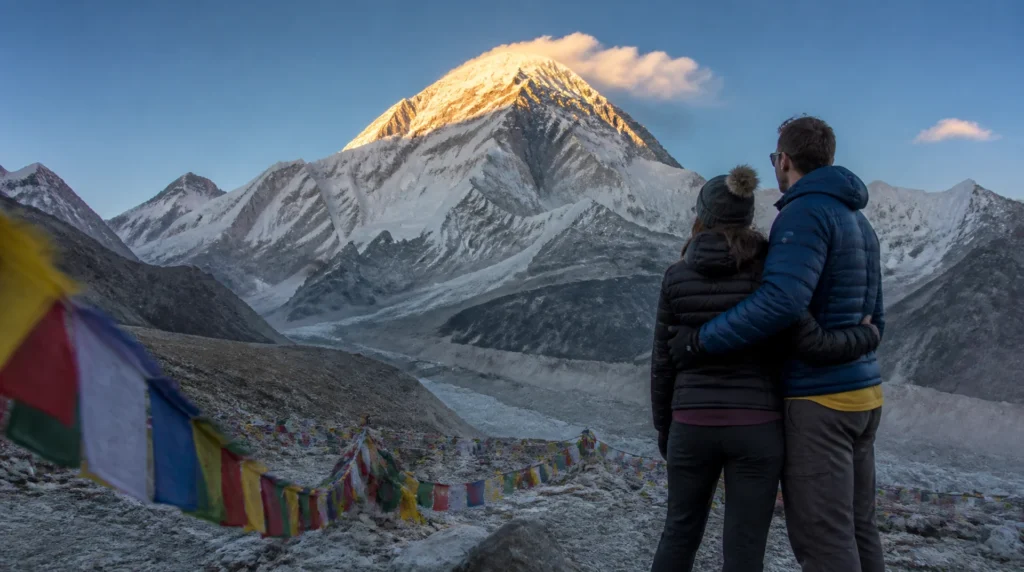
A Himalayan honeymoon across Tibet, Nepal, and Bhutan is something else entirely. It’s the kind of trip that becomes the story you tell for the next 40 years, the one where you stood together at Everest Base Camp at sunrise, hiked up to a monastery perched on a cliff, and watched the sun drop behind the Himalayas from a valley that feels untouched by everything.
This is not a beach-and-cocktails honeymoon. It’s the honeymoon for couples who want to start their marriage with something real.
This guide covers everything you need to know about planning a 16-day Himalayan honeymoon with Experience Tibet, from the full itinerary to what actually makes it romantic (and what to expect at 5,200 meters above sea level).
Why a Himalayan honeymoon works so well for couples

Let’s be honest: a two-week trip through three countries at high altitude is not for everyone. But that’s exactly the point.
A Himalayan honeymoon filters itself. The couples who choose it tend to be adventurous, curious, and slightly allergic to cookie-cutter trips. They want to arrive somewhere and feel genuinely far from home. They want shared memories that go beyond a poolside photo.
Here’s what this trip actually gives you:
A built-in sense of awe. There are moments on this route, crossing Dochula Pass in Bhutan, or watching dawn break over Everest, where you and your partner will simply go quiet together. That kind of shared silence is rare. It’s also deeply romantic.
Low crowds, high privacy. Tibet requires a permit and limits tourism. Bhutan caps visitors with a Sustainable Development Fee. Nepal’s cultural circuit is well-trodden, but the tour keeps you away from backpacker chaos. You’re not sharing this experience with thousands of people.
Forced togetherness (the good kind). Long drives across the Tibetan plateau, overnight stays in small mountain towns, dinners in local restaurants where nobody speaks your language. These are the moments that build a marriage.
A story nobody else has. Ask most couples where they honeymooned. Bali, Paris, Santorini. Ask them if they watched sunrise over Everest from Tibet. That’s your answer.
The 16-day Himalayan honeymoon route at a glance
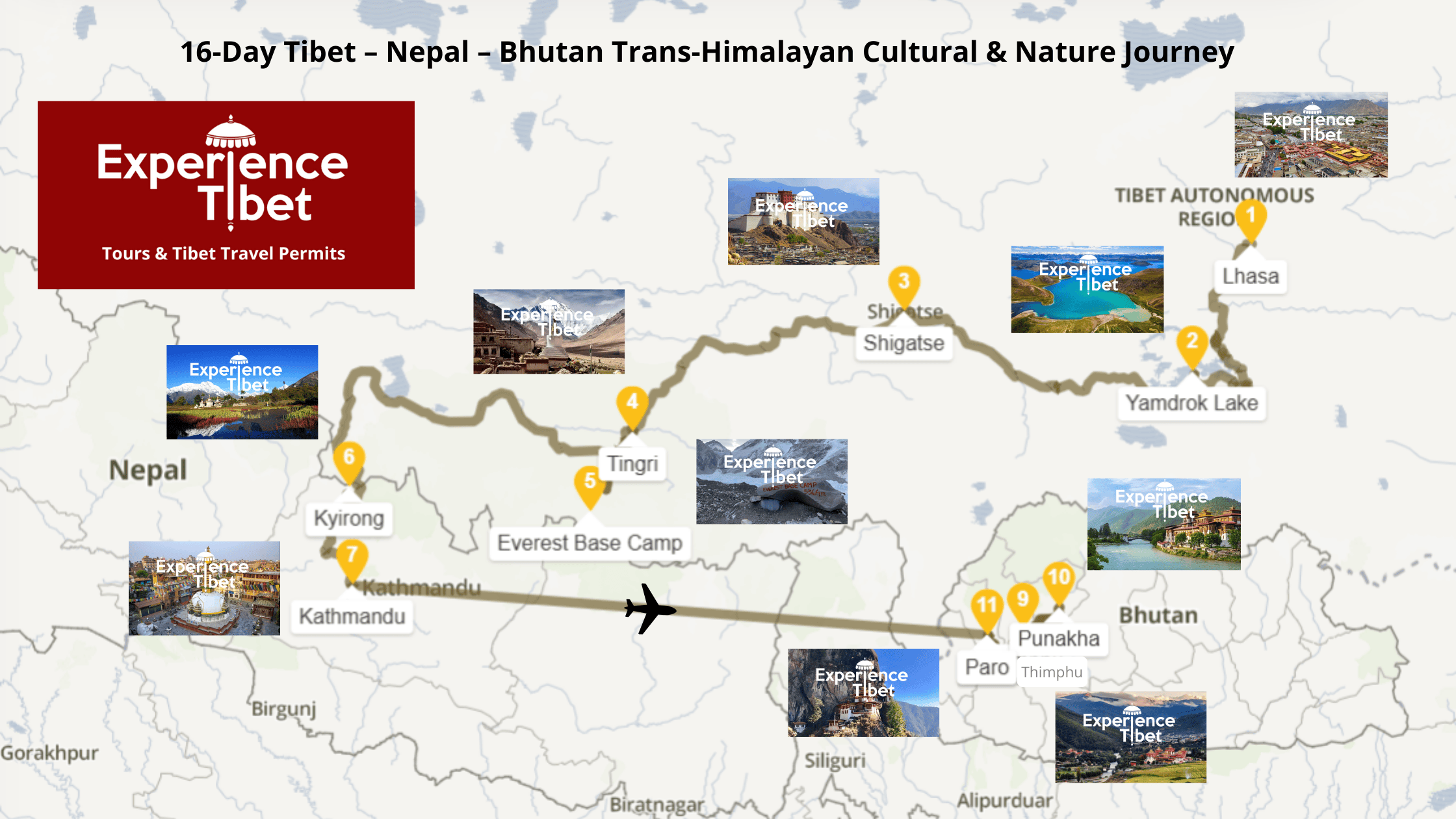
The full route runs: Lhasa → Yamdrok Lake → Shigatse → Everest Base Camp → Kyirong Valley → Kathmandu → Paro → Thimphu → Punakha → Paro (departure).
Three countries. Sixteen days. One continuous overland and fly journey through the most spectacular mountain landscapes on earth.
You can see the full itinerary on the 16-Day Tibet, Nepal and Bhutan Trans-Himalayan Tour
Day by day: what your Himalayan honeymoon looks like
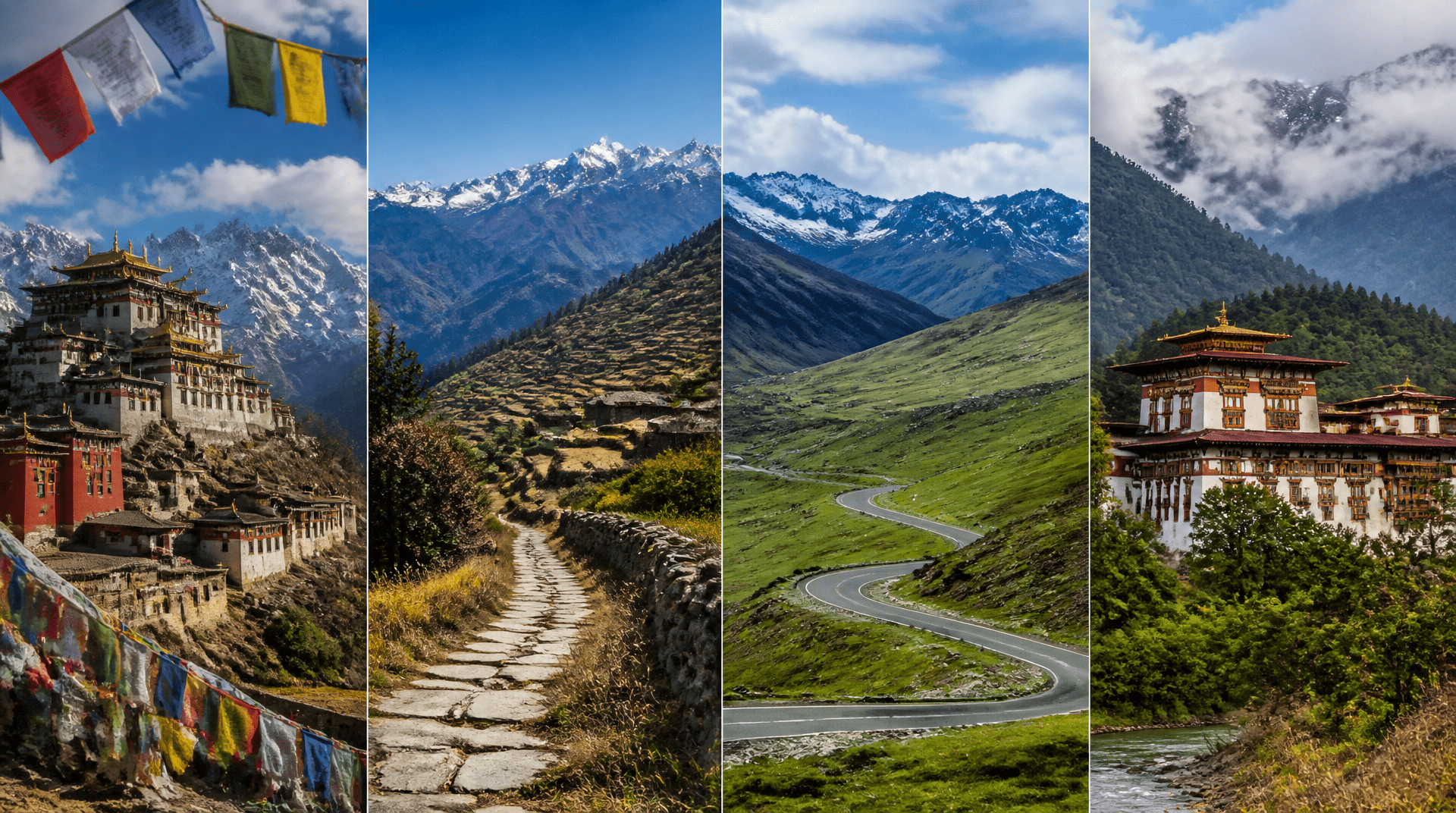
Days 1 to 3: Lhasa, Tibet
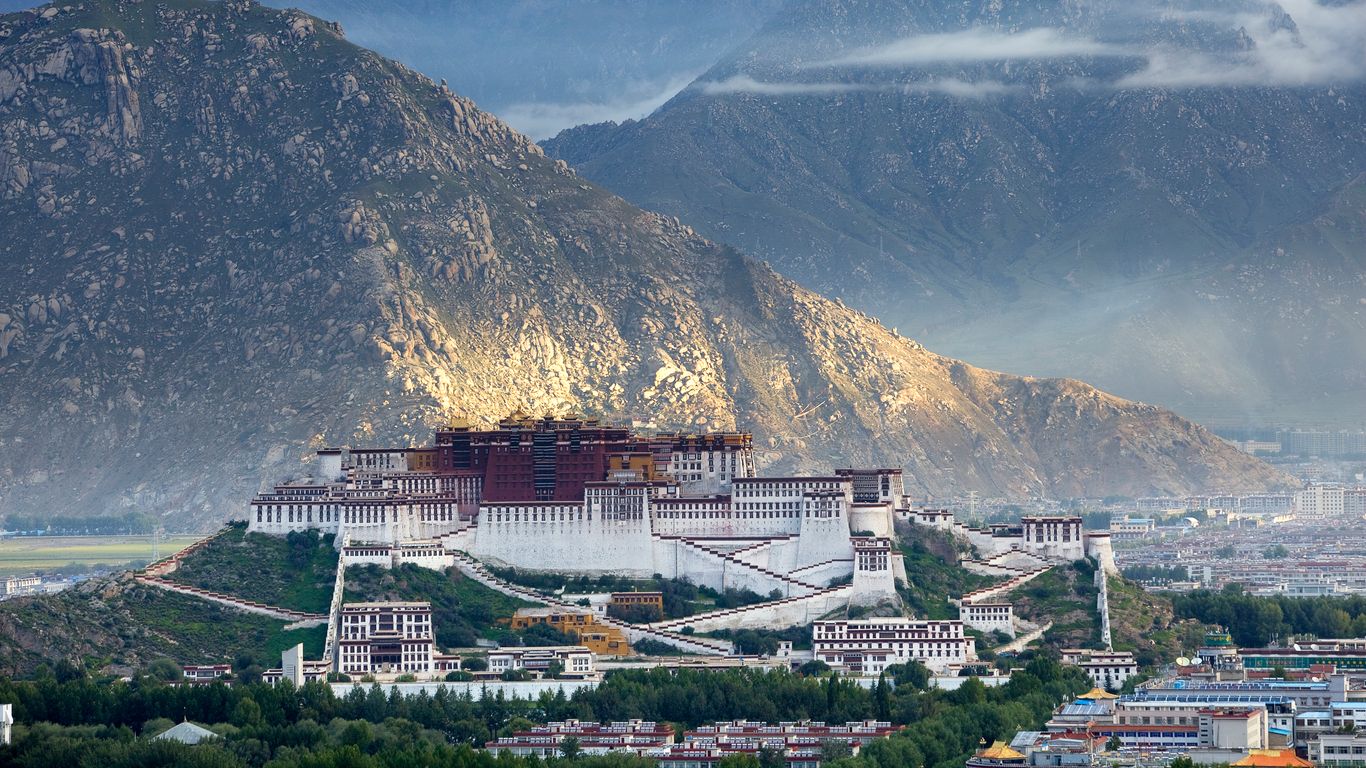
You land in Lhasa at 3,650 meters. Day one is intentionally slow, a rest day for acclimatization. Don’t skip this part. Your body needs it, and it gives you an excuse to wander Lhasa at your own pace, find a rooftop cafe, drink yak butter tea, and just arrive.
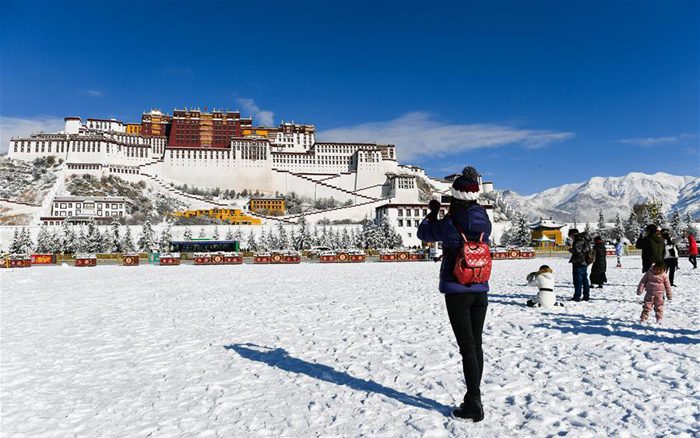
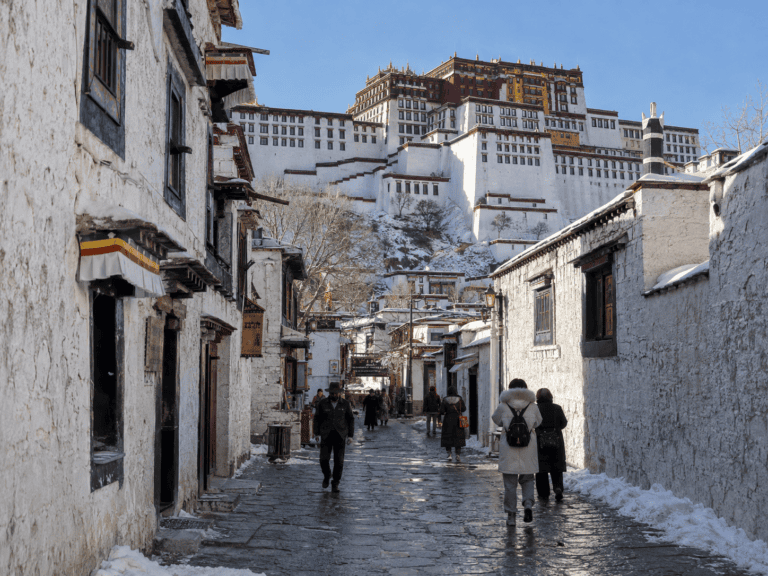
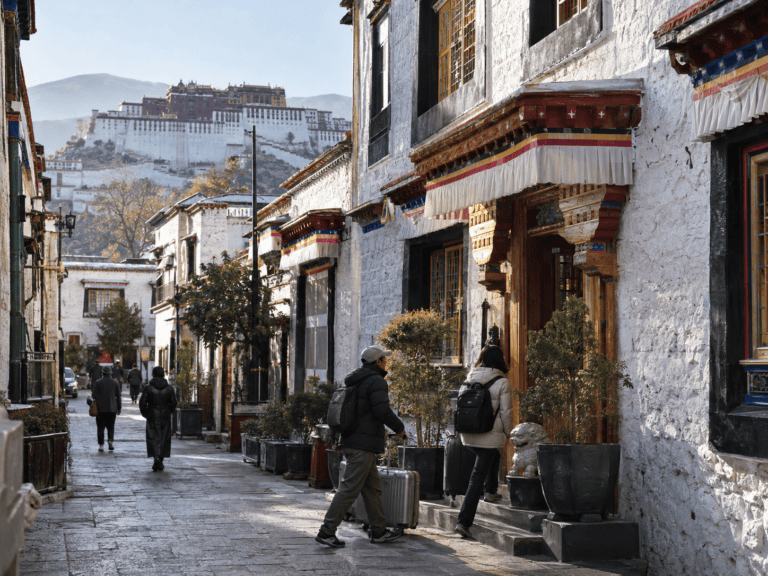
Days two and three are the cultural heart of Tibet. Drepung Monastery in the morning, where monks in saffron robes move through enormous courtyards in near silence. Sera Monastery in the afternoon, where monk debate sessions turn suddenly loud and theatrical (genuinely fun to watch). And then the Potala Palace, the Jokhang Temple, the Barkhor pilgrimage circuit where locals spin prayer wheels and the air smells of juniper incense.
For couples interested in spirituality, these three days are extraordinary. For couples who aren’t, they’re still some of the most visually stunning places on the planet.
Day 4: Yamdrok Lake to Shigatse
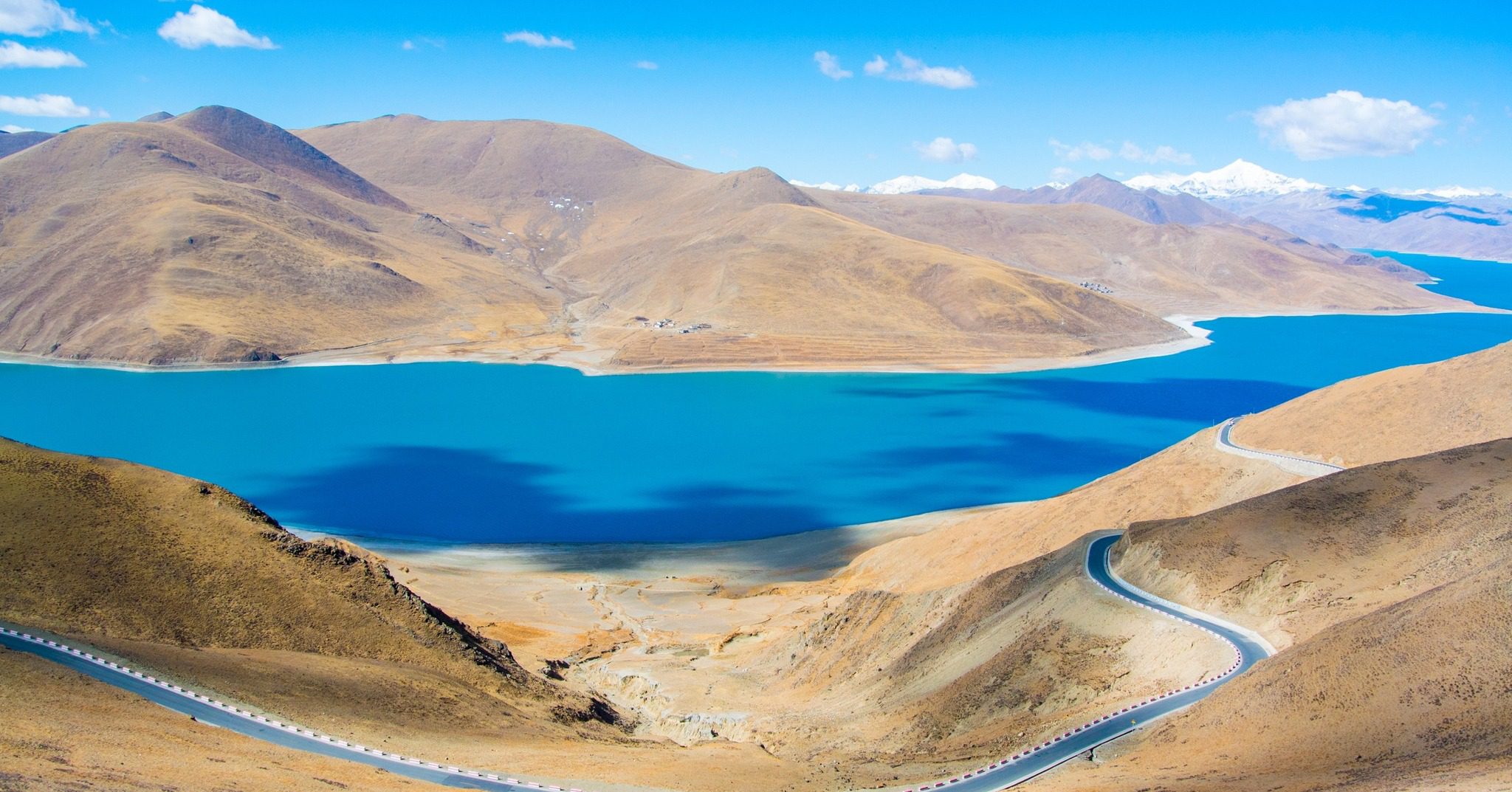
This is a driving day, and it’s one of the best on the trip.
The road from Lhasa to Shigatse passes over Kamba-La Pass and then down to Yamdrok Lake, one of Tibet’s three sacred lakes. The color is almost unreal, a deep turquoise that changes depending on the light and the hour. Stop, walk to the edge, take the photo. It earns it.
From Yamdrok you continue to Shigatse, Tibet’s second city and home to Tashilhunpo Monastery.
Day 5: Everest Base Camp (North Face)
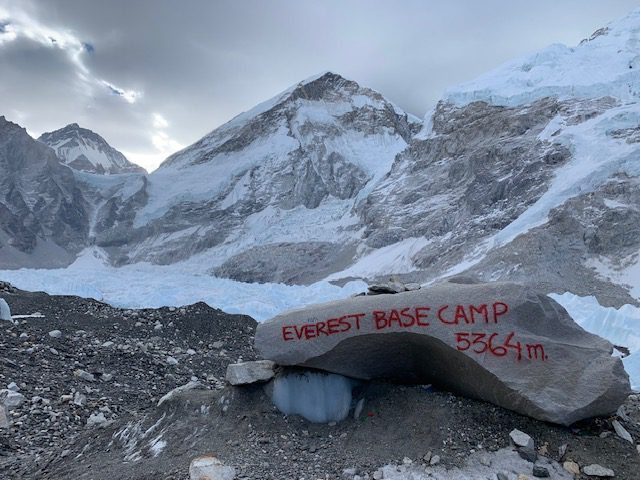
There’s no polite way to say this. Waking up at Everest Base Camp on Day 5 of your honeymoon is absurd. In the best possible way.
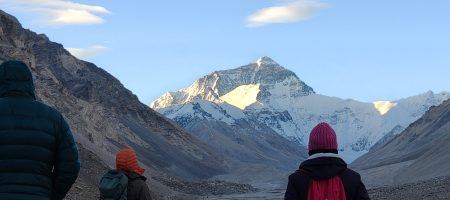
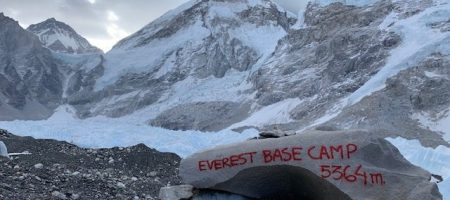
The North Face base camp sits at 5,200 meters. The drive there crosses high plateau with views of Himalayan peaks stacked across the horizon. The Everest eco-bus takes you the final stretch to the viewing area. And then, if the weather cooperates, you see it. The mountain. Close enough to feel it.
Sunrise at EBC during honeymoon season (spring or autumn) is something couples consistently describe as a stop-everything moment. It’s hard to explain until you’re there.
The tour includes the Everest eco-bus fee in the price. Worth noting.
Day 6: Dingri and Kyirong Valley
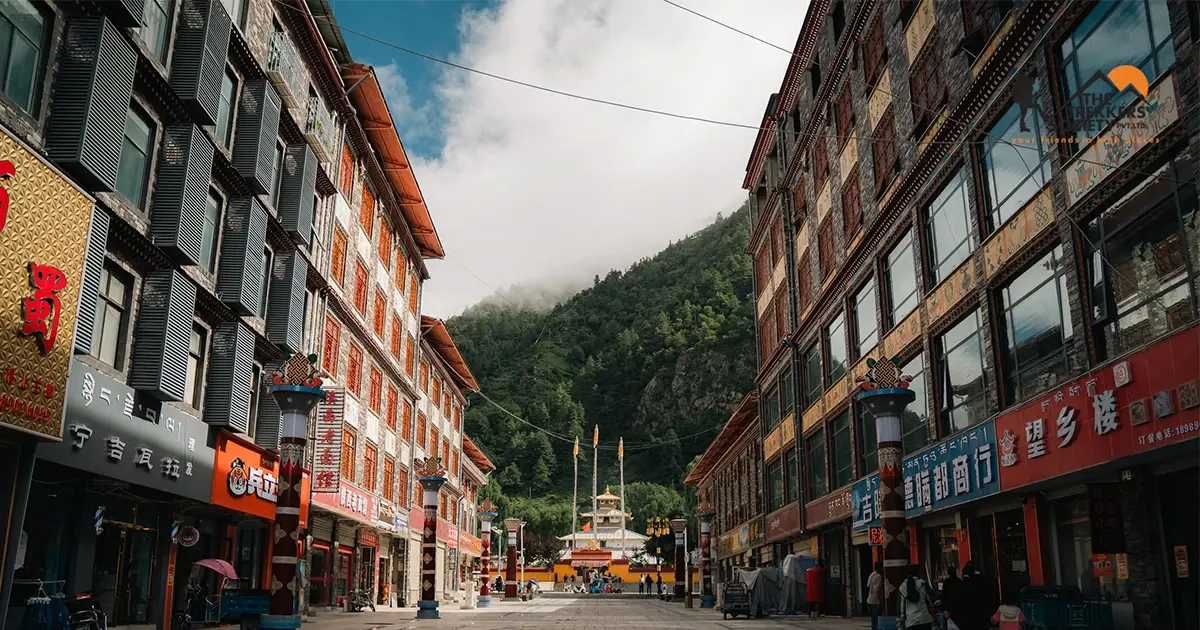
You descend from the high plateau into the greener Kyirong Valley. The temperature rises. The landscape changes dramatically, from bare high-altitude steppe to terraced hillsides, rivers, and forest. After five days at altitude, Kyirong feels like breathing normally again.
Day 7: Border crossing into Nepal, arrival in Kathmandu
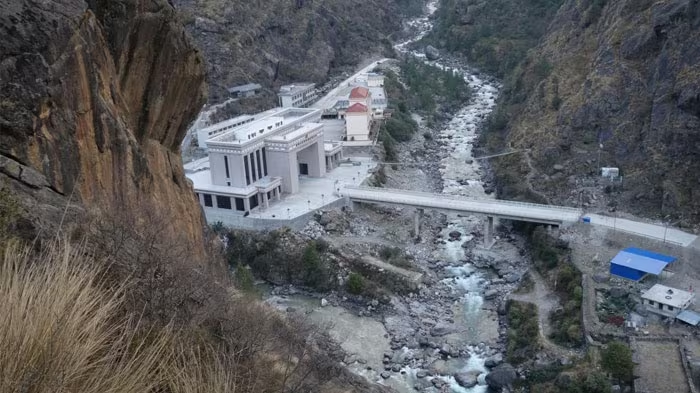
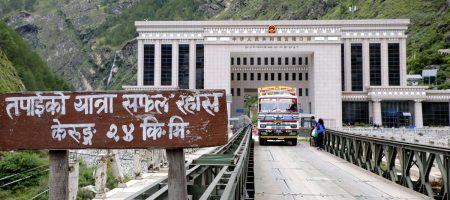
This is one of the more logistically interesting days. You cross the Tibet-Nepal border at Kyirong and drive through river gorges and terraced hillsides into Nepal. Kathmandu arrives as a shock of noise, color, and lower altitude after the silence of Tibet.
The tour includes the vehicle transfer from the Kyirong border to Kathmandu in the price.
Days 8 and 9: Kathmandu Valley
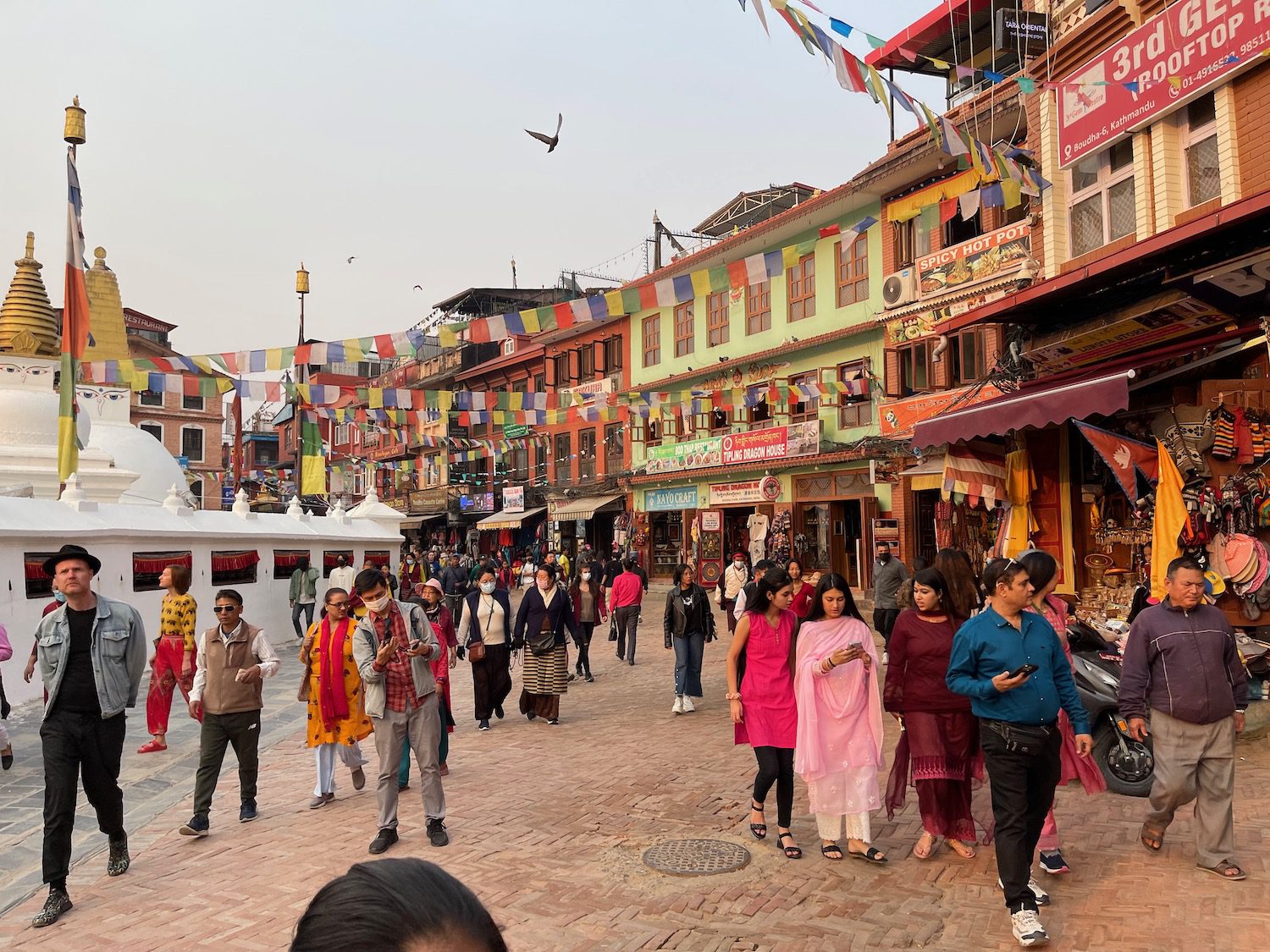
Two full days in Kathmandu covers Durbar Square (the old royal palace complex), Patan’s Newari architecture, Bhaktapur’s medieval streets, Swayambhunath Stupa (the Monkey Temple with its panoramic city views), Pashupatinath Temple on the sacred Bagmati River, and the great white dome of Boudhanath.
Kathmandu is chaotic and beautiful. It smells of marigolds and incense. The streets are narrow and the traffic is creative. For couples who thrive on sensory overload, it’s electric.
Day 10: Flight to Bhutan (Paro)
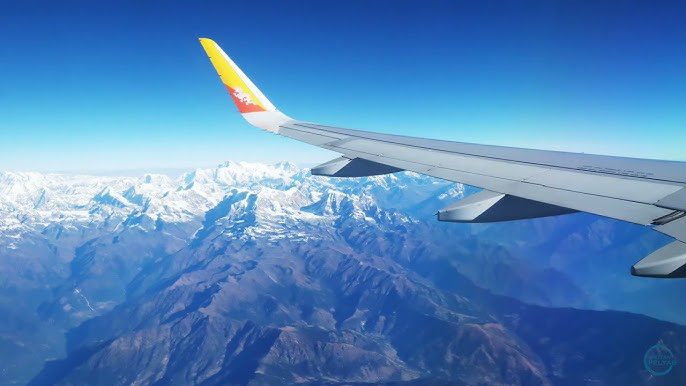
The flight from Kathmandu to Paro is one of the most dramatic in the world. On a clear day, you can see Everest and the entire Himalayan chain out the window. The descent into Paro requires pilots certified specifically for this approach, threading between mountain ridges into a narrow valley. Passengers tend to applaud when they land. This is completely normal.
Day 11: Tiger’s Nest Monastery, Paro
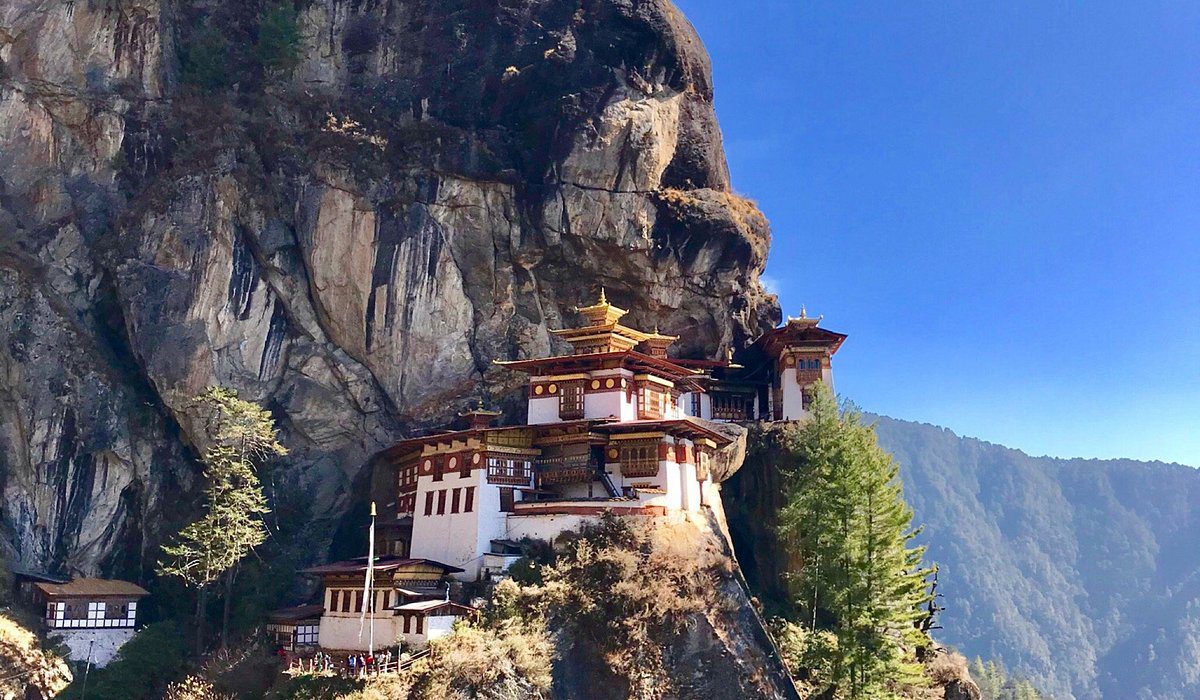
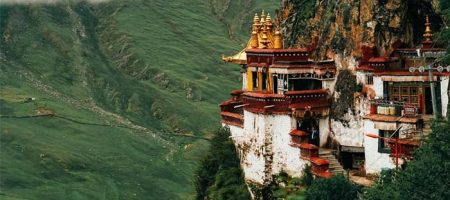
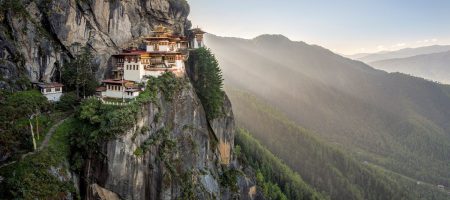
The hike to Taktsang, or Tiger’s Nest, takes about two to three hours up. The trail goes through pine forest, past prayer flags, past a waterfall, until the monastery appears clinging to a 900-meter cliff face above you.
This is the hike that defines Bhutan in most people’s minds. Doing it together on your Himalayan honeymoon adds an obvious layer. It’s not technically difficult, but the altitude and the length make it a real morning. The views from the top are complete.
In the afternoon, Kyichu Lhakhang, one of Bhutan’s oldest and most sacred temples, keeps the pace slower and more reflective.
Day 12: Thimphu, Bhutan’s capital
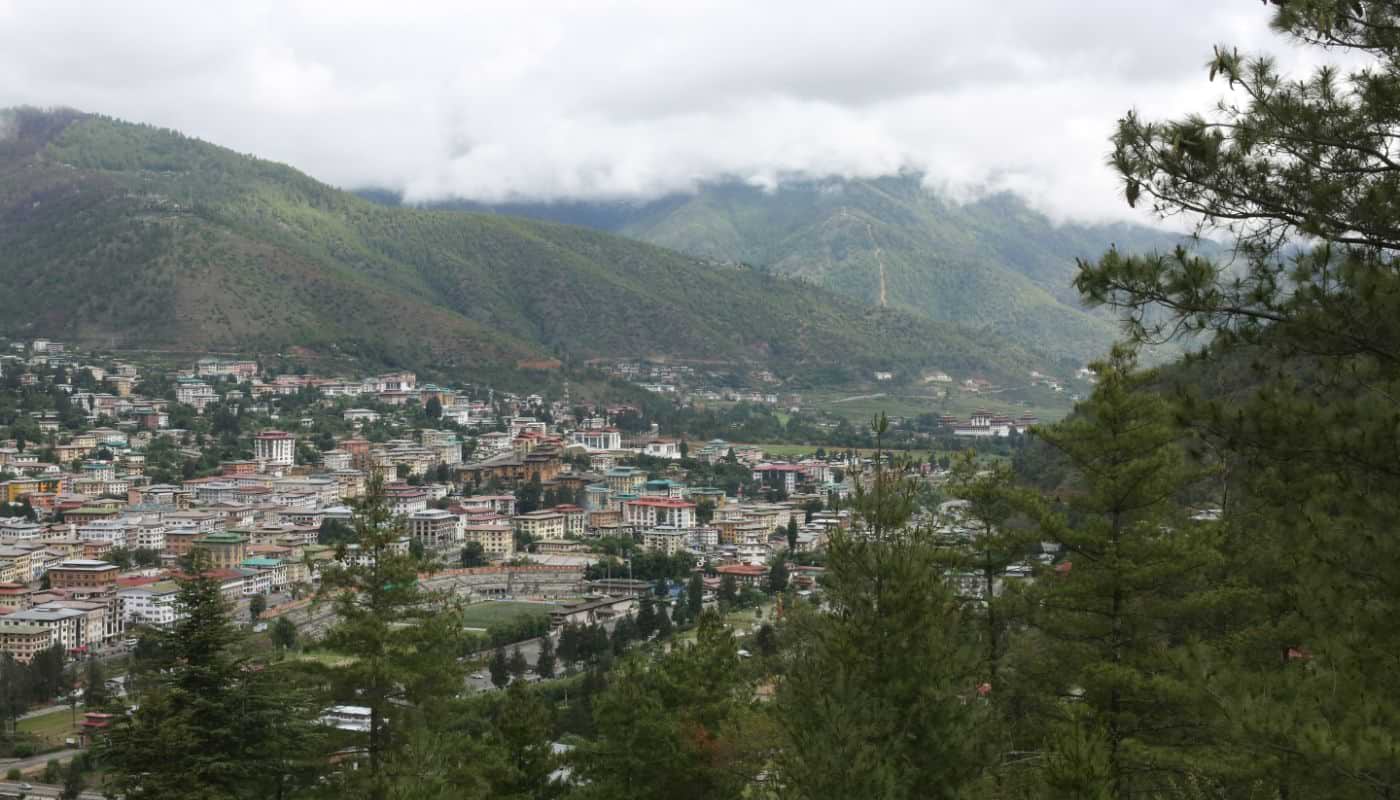
Thimphu is the only national capital in the world with no traffic lights. A traffic policeman in a decorated booth directs cars instead. The Bhutanese found that traffic lights felt impersonal.
Visit the Memorial Chorten, the giant Buddha Dordenma statue overlooking the valley, traditional craft markets, and local monasteries. Thimphu manages to be both a functional modern capital and deeply, genuinely traditional at the same time.
Day 13: Dochula Pass and Punakha Valley
The drive from Thimphu to Punakha crosses Dochula Pass at 3,100 meters, where 108 white chortens stand in rows against a backdrop of snow peaks on a clear day. It’s one of those spots where someone always reaches for their partner’s hand.
The descent into Punakha Valley is green and warm, rice paddies and orange trees and rivers running fast between hills. Chimi Lhakhang, known as the Fertility Temple, sits in the middle of a rice field and requires a 20-minute walk across paddies to reach. It’s unusual, funny, and oddly moving. (Especially on a honeymoon. You’ll understand when you get there.)
Day 14: Punakha Dzong, river walks, nunnery
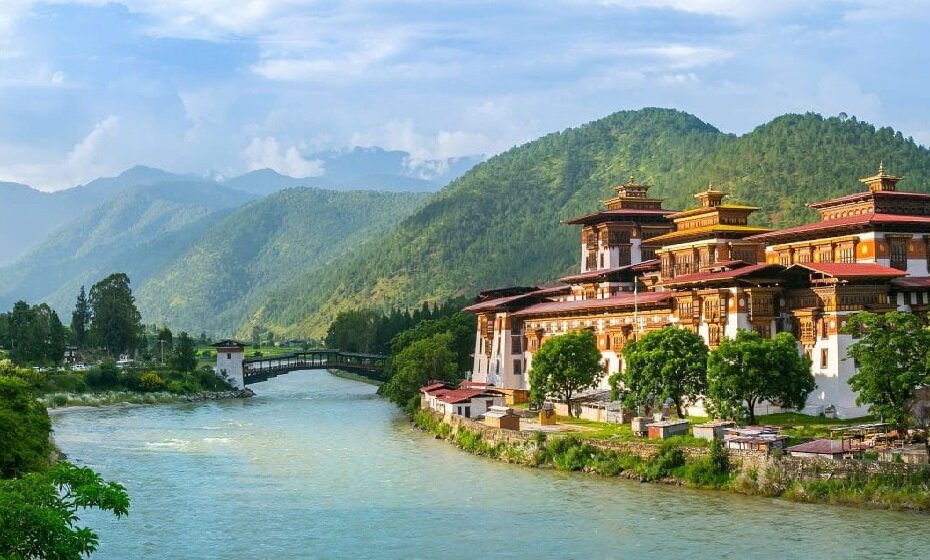
Punakha Dzong stands at the confluence of two rivers and is widely considered the most beautiful fortress monastery in Bhutan. The interior is painted in deep reds and golds. Outside, the surrounding valley offers easy walks through rice fields and riverbanks.
The local nunnery visit gives a completely different perspective from the monastery circuit, quieter and less visited, with remarkable views of the valley.
This day is the most genuinely peaceful on the whole trip. After 13 days of movement, Punakha gives you space to be slow together.
Day 15: Simtokha Dzong, National Museum, farewell dinner in Paro
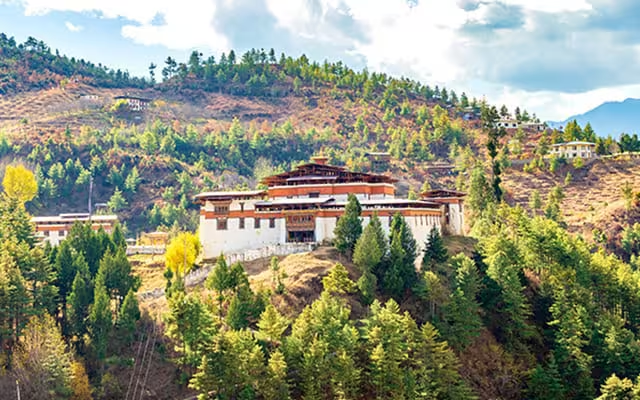
The return to Paro stops at Simtokha Dzong, the oldest fortress in Bhutan, and the National Museum (Ta Dzong), which puts everything you’ve seen in the previous two weeks into historical context.
The farewell dinner in Paro is included in the tour price. After 15 days of travel across three countries, it’s a good moment to sit, eat something good, and look back at what you actually just did.
Day 16: Departure from Paro International Airport
Transfer to the airport and the flight home. You’ll come back different. Most couples do.
What’s included in the price (and what isn’t)
Included from US$3,270 per person:
- Tibet Travel Permit (required for all foreign travelers, handled by Experience Tibet)
- English-speaking local guides throughout all three countries
- All ground transportation, including the Kyirong to Kathmandu vehicle transfer
- Accommodation in 3-star hotels, double occupancy, with breakfast daily
- Welcome dinners in Tibet and Nepal
- All entrance fees, including the Everest eco-bus
- Travel insurance
- Oxygen supply (important at altitude)
- Bhutan visa fee ($40 per person)
- Bhutan Sustainable Development Fee or SDF ($100 per person)
- Complimentary bottled water
Not included:
- Flights to/from Lhasa and from Paro
- Meals not specified in the itinerary
- Single supplement (if applicable)
- Tips: the recommendation is $7 per day per person, split between guide and driver
This is a small group tour for 2 to 15 participants. For a honeymoon, being in a small group actually works in your favor. It’s not a private tour, but it doesn’t feel like a bus trip either.
Best time for a Himalayan honeymoon
The sweet spots are spring (April to early June) and autumn (late September to November).
Spring brings clear skies, moderate temperatures, and the best Everest visibility. Tibet opens to tourists after the Tibetan New Year period. Bhutan is warm and green.
Autumn has stable weather, excellent mountain visibility, and Bhutan’s major festivals (tsechus) often fall in October or November. The Punakha valley turns gold.
Avoid: July and August, when monsoon rains affect Nepal and Bhutan heavily. January and February are cold across all three countries, and Tibet can be logistically restricted.
A note on permits: Tibet requires advance planning. The Tibet Travel Permit typically takes at least two weeks to process, sometimes more during peak season. Experience Tibet handles the permit application as part of the tour package, but book as early as possible. You can also learn more about how the process works in our Tibet Travel Permit Online Application 2026 guide. And for the full range of tour options, see all Tibet tours here.
Is altitude sickness a concern for couples?
Yes, and it should be on your radar. Lhasa sits at 3,650 meters. Everest Base Camp is at 5,200 meters.
The itinerary is designed with acclimatization built in. Day one in Lhasa is a rest day. The altitude increases gradually as you move west toward Shigatse and EBC. The descent into Kyirong and then Kathmandu provides real relief.
Experience Tibet includes oxygen supply and travel insurance in the tour price. Most people feel mild symptoms (headache, slight breathlessness) in the first day or two in Lhasa and then adapt. Drinking water, resting, and not rushing helps significantly.
It’s worth talking to your doctor before booking. Some people take acetazolamide (Diamox) as a preventive. Not everyone does. Either way, the altitude is manageable with the right preparation and the right pace, which this tour provides.
Why choose Experience Tibet for your Himalayan honeymoon
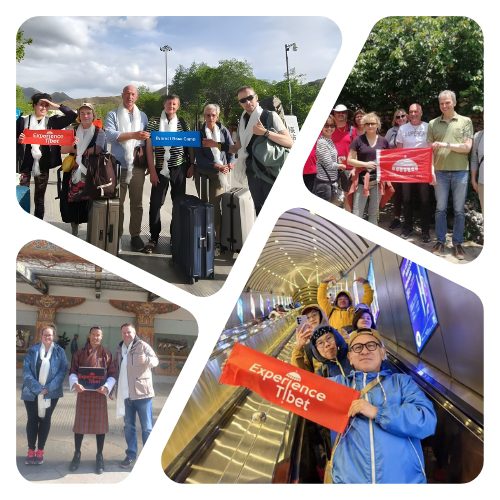
Experience Tibet has been running Tibet and Himalayan tours for over 15 years. They hold a TripAdvisor Travelers’ Choice 2025 award. Their guides are local, certified, and English-speaking throughout all three countries on this route.
For a honeymoon specifically, having an experienced operator handle all permits, border logistics, and transfers matters a lot. Crossing from Tibet into Nepal overland, and then flying into Bhutan, involves multiple permit systems and border procedures that are genuinely complex for first-time visitors. Getting it wrong creates delays and stress. Getting it right leaves you free to just be on your honeymoon.
You can browse the full Himalaya Tours collection here, or go straight to the 16-Day Tibet, Nepal and Bhutan Trans-Himalayan Tour to check dates and request a quote.
Frequently asked questions about a Himalayan honeymoon
Do we need a visa for Tibet?
Tibet requires a special Tibet Travel Permit in addition to a Chinese visa. Experience Tibet applies for the permit on your behalf as part of the tour. You do need your Chinese visa before the permit can be processed. For a step-by-step overview of how the application works, see our Tibet Travel Permit Online Application 2026 guide.
How physically fit do we need to be?
The tour activity level is rated 3 out of 5. The Tiger’s Nest hike (about 2 to 3 hours each way) and some walking at altitude are the most demanding sections. You don’t need trekking experience, but you should be comfortable walking for a few hours on varied terrain.
Can we book this as a private tour just for the two of us?
The tour runs as a small group (2 to 15 people). For a fully private experience, contact the Experience Tibet team directly to discuss private tour options.
What if one of us gets altitude sickness?
The tour includes oxygen supply and travel insurance. The itinerary is built with acclimatization time in Lhasa. If symptoms are severe, the team is experienced in managing altitude-related issues and can adjust as needed.
When should we book?
As early as possible. Tibet permits have processing windows, group tours fill up for peak season, and the border logistics benefit from advance planning. For spring (April to May) or autumn (September to November) honeymoons, booking three to six months ahead is ideal.
The short version
A Himalayan honeymoon is not easy to plan. It involves permits, border crossings, two visa categories, altitude considerations, and three countries with very different entry requirements. That’s exactly why having the right tour operator changes everything.
Experience Tibet has done this route hundreds of times. They know where the permits can get stuck, when to book the flights, which hotels in Lhasa give you the best acclimatization conditions, and where to stop on the road to Yamdrok Lake for the best light.
You bring the sense of adventure. They handle the rest.
View the 16-Day Tibet, Nepal and Bhutan Trans-Himalayan Tour and request your quote.