 About





 Tibet Tours
 Tibet Train Tours
 Himalaya Tours (Tibet-Nepal-Bhutan)
 Private Tours
 Mount Kailash Tours
 Trekking Tours
 Travel Guide
 Tibet Travel Blog
 FAQ
 About us

The door opens and the atmosphere changes almost immediately.
Outside, Lhasa may be full of traffic, pilgrims and shopkeepers. Inside a monastery prayer hall, you might hear the low rhythm of chanting, smell butter lamps and incense, and see people moving quietly from shrine to shrine.
Then comes the traveler’s dilemma.
Can I take a photo?
Should I spin that prayer wheel?
Which direction do I walk?
Do I need to bow?
And what exactly counts as “dressed respectfully” when you’ve spent the morning walking around Lhasa in the sun?
You don’t need to become an expert in Tibetan Buddhism before visiting a monastery. But understanding a few basic customs makes a big difference, especially because places such as Sera, Drepung, Ganden, Tashilhunpo and Rongbuk are active religious sites, not museum sets arranged for visitors.
Here’s how to visit without feeling nervous about every step.
Start with one simple idea: you’re entering a place of worship
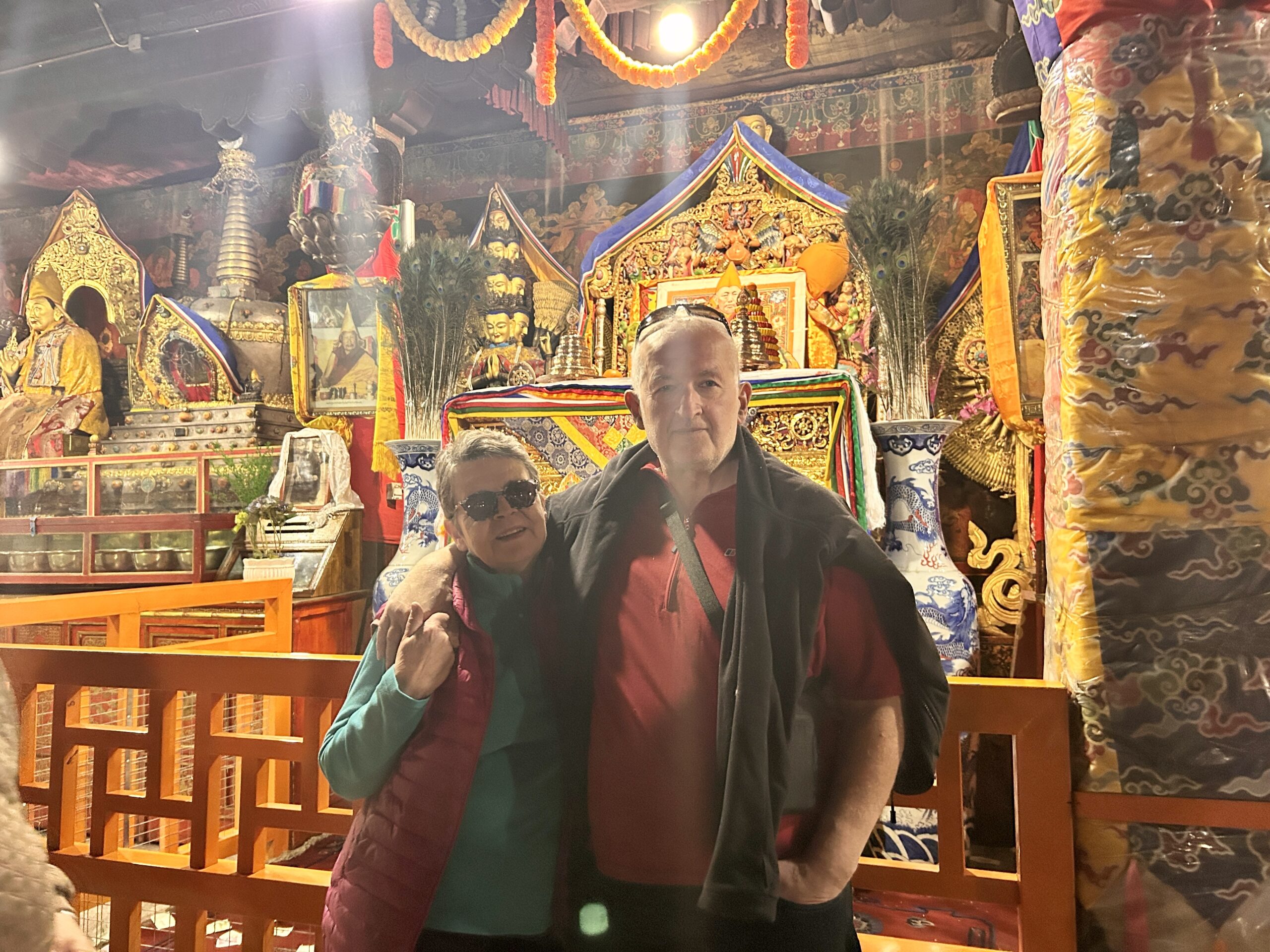
It’s easy to forget this at famous sites.
Sera Monastery appears on countless Tibet itineraries. Jokhang Temple is one of Lhasa’s main visitor attractions. Tashilhunpo is a major stop in Shigatse.
Yet monks study there, pilgrims pray there, families make offerings there and religious ceremonies continue whether tourists are present or not.
That’s the best starting point for Tibetan monastery etiquette.
Treat the space much as you would treat an active church, mosque, synagogue or temple elsewhere. Lower your voice. Give people room. Don’t turn a person praying into an obstacle between you and your next photograph.
Experience Tibet’s own guidance for Sera asks visitors to dress modestly, speak quietly, respect photography restrictions, keep distance from religious activities and remove hats in sacred indoor spaces.
Prayer wheels: which direction should you turn them?

Prayer wheels are one of those things travelers often recognize before they understand them.
You’ll see handheld wheels, rows of large copper cylinders around monasteries and smaller wheels built into pilgrimage routes.
At Tibetan Buddhist sites, prayer wheels are traditionally turned clockwise. Chinese government cultural guidance also describes Tibetan prayer wheels as being turned clockwise.
If you’re walking past a row of prayer wheels, follow the direction of local pilgrims and turn them gently as you pass.
There’s no need to race along the entire row as if you’re trying to get a high score.
And don’t reverse a wheel for a joke or photograph.
The gesture has a religious purpose for the people using it. If you’re unsure whether visitors should touch a particular wheel, ask your guide first.
Clockwise walking matters too
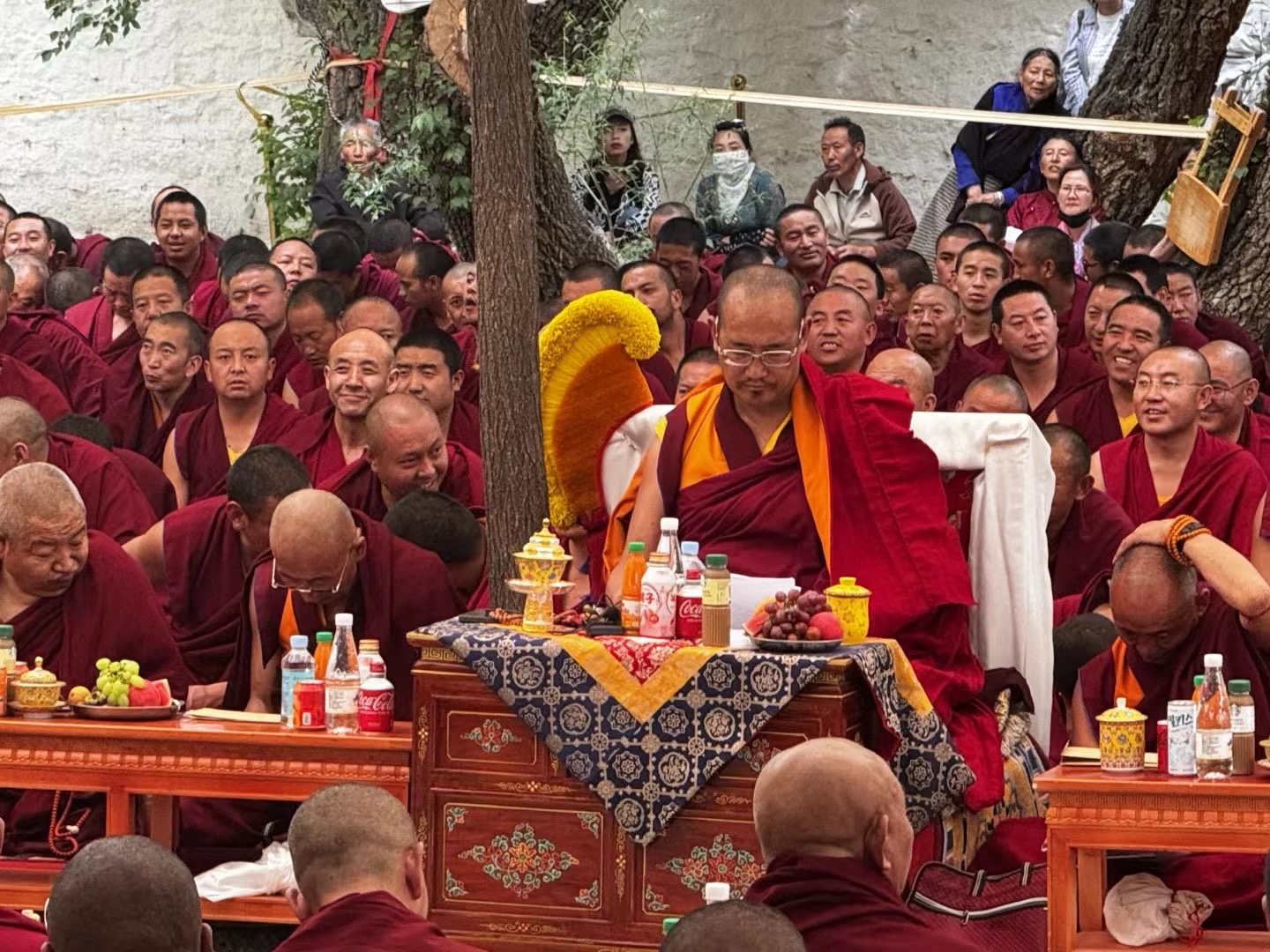
The same clockwise direction applies to most Tibetan Buddhist kora routes.
A kora is a devotional circuit around a sacred place. Around Jokhang Temple, for example, pilgrims follow the Barkhor circuit clockwise. The same principle applies around many monasteries, stupas and sacred structures.
You don’t have to be Buddhist to walk a kora.
Just move with the flow instead of marching against groups of pilgrims.
The easiest rule is to watch what local people are doing.
There are religious traditions in the Tibetan cultural world where circumambulation can follow a different direction, including Bon practice. So if your guide tells you that a particular site follows different customs, follow the local practice instead of applying one rule everywhere.
Do I have to spin prayer wheels or perform religious gestures?

No.
Respectful participation doesn’t mean copying everything you see.
You don’t need to prostrate, bow at every shrine, recite a mantra or make an offering because other people are doing it.
In fact, quietly observing is often better than imitating a ritual you don’t understand.
If you genuinely want to participate, ask your Tibetan guide what is appropriate. They can explain what people are doing and whether visitors normally take part.
And if you’d prefer simply to watch, that’s perfectly fine.
Photography inside Tibetan monasteries

This is probably where travelers make the most mistakes.
The problem is that there isn’t one photography rule that covers every monastery, courtyard and chapel.
Some exterior areas allow photography.
Some interior halls don’t.
Some monasteries may permit photographs in particular areas under certain conditions or after payment of a photography fee. Others prohibit interior photography completely.
So don’t assume that because your camera was fine in the courtyard, it’s fine five minutes later in front of a statue or altar.
Guidance from both Experience Tibet and other Tibet travel sources consistently recommends checking before photographing interiors, religious objects, monks or ceremonies.
Your local guide is usually the easiest person to ask.
If the answer is no, put the camera away.
There’s always another photograph.
Photographing monks and pilgrims
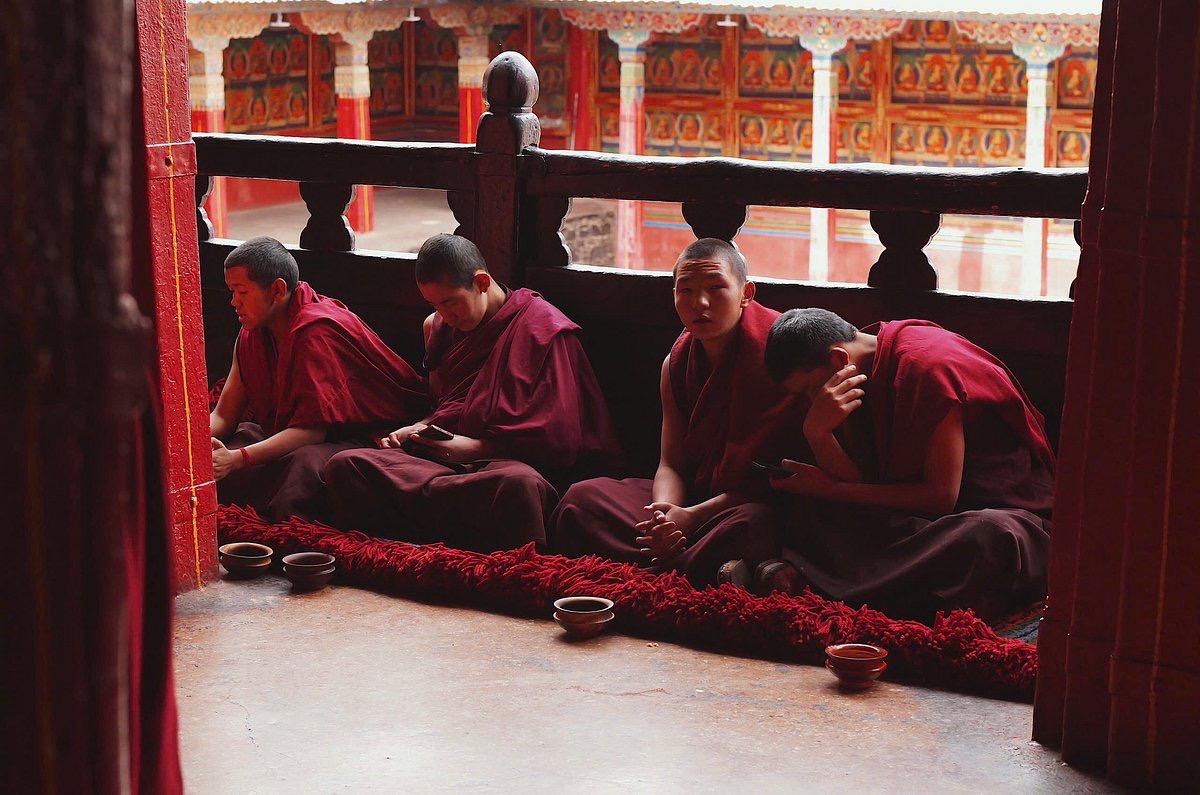
A long lens can make it tempting to photograph someone without them noticing.
That doesn’t automatically make it respectful.
Pilgrims may be prostrating, praying, making offerings or having a private religious moment. Monks may be studying or participating in ceremonies.
If you want a recognizable portrait, ask when practical.
A smile and a small gesture toward the camera often communicates the question perfectly well.
If someone turns away, waves you off or appears uncomfortable, that’s the answer.
Experience Tibet already makes the same recommendation in its guide to respectful travel and in its article about mani stones: ask before photographing people, especially pilgrims, monks and elders.
What about the monk debates at Sera Monastery?
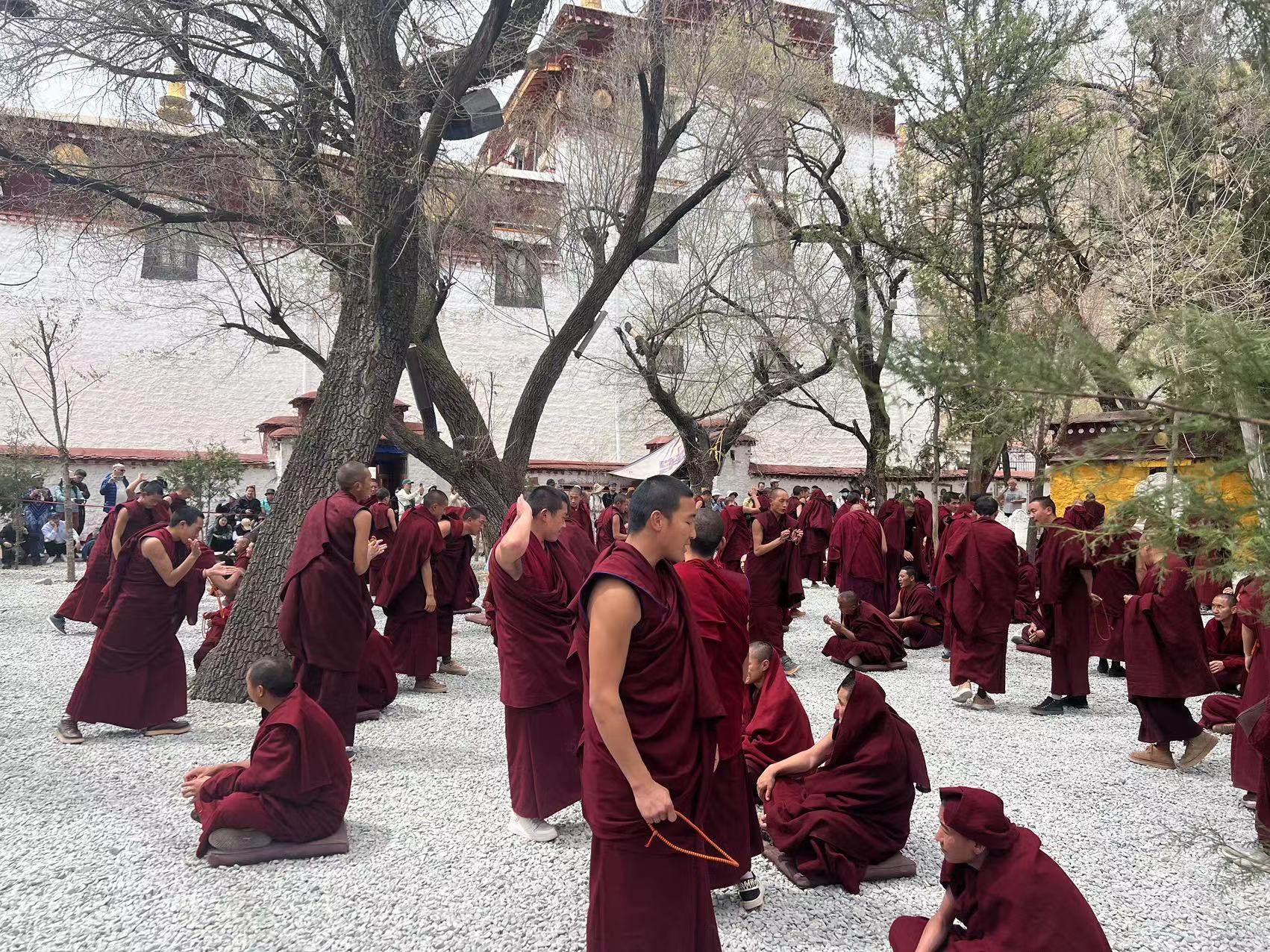
Sera is a little different because the famous debate sessions are one of the reasons many travelers visit.
The courtyard can be surprisingly energetic.
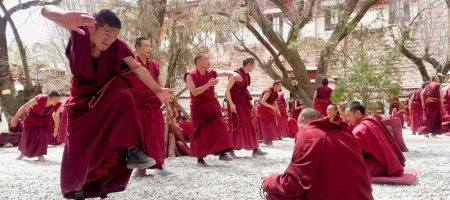
Monks clap loudly, challenge one another with questions and use dramatic hand movements as part of their study and debate practice.
It’s visually fascinating, which explains all the cameras.
But it’s still a study session.
Keep enough distance that you’re observing instead of becoming part of the performance. Don’t walk between debating monks to get a better angle, don’t interrupt them for portraits, and follow the current photography instructions given by your guide or monastery staff.
Experience Tibet’s Sera Monastery guide goes into more detail about the debates and visiting the monastery.
You can visit Sera together with Drepung, Jokhang and the Potala Palace on the 4-Day Lhasa Holy City Tour.
What should you wear in a Tibetan monastery?
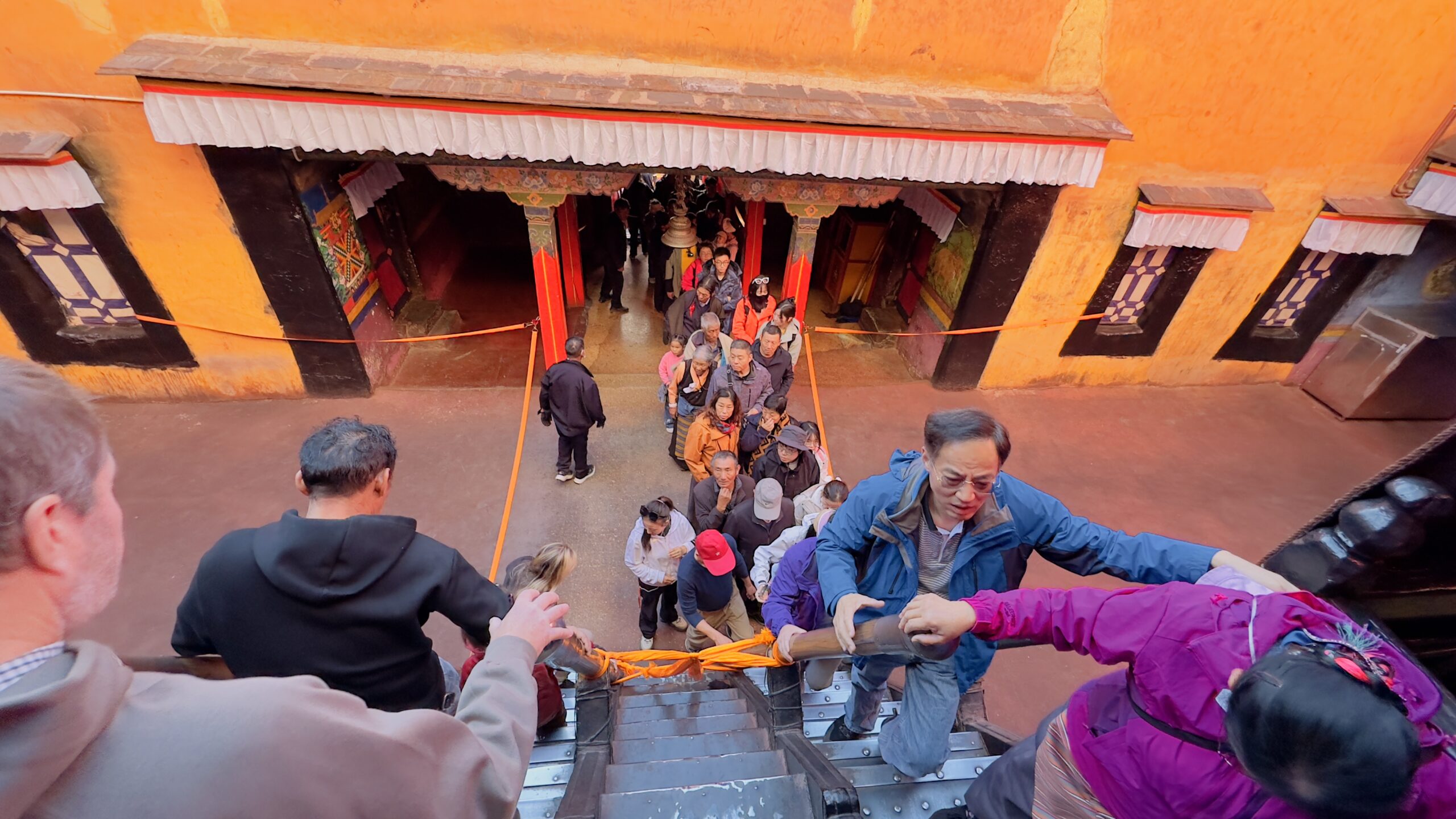
You don’t need formal clothes.
You do need clothes that make sense for a religious building.
Shoulders and knees should be covered, and very revealing clothing is best avoided. Inside sacred spaces, removing your hat is a common sign of respect. Experience Tibet gives the same guidance for Sera and Jokhang.
This doesn’t mean you need to trek around Tibet dressed for a business meeting.
A normal T-shirt, long trousers or a reasonably long skirt works perfectly well.
If you’re traveling during warmer months and wearing shorts outdoors, carrying a light layer can save you from having an awkward conversation at the entrance.
And Tibet’s temperatures can change quickly anyway, so that extra layer usually earns its place in your bag.
Do you remove your shoes?

Usually, foreign visitors aren’t expected to remove their shoes simply because they’re entering a Tibetan monastery.
But individual halls or religious spaces may have their own instructions.
If you see a sign, a monk asks you to remove them or your guide tells you to do so, follow that instruction.
This is another good example of why watching the people around you works better than memorizing fifty rules before breakfast.
Keep hats off and voices down inside prayer halls
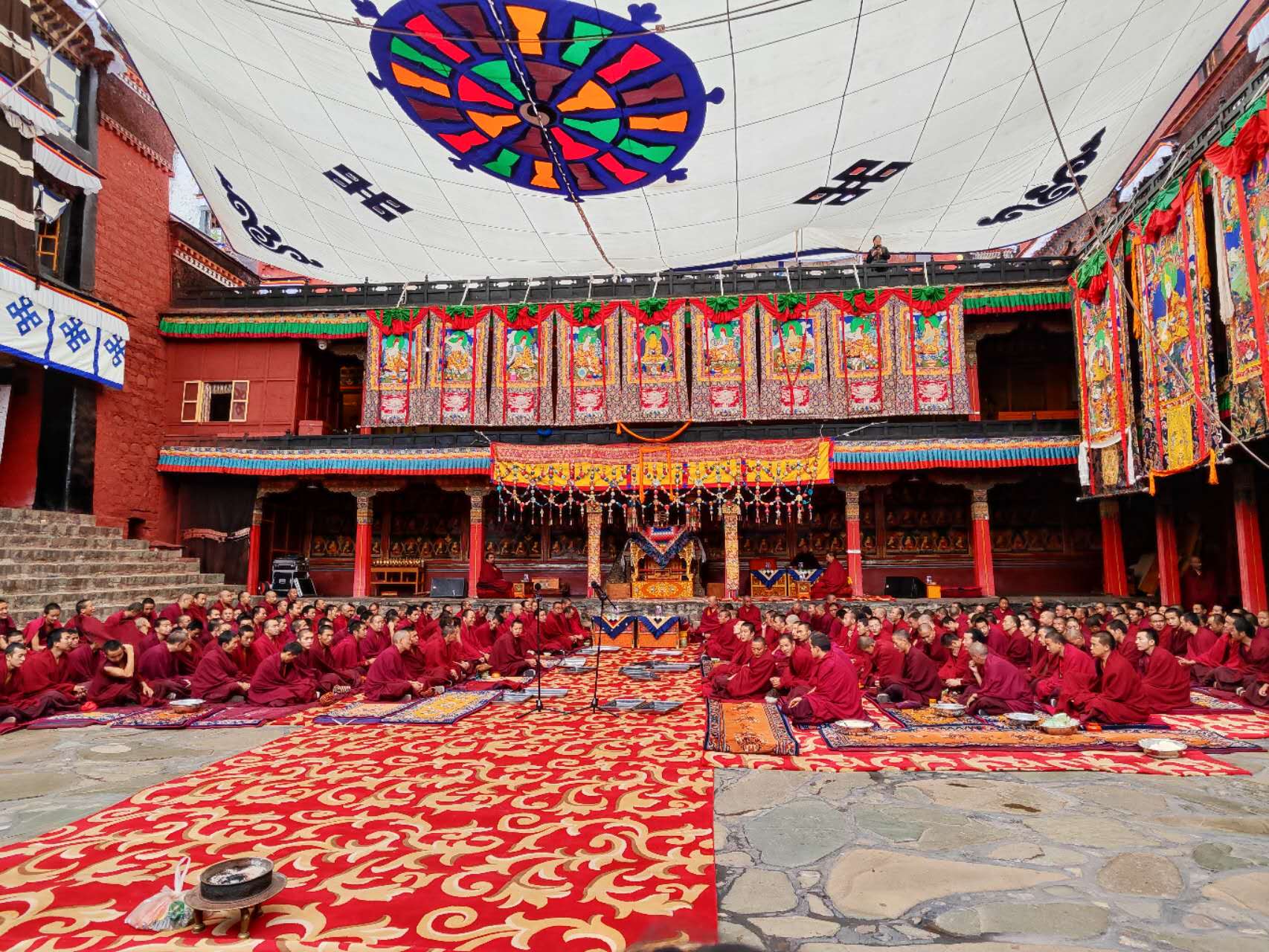
Prayer halls can be dark, crowded and very atmospheric.
They’re also working religious spaces.
Take your hat off when appropriate, silence your phone and avoid loud conversations. If monks are chanting or pilgrims are praying, stay behind them or at the side instead of pushing forward.
Official Chinese travel guidance on Tibetan monastery visits specifically advises visitors to keep quiet during religious ceremonies and not touch sacred images or scriptures.
If your guide starts explaining something, they’ll normally know where it’s appropriate to speak.
Don’t touch religious objects because they look interesting
This sounds obvious until you’re standing thirty centimeters from an old mural, statue, prayer book or butter sculpture.
Then curiosity takes over.
Resist it.
Don’t touch statues, murals, scriptures, butter sculptures, ritual objects or offerings unless you’re specifically invited to do so.
And don’t step over religious objects or texts lying on the ground.
Several sources on Tibetan visiting customs give the same advice, including official cultural guidance and Experience Tibet’s respectful-travel material.
The same principle continues outdoors.
If you see carved mani stones, don’t move them into a prettier arrangement for Instagram.
Our Mani Stone Cairns in Tibet guide explains why these stones should be treated as devotional objects, not hiking props.
Watch where your feet are pointing
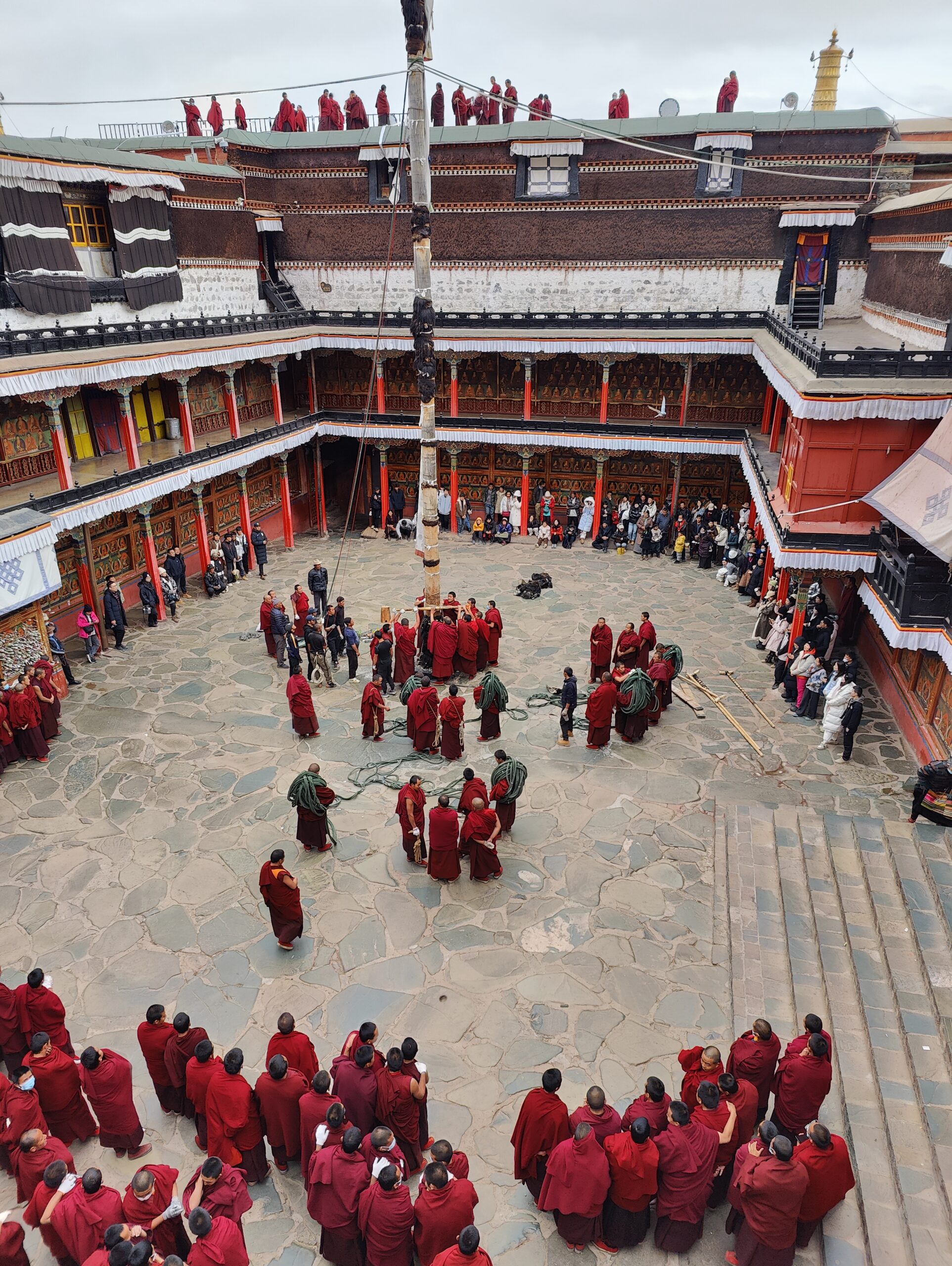
This is a small detail many first-time visitors don’t know.
When sitting in a prayer hall, avoid stretching your legs out so that the soles of your feet point directly toward an altar, Buddha image, monk or sacred object.
If you’re sitting on a bench or low platform, keep your feet tucked down or to the side.
It’s a simple adjustment, and nobody needs to perform advanced yoga to achieve it.
Don’t block pilgrims doing a kora

Photographers are particularly guilty of this one.
You spot a great composition, take two steps backward, wait for the light and suddenly realize you’ve planted yourself directly in the path of twenty pilgrims.
Pilgrimage routes aren’t photography lanes.
Around Jokhang and Barkhor, at Ganden, Tashilhunpo and other sacred sites, keep an eye on the flow of people and step aside when you stop.
If you’d like to understand what you’re seeing around Jokhang, the Jokhang Temple travel guide covers the Barkhor kora, pilgrims and temple etiquette in more detail.
Offerings, donations and butter lamps

You’ll often see money, butter lamps or other offerings around shrines.
Visitors aren’t required to leave money simply because other people are doing so.
If you want to make a small donation or offering, ask your guide how it is normally done at that particular monastery.
Some visitors also want to add butter or oil to lamps. Again, don’t assume. Ask first.
Religious participation is more meaningful when you understand what you’re doing.
And nobody at the monastery is keeping a tourist donation leaderboard.
Can you watch monks praying?

Often, yes, when the area is open to visitors.
But being allowed into a prayer hall doesn’t mean you should behave as though you’ve bought a front-row ticket.
Stay toward the back or where visitors are directed. Keep quiet. Avoid walking directly in front of people praying.
If a ceremony is taking place and access is restricted, follow the instructions of monastery staff and your guide.
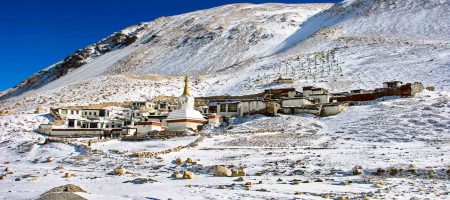
At Rongbuk Monastery near Everest, for example, chanting and daily religious practice are part of monastery life, not a performance scheduled for tourists.
You can read more in The Sacred Sound of Everest: Experiencing the Chants of Rongbuk Monastery.
Rongbuk is also included on Experience Tibet’s 8-Day Everest Base Camp Tour.
Ganden: a good place to understand kora etiquette

If you want more time around Tibetan monastic life than a short city visit allows, Ganden is a good choice.
The monastery sits outside central Lhasa, and its pilgrimage circuit gives you a chance to see how a kora works without the constant crowds of central Barkhor.
Experience Tibet’s 5-Day Lhasa & Ganden Monastery Small Group Tour includes Drepung, Sera, Jokhang, Drak Yerpa and Ganden, with time to walk the Ganden kora.
That’s a useful itinerary if monasteries and Tibetan religious practice are a major reason you’re coming to Tibet.
Tashilhunpo: etiquette beyond Lhasa
The same basic etiquette continues when you leave Lhasa.
Tashilhunpo Monastery in Shigatse remains an active religious center, so keep the same habits: move with the pilgrim flow, keep voices down inside, check before photographing and don’t touch sacred objects.
You can learn more about its history and religious role in Tashilhunpo Monastery: A Journey into the ‘Heap of Glory’.
Travelers who want to combine Lhasa’s monasteries with Tashilhunpo can do so on the 6-Day Lhasa to Shigatse Golden Route Tour, which visits Drepung, Sera, Jokhang and Tashilhunpo.
A quick monastery etiquette check before you walk in
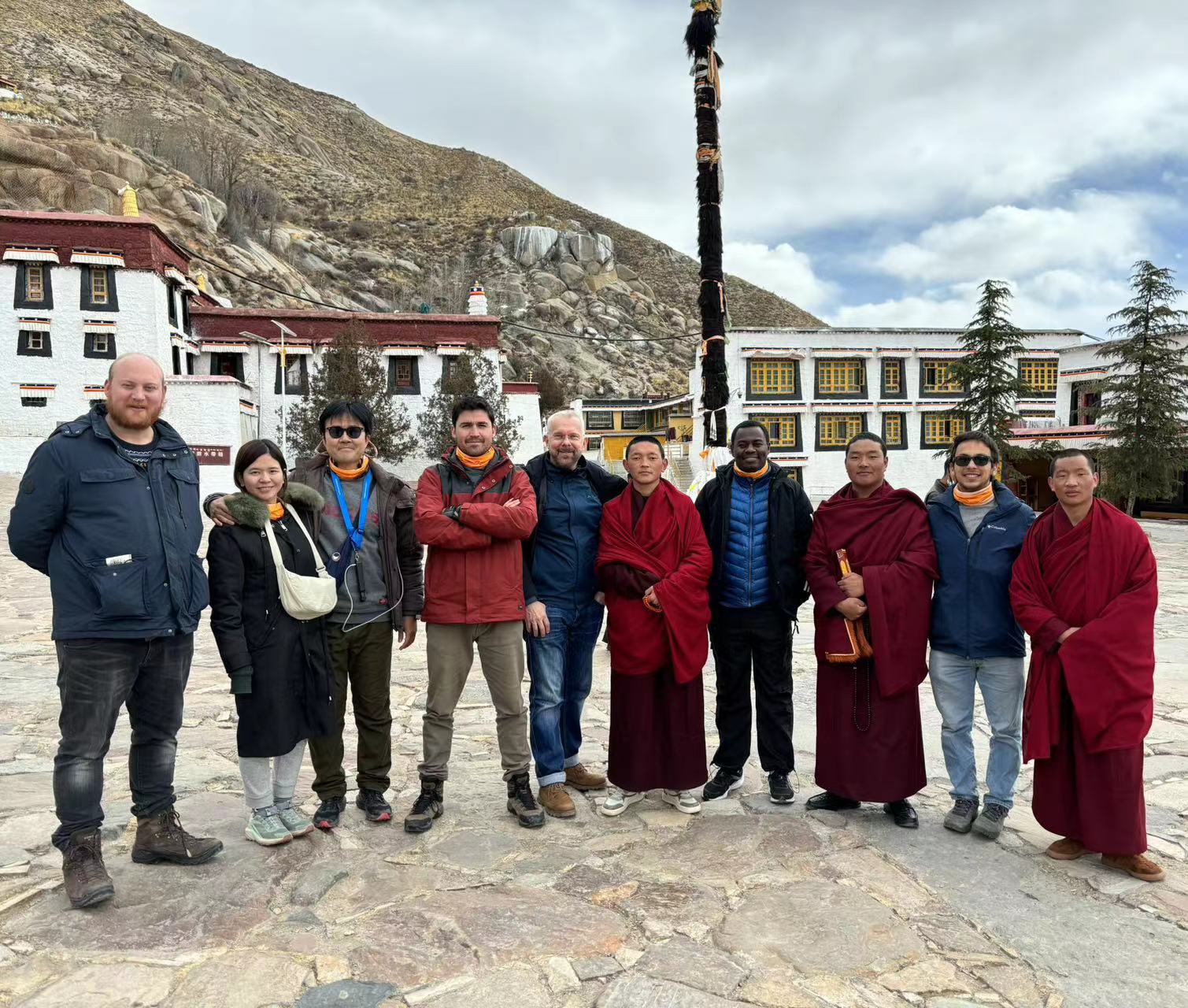
| Situation | Best approach |
|---|---|
| Prayer wheels | Turn clockwise at Tibetan Buddhist sites and follow local pilgrims |
| Kora routes | Walk clockwise unless your guide explains a different local tradition |
| Photography | Check signs and ask your guide before photographing interiors |
| Monks and pilgrims | Ask before close or recognizable portraits |
| Clothing | Cover shoulders and knees; avoid very revealing clothes |
| Hats | Remove them inside sacred halls when required |
| Prayer halls | Speak quietly and keep your phone silent |
| Religious objects | Don’t touch statues, murals, scriptures or ritual items |
| Mani stones | Don’t move, climb on or rearrange them |
| Ceremonies | Stay out of the way and follow staff or guide instructions |
| Offerings | Optional; ask your guide if you want to participate |
| Unsure what to do? | Watch local pilgrims or ask your Tibetan guide |
What if you make a mistake?
You probably will at some point.
Maybe you’ll start walking the wrong way before noticing everyone else coming toward you.
Maybe you’ll forget your hat is still on.
Maybe you’ll lift your camera and your guide will quietly say, “No photo here.”
Correct it and move on.
Respectful travel isn’t about performing Tibetan customs perfectly.
It’s about paying attention.
The problems usually start when visitors ignore instructions, treat religious spaces as photo studios or assume that paying an entrance fee gives them permission to do whatever they want.
A traveler who watches, listens and asks questions is unlikely to cause much trouble.
Let your Tibetan guide explain what you’re seeing
One advantage of visiting Tibet with a local guide is that monastery etiquette doesn’t need to be a guessing game.
Different monasteries have different layouts, photography policies and religious activities.
Your guide can tell you why pilgrims are circling a particular shrine, whether a chapel allows photographs, what a ceremony means and where visitors should stand.
That’s particularly useful in places such as Sera, Drepung, Ganden and Tashilhunpo, where you can walk past dozens of things without understanding their purpose.
Experience Tibet uses local Tibetan guides on its Tibet itineraries, and monastery visits are built into many of its shorter cultural tours.
If you’re still planning your trip, browse all Tibet tours and look at which monasteries appear in each itinerary.
Respect makes the visit better, not more complicated

You don’t need a notebook full of rules hanging around your neck.
Remember the basics.
Move with the pilgrims. Keep sacred objects on the respectful side of your curiosity. Ask before taking personal photographs. Dress appropriately. Lower your voice when the room does.
And when you’re unsure, ask your guide.
You’ll spend less time wondering whether you’re doing something wrong and more time noticing what actually makes Tibetan monasteries fascinating: the sound of monks debating at Sera, pilgrims moving around Jokhang before breakfast, butter lamps glowing inside a dim chapel, or the quiet of Ganden after you’ve stepped away from the road.
If monasteries are one of the main reasons you want to visit Tibet, start with the 4-Day Lhasa Holy City Tour, add Ganden on the 5-Day Lhasa & Ganden Monastery Tour, or continue to Tashilhunpo on the 6-Day Lhasa to Shigatse Golden Route Tour.
You can also read our broader How to Visit Tibet: Safe and Ethical Guide for Foreign Travelers before your trip.